





When President Yoweri Kaguta Museveni was recently asked by a young Ugandan to commit to appointing more youthful leaders in the next government, the question struck at the heart of an ongoing transformation within the ruling National Resistance Movement (NRM).
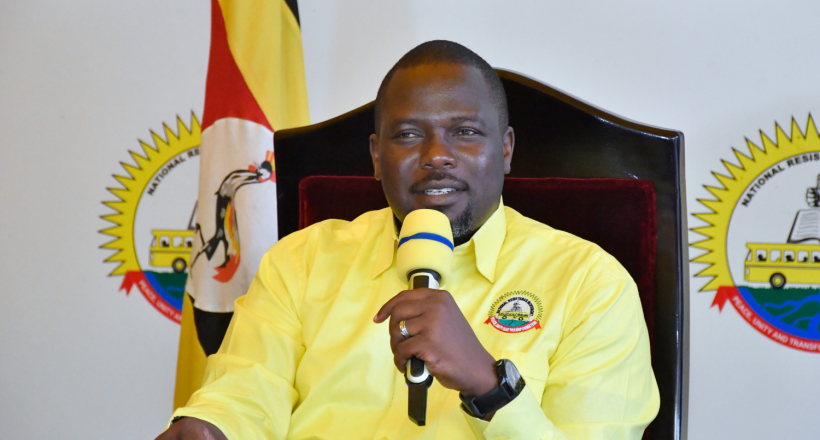
While the President’s response signaled openness to generational renewal, many observers note that the groundwork for this transition has already been laid at the party’s secretariat under the stewardship of Secretary General Richard Todwong.
Quietly Engineering a Transition
Over the last few years, the NRM has witnessed a notable shift: seasoned political heavyweights — long-serving Members of Parliament and ministers — have increasingly faced stiff competition from younger, more energetic contenders. In several instances, the old guard has been unseated, replaced by candidates who represent a new generation of leadership.
Far from being accidental, insiders credit this shift to deliberate structural and organizational reforms championed by Todwong.
Since assuming office as Secretary General, Todwong has emphasized grassroots mobilization, ideological clarity, and internal party democracy. By strengthening internal electoral processes and opening up space for competition, the secretariat has enabled young aspirants to test their popularity on equal footing with established figures.
The result has been a slow but steady migration of influence from long-entrenched actors to a new crop of youthful leaders.
Re-energizing the Party Base
Todwong’s strategy has revolved around reinvigorating the party at the grassroots. Through structured mobilization drives, cadre training programs, and reorganization of district and sub-county party structures, the secretariat has ensured that youthful participation is not symbolic but substantive.
Young people have increasingly taken up leadership positions within party leagues and mainstream structures — not merely as mobilizers, but as decision-makers.
This re-energization has had ripple effects. Younger candidates, armed with stronger networks and organizational backing, have been able to challenge incumbents who once seemed untouchable.
Balancing Continuity and Renewal
Observers say one of Todwong’s key strengths has been balancing generational change without fracturing party unity. The transition has not been framed as a rebellion against experience, but as a necessary evolution to secure the party’s future.
The NRM, now four decades in power, faces a demographic reality: Uganda’s population is overwhelmingly young. Any political movement that fails to reflect this reality risks alienation from the very voters it seeks to represent.
By planting the seeds of youthful leadership early, Todwong appears to be safeguarding the party’s longevity.
Institutionalizing Youth Inclusion
Rather than relying on appointments alone, the secretariat has focused on institutional mechanisms that naturally produce younger leaders. Competitive primaries, transparent internal processes, and strengthened local structures have collectively lowered barriers to entry.
The outcome is visible: a growing presence of young MPs, ministers, and party officials emerging from the most recent political cycles.
This shift aligns closely with the President’s public acknowledgment that the next phase of leadership must integrate youth more deliberately.
A Strategic Legacy in the Making
As conversations about the next government gather momentum, Richard Todwong’s imprint on the party’s evolving leadership landscape is increasingly evident. What some interpret as political turbulence — with veteran politicians losing ground — may in fact be a calculated recalibration.
If the generational shift consolidates, Todwong’s tenure may well be remembered as the period when the NRM successfully transitioned from an old-guard dominated movement into a rejuvenated political force driven by a new generation.
In the language of political strategy, seeds planted quietly often yield the strongest harvest.