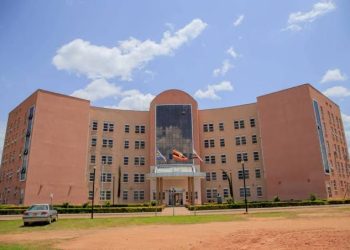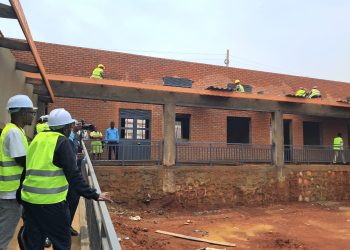




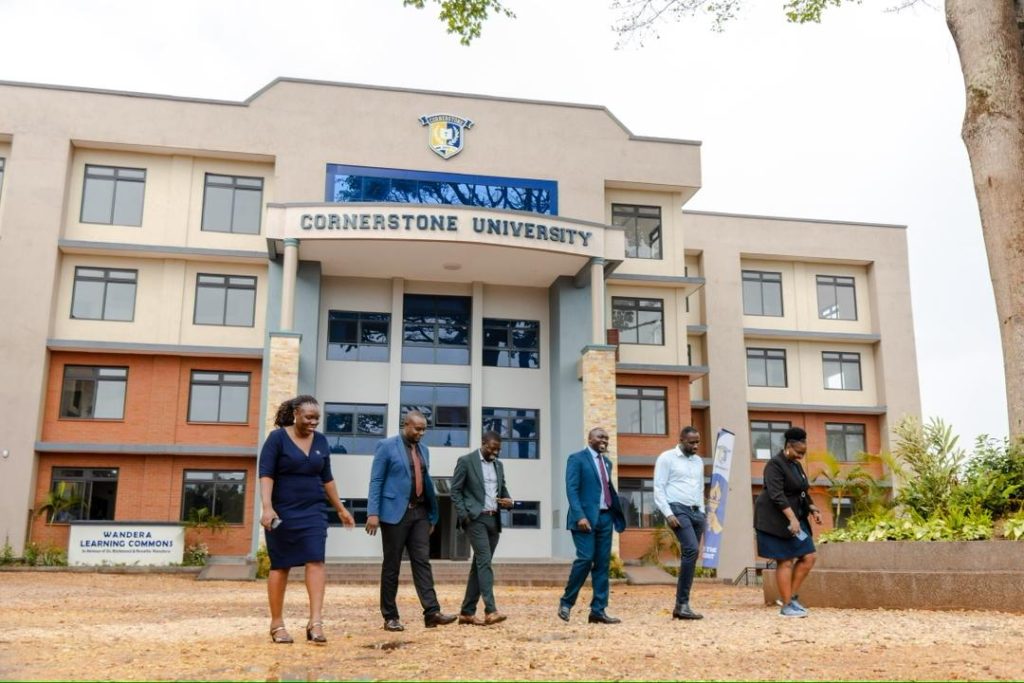
EDUCATION: As thousands of Ugandan students transition from high school to university following the release of 2025 UACE examination results, a growing debate about the quality and relevance of higher education is taking center stage. At the heart of this conversation is Cornerstone University, a newly accredited institution that aims to change the system, which many critics say is producing graduates who are not ready for today’s job market.
Speaking at the university’s campus in Bweyogerere – Kampala, Vice Chancellor Dr. Richmond Wandera delivered a sweeping address that both celebrated student achievement and sharply questioned the direction of university education in Uganda and across Africa.
A System Under Scrutiny
Drawing on more than two decades of academic and leadership experience across Africa, the United States, and Europe, Dr. Wandera highlighted a troubling paradox: while university enrollment continues to grow, the impact of graduates on society remains inconsistent.
“Many students are graduating, but are leaving without practical, actionable skills, without clear career direction, without discipline, and without strong values,” he said.
According to the university’s internal observations, these gaps are contributing to widespread dissatisfaction among employers and graduates alike. Many students, he noted, complete degrees they neither fully understand nor find relevant, leading to confusion and underemployment.
This concern is compounded by a significant dropout rate in Uganda’s universities, estimated between 15% and 30%. Financial barriers remain a primary cause, with many families unable to sustain rising tuition costs.
The Cost Barrier and Access to Education
In response, Cornerstone University has introduced a 25% tuition scholarship for all incoming students, a move the institution says is aimed at widening access to higher education.
“With Uganda’s economic realities, we must ensure that gifted students are not locked out of university simply because they cannot afford it,” Dr. Wandera emphasized.
The initiative has reportedly sparked interest among parents and students who previously saw university education as unattainable.

Beyond Academics: Character and Environment
While affordability is one challenge, the university argues that deeper systemic issues lie in how students are trained. Dr. Wandera pointed to a lack of mentorship, weak institutional culture, and limited attention to students’ lives outside the classroom.
“Education is not just what is taught, it is what is caught,” he said, stressing the importance of environment in shaping discipline, leadership, and personal values.
Cornerstone’s model includes structured mentorship, guided career selection, and curated campus experiences designed to keep students engaged and focused.
Dr. Wandera argue that traditional institutions often neglect these aspects, particularly during unstructured periods such as weekends.
Rethinking Learning: Competency Over Credentials
Central to the university’s philosophy is a shift toward competency-based education, a model that prioritizes practical skills and real-world application over theoretical knowledge.
“In the traditional system, we ask students, ‘Do you know it?’” Dr. Wandera explained. “In our system, we ask, ‘Can you do it?’”
Classes are structured as interactive discussion spaces rather than lecture halls, and faculty are selected not only for academic credentials but also for demonstrated success in their respective industries.
This approach, the university claims, is already yielding early results, with students reportedly showing increased focus, discipline, and clarity about their career paths within their first semester.

A Broader Vision for Africa
Beyond Uganda, Cornerstone University is positioning itself within a larger continental mission. The institution has outlined four ambitious goals: to become Africa’s leading research university, its most technologically advanced, its most environmentally sustainable, and a hub for producing influential leaders.
Dr. Wandera criticized Africa’s reliance on foreign research, noting that much of the academic material used on the continent originates abroad.
“We cannot continue importing solutions that do not fully understand our context,” he said. “Africa must produce its own knowledge.”
Technology and Sustainability at the Core
The university is also investing heavily in infrastructure designed to reflect its forward-looking vision. Its campus features advanced artificial intelligence labs and a strong emphasis on digital innovation, aiming to prepare students for a rapidly evolving global economy.
Sustainability is another pillar. With over 200 solar panels installed, the university generates more energy than it consumes—a model it hopes will inspire solutions to Uganda’s persistent energy challenges, where large portions of the population still lack reliable electricity.
Faith, Ethics, and Leadership
Perhaps most distinctively, the institution places strong emphasis on faith and ethical formation. Dr. Wandera argued that technical skills alone are insufficient without a moral foundation.
“Uganda’s greatest challenge is not a lack of educated people, it is a lack of leaders who serve others rather than themselves,” he said.
The university integrates faith-based discussions into its programs, aiming to shape graduates who are not only competent but also principled.
A Timely Intervention or Idealistic Vision?
While Cornerstone University’s approach has been welcomed by some as a much-needed reform, questions remain about scalability and long-term impact. Critics may argue that systemic challenges in Uganda’s education sector require broader policy interventions beyond individual institutions.
However, as the country grapples with youth unemployment, skills mismatches, and ethical concerns in leadership, initiatives by Cornerstone University are likely to fuel ongoing conversations about the future of higher education.
For now, as a new cohort of students weighs their options, the message from Cornerstone University is clear: the next chapter of Uganda’s education system may depend not just on access, but on relevance, values, and the ability to turn knowledge into meaningful action.