




As darkness fell over Busega on April 17, 2026 the schoolyard of Valley View Nursery and Primary School flickered to life with an unusual kind of energy.
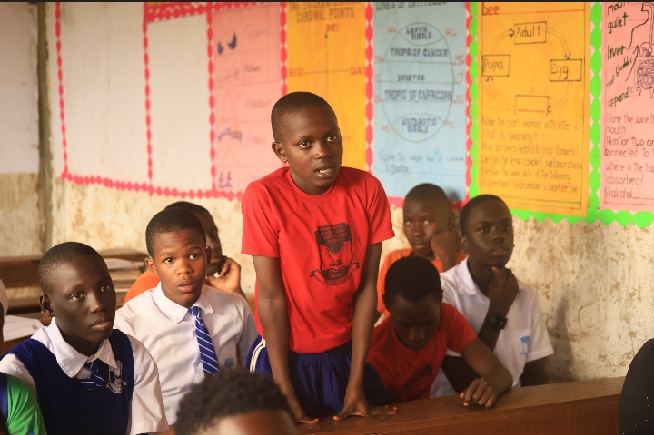
More than 100 young people, some in school uniforms, others long absent from classrooms, gathered shoulder to shoulder with parents, teachers, and community leaders for a conversation many had never been allowed to have.
What unfolded was not just a community meeting but a rupture in silence.
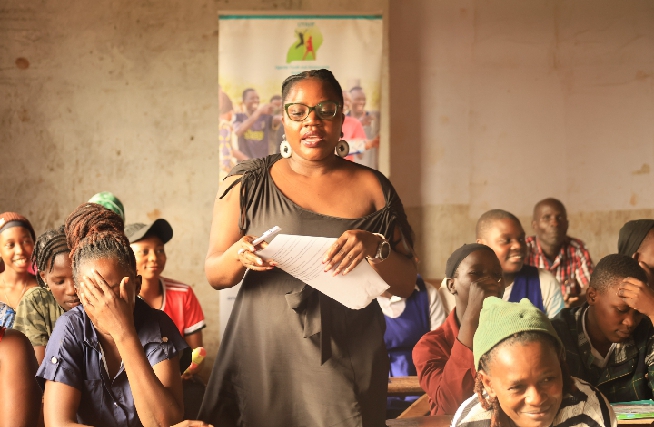
Hosted by the Uganda Youth and Adolescents Health Forum in partnership with Tiko, the chat transformed an ordinary evening into a candid, often emotional reckoning with adolescence, from body changes and menstruation to the harsh realities of sexual and gender-based violence.
The setting was deliberately informal. Here, questions replaced lectures. And for many of the young attendees, hesitation quickly gave way to curiosity.
It was a single question, however, that shifted the mood entirely.
“Can boys menstruate too?”
The inquiry, posed by a young boy, drew laughter at first, but only briefly. What followed was a moment of clarity that defined the day’s event.
Facilitators leaned in, not to dismiss the question, but to meet it with honesty.
Norah, a youth advocate with UYAHF, answered plainly: ‘menstruation is a natural biological process experienced by girls and women after puberty’.
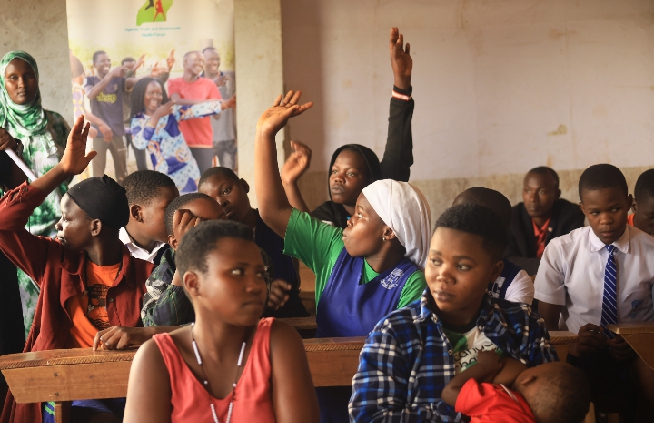
Boys, she explained, undergo different but equally significant changes, deepening voices, physical growth, and hormonal shifts that shape their transition into adulthood.
There was no embarrassment in her tone, only assurance.
In that moment, a taboo subject became teachable. Confusion gave way to understanding.
Health workers on site reinforced the message, sketching simple diagrams and demystifying puberty with language that resonated across ages.
Adolescents spoke up, some for the first time, sharing fears, misconceptions, and personal experiences.
A girl admitted she had been terrified when her first period came without warning.
A boy confessed he now understood why his sister sometimes seemed withdrawn or fatigued.
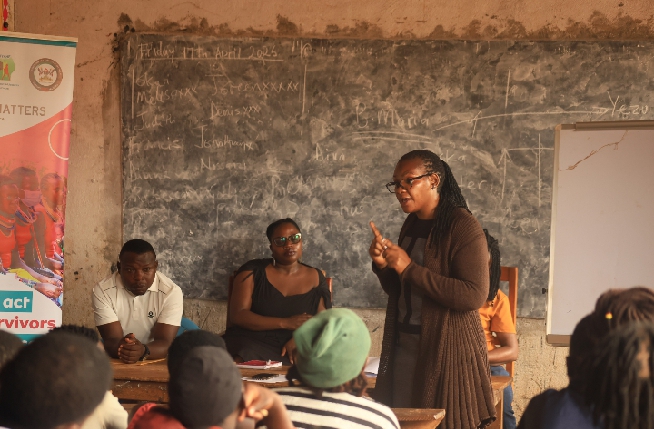
What began as a conversation about biology soon deepened into something far more urgent.
Sexual and gender-based violence, often hidden, often normalized, was brought into the open with striking directness. Facilitators broke down the concept in terms that left little room for ambiguity: violence is not only physical. It can be emotional, economic, or sexual. It can happen at home, at school, or within relationships. And crucially, it thrives in silence.
The issue of consent also emerged as a focal point during the conversation.
True consent, participants were told, must be freely given, never coerced, manipulated, or extracted through fear. For minors, the message was even more stark: the law does not recognize their ability to consent to sexual activity or marriage, a safeguard often misunderstood or ignored in many communities.
The term “victim” was also replaced with “survivor,” reframing those affected not as powerless, but as resilient individuals capable of recovery and dignity.
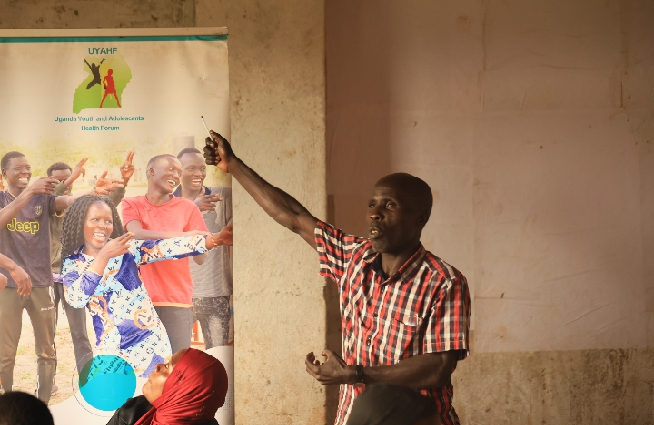
Medical urgency was another sobering reality. Health professionals stressed that in cases of sexual violence, immediate care can be the difference between recovery and lasting harm. Access to treatment, including emergency contraception, disease prevention, and counseling, is time-sensitive, yet often delayed due to stigma or lack of awareness.
For many in attendance, they confessed this was the first time such services had been explained so clearly, or made to feel accessible.
A community chairperson addressed parents directly, urging them to take a more active role in guiding their children through adolescence.
The warning was blunt: in the absence of accurate information at home, young people will seek answers elsewhere, often at great risk.
Young people practiced how to say “no” with confidence. Others discussed how to support friends facing abuse. Misconceptions, particularly around menstruation, began to dissolve in real time.
What set the evening apart was not just the information shared, but how it was delivered. Through peer educators, digital tools, and on-the-ground support, Tiko and UYAHF ensured that the conversation did not end with words alone.
Young attendees were connected to services immediately, bridging a gap that too often leaves vulnerable adolescents without help.
Parents spoke quietly with their children. And for many of the young people who arrived uncertain or uninformed, the event marked a turning point.
In a world where discussions about puberty and violence are frequently avoided, the gathering in Busega stood as a powerful reminder: when young people are given space to speak, and adults are willing to listen, silence can be broken.