


Uganda has announced plans to repatriate hundreds of its citizens from South Africa after a wave of xenophobic violence and growing hostility toward foreign nationals prompted fears for their safety.
The decision follows a directive from President Yoweri Museveni instructing the Office of the Prime Minister to coordinate an emergency repatriation exercise alongside the Ministries of Foreign Affairs, Works and Transport, and Internal Affairs.
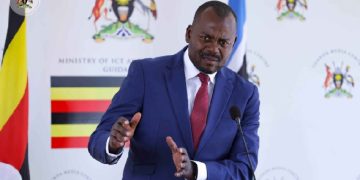
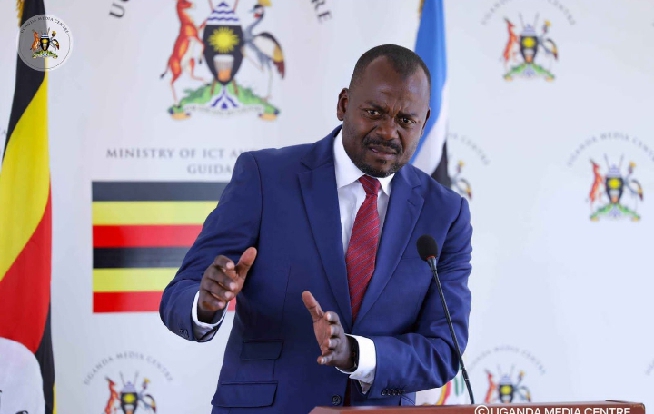
Acting Minister for Foreign Affairs Haruna Kasolo Kyeyune told journalists in Kampala, said the government had begun preparations to bring home Ugandans who have expressed a desire to leave South Africa because of deteriorating security conditions.
“President Museveni has directed the relevant government agencies to immediately commence arrangements for the safe repatriation of Ugandans who wish to return home,” Kasolo said.
According to the minister, 746 Ugandans have so far registered with the Ugandan High Commission in Pretoria, saying they no longer feel safe remaining in South Africa amid rising attacks targeting foreign nationals.
“These are all Ugandans who have so far registered themselves, saying they can no longer remain in South Africa,” Kasolo said, adding that more registrations are expected as the repatriation programme gathers momentum.
Kasolo disclosed that two Ugandan nationals have already died during the unrest, although he did not provide further details regarding the circumstances of their deaths.
He said the South African government was working through its security agencies to restore law and order while protecting affected communities, including foreign nationals.
“There is increasing pressure on foreigners to leave South Africa, and several countries have already begun facilitating the return of their citizens,” Kasolo said.
He urged Ugandans who remain in South Africa to maintain contact with the Ugandan High Commission and formally register if they require government assistance to return home.
The evacuation exercise is expected to begin once logistical arrangements, including travel documentation, transportation and reception plans, are finalized by the responsible government agencies.
Renewed concerns over Xenophobic violence
South Africa has long been a preferred destination for migrants from across Africa because of its relatively diversified economy and employment opportunities. Thousands of Ugandans live and work in the country, engaging in businesses ranging from retail trade and hospitality to professional services and academia.
However, periodic outbreaks of xenophobic violence have repeatedly disrupted the lives of foreign nationals.
Over the past two decades, South Africa has witnessed several waves of attacks directed at migrants from elsewhere on the African continent.
Major episodes in 2008, 2015 and 2019 left dozens of people dead, displaced thousands and damaged businesses owned by foreign nationals.
The violence has often been fueled by a combination of high unemployment, economic inequality, political rhetoric surrounding immigration, and perceptions among some South Africans that foreign nationals compete for scarce jobs, housing and public services.
Although South African authorities have consistently condemned xenophobic attacks and pledged to protect all residents regardless of nationality, migrant communities continue to report intimidation, looting of businesses and targeted violence during periods of heightened social and economic tension.
Regional organizations, including the African Union and the Southern African Development Community (SADC), have repeatedly called for stronger protection of migrants and greater cooperation among African governments to address the underlying causes of displacement and anti-immigrant sentiment.
Uganda’s decision to repatriate citizens underscores growing concern among African governments over the safety of their nationals living abroad.
Kampala has previously coordinated evacuations of Ugandans from conflict zones and countries experiencing political instability, including Sudan during the 2023 civil war and other emergency situations in the Middle East.
Officials say the latest operation is intended to provide a safe and voluntary return for Ugandans who believe remaining in South Africa places their lives at risk, while diplomatic engagement between Kampala and Pretoria continues over the protection of Ugandan citizens still residing in the country.