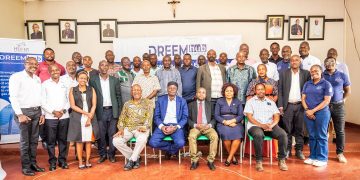



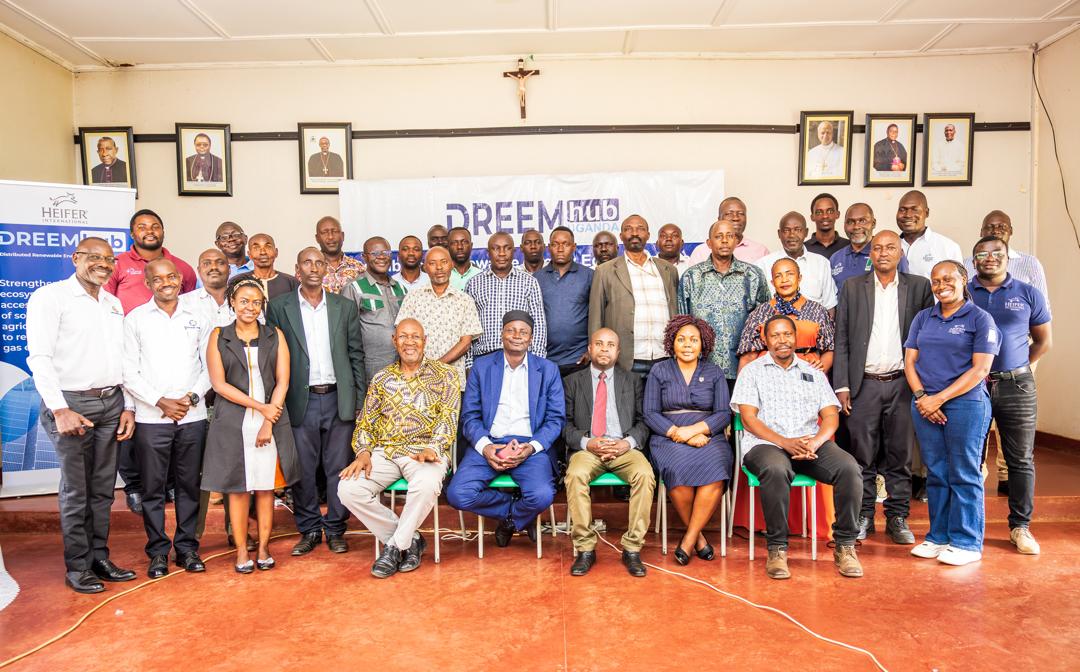
NAKASEKE – Heifer International Uganda, together with Nakaseke District Local Government, farmers and development partners, has reviewed the progress of the three-year Distributed Renewable Energy Ecosystem Model (DREEM) Hub Project, with stakeholders describing the initiative as a game-changer for dairy farming and rural livelihoods.
The review meeting, held at St. Paul Hotel in Kasana, Luweero, highlighted the achievements registered halfway through the project, which is now in its second year of implementation.
The DREEM Hub project aims to strengthen Uganda’s renewable energy ecosystem by promoting productive use of solar energy across agricultural value chains, particularly in the dairy sector, while reducing greenhouse gas emissions. The initiative is being implemented by Heifer International Uganda in partnership with Enterprise Uganda, the Advocates Coalition for Development and Environment (ACODE), Joint Energy and Environment Projects (JEEP), Kabaka Foundation and Nakaseke District Local Government.
Solar technology transforming dairy farming
Speaking during the meeting, Heifer International Uganda Signature Program Technical Lead Ronald Wabwire said the project was designed around an ecosystem approach that brings together government, financial institutions, farmer cooperatives and development partners to address challenges affecting dairy farmers.
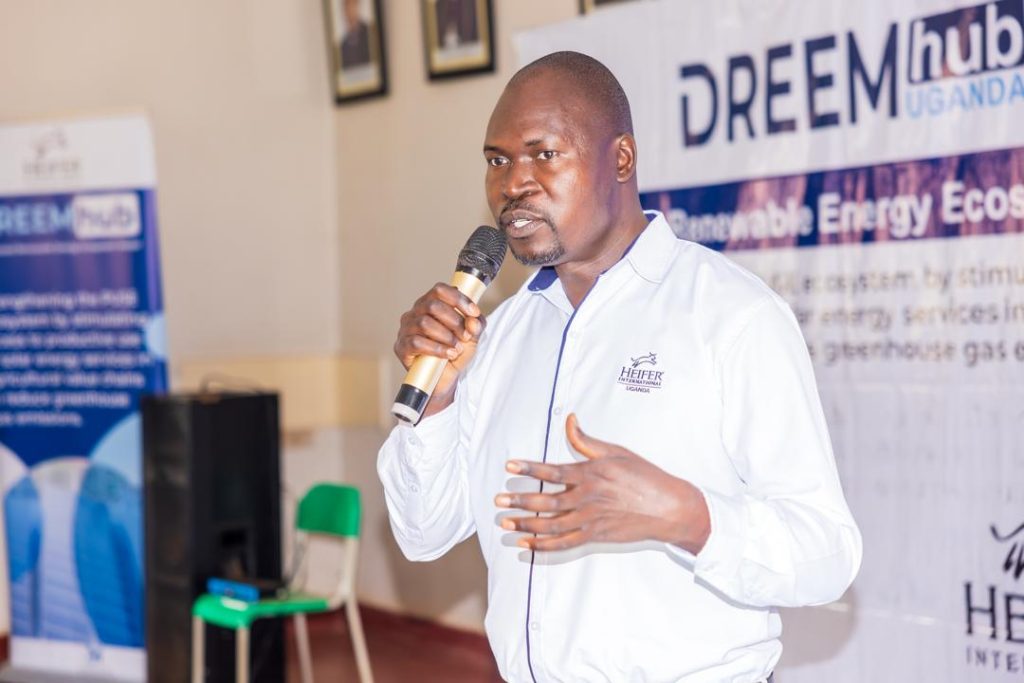
“We are solarising the dairy value chain. Solar energy is being used to cool milk at milk collection centres, pump water for livestock, power fodder choppers, operate milking machines and even provide refrigeration at household level,” Wabwire said.
He explained that one of the biggest achievements has been replacing expensive diesel generators at off-grid milk collection centres with solar-powered systems.
To make the technology affordable, Heifer partnered with Stanbic Bank to establish a blended financing model where farmers receive partial grant support while contributing the remaining cost through affordable loans.
Milk collection and cooperative membership growing
According to Wabwire, the project has already worked with four dairy cooperatives in Nakaseke District—Kalyabulo, Migani, Nyakarongo and Kijumba—with remarkable results.
“The profitability of these cooperatives has improved, milk quality has increased, efficiency has gone up and more farmers are joining the cooperatives because they now have confidence that their milk will not spoil,” Wabwire noted.
He added that the success of the project has prompted Heifer International Uganda to begin scaling up the model through another initiative known as the Greening Dairy Investment (GDI) Project.
Building skills and strengthening the renewable energy ecosystem
Project Manager Edna Nyamwaka presented the project’s progress, noting that besides investing in solar infrastructure, DREEM Hub has focused on developing skills, entrepreneurship and institutional capacity.
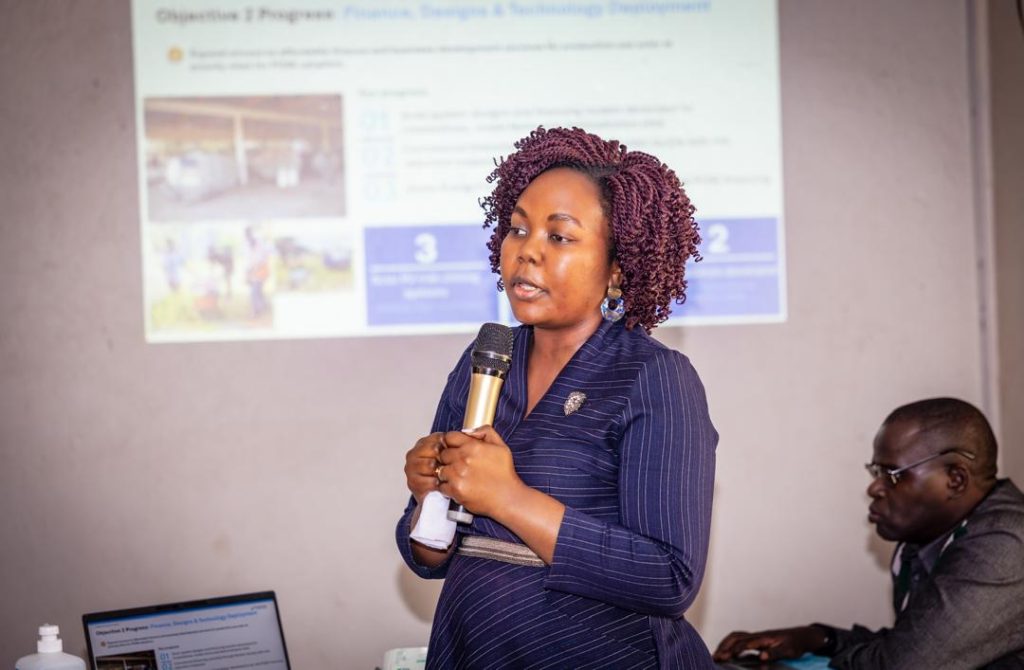
She said 54 cooperative leaders, 45 dairy farmers, 982 youth and women, and 71 students undertaking service learning have been trained in renewable energy, business development and productive use of solar technologies.
The project has also trained 64 Nakaseke District stakeholders on integrating renewable energy into district planning and budgeting, helping shift the district from isolated technology pilots to a coordinated ecosystem that brings together finance, policy, markets and technical expertise.
Nyamwaka said three solar-powered sites, each with a capacity of 22 kilowatt peak (22kWp), have already been commissioned.
The installations now chill about 82,025 litres of milk every month, valued at approximately Shs103.8 million, while eliminating milk losses at the supported facilities.
She added that farmers are expected to realise up to 95 percent savings on energy costs after completing loan repayments for the solar systems.
Beyond improving incomes, the project contributes to environmental conservation through a monthly reduction of about 4.9 tonnes of carbon dioxide equivalent emissions, replacing diesel-powered generators with clean solar energy.
Farmers testify to life-changing impact
Among the beneficiaries is Karuhanga Bendicto, a dairy farmer from Nyakarongo in Kinoni Sub-county, who said the project has completely transformed his farming enterprise.
He explained that Nakaseke experiences prolonged dry seasons that often leave farmers struggling with water shortages.
Through the DREEM Hub project, he acquired a solar-powered water pumping system that now pumps water from his valley dam to grazing fields and livestock watering points.
The system also supports irrigation of pasture, ensuring his cows have adequate feed throughout the year.
“My cows used to produce about three litres of milk each, but today many produce between seven and ten litres because they have enough water and pasture,” Bendicto said.
He added that his daily milk production has increased from about 50 litres to between 150 and 200 litres, significantly boosting household income.
Besides irrigation, Bendicto uses solar-powered refrigeration to preserve evening milk before transporting it to the Nyakarongo milk collection centre the following morning.
He also uses solar energy to process fodder and preserve farm produce.
Although the solar system was not free, he contributed Shs15 million under the project’s financing arrangement and is completing the balance through instalments.
The improved productivity has enabled him to employ 10 young people on his farm, with plans to recruit more as he expands fodder production and irrigation.
He encouraged farmers across Uganda, especially those in drought-prone areas, to embrace solar technology, describing it as a practical solution to climate challenges.
Cooperative records zero milk losses
The Chairperson of Migani Dairy Cooperative, Steven Sande, said the cooperative had previously relied on a diesel generator to power its milk cooling facility, resulting in frequent breakdowns and significant milk losses.
He said before the solar installation, the cooperative lost nearly 18,000 litres of milk due to unreliable power.
Since the installation of the solar-powered cooling system under the DREEM Hub project, the cooperative has not recorded any milk losses.
Sande revealed that the solar installation cost Shs270 million, with Heifer International Uganda contributing Shs90 million, while the cooperative is financing the balance through affordable repayments.
“So far we have repaid Shs45 million, and despite the outstanding balance, the investment is already paying for itself because milk losses have been completely eliminated,” he said.
District leaders call for government support
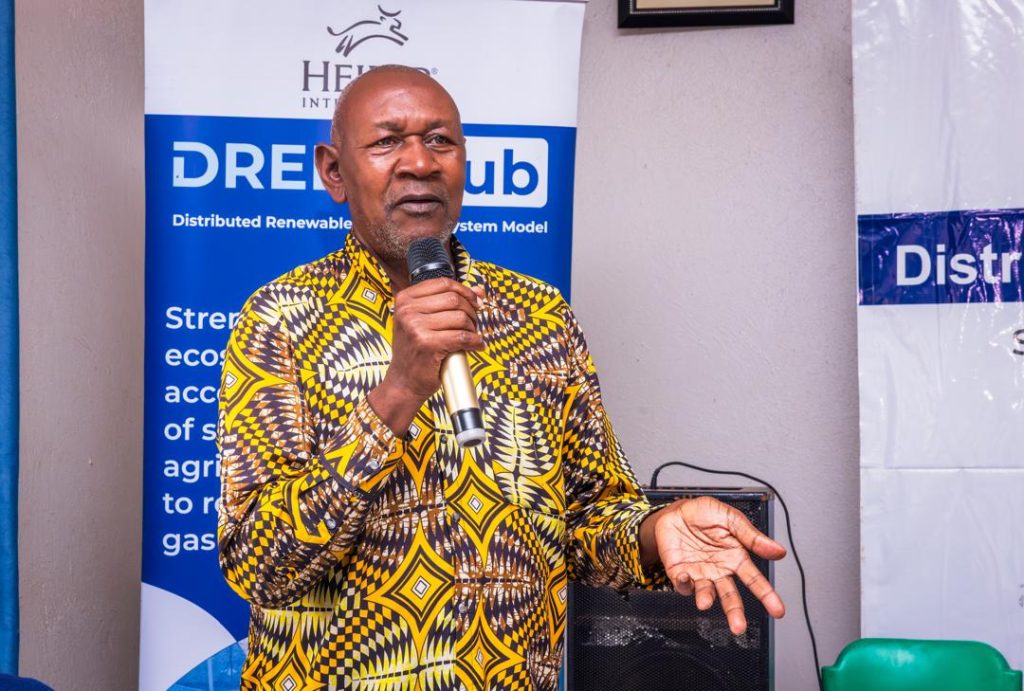
Closing the meeting, Nakaseke District Chairperson Ignatius Koomu applauded Heifer International Uganda and its partners for expanding access to solar technology among dairy farmers and rural households.
He appealed to government to subsidise solar equipment so that more farmers can afford the technology and increase agricultural production.
He said wider access to solar energy would not only improve dairy farming but also enable rural households to replace traditional energy sources with cleaner and more reliable alternatives.
Koomu also urged stakeholders to intensify public sensitisation on the benefits of adopting modern technologies in agriculture.
He said the success of the DREEM Hub project demonstrates how renewable energy can improve productivity, create jobs, strengthen farmer cooperatives and build climate resilience, making it a model worth replicating across Uganda.