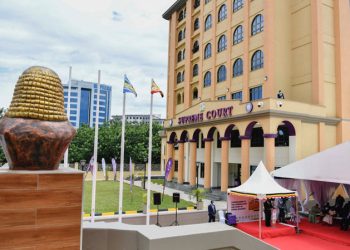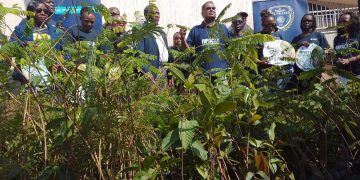



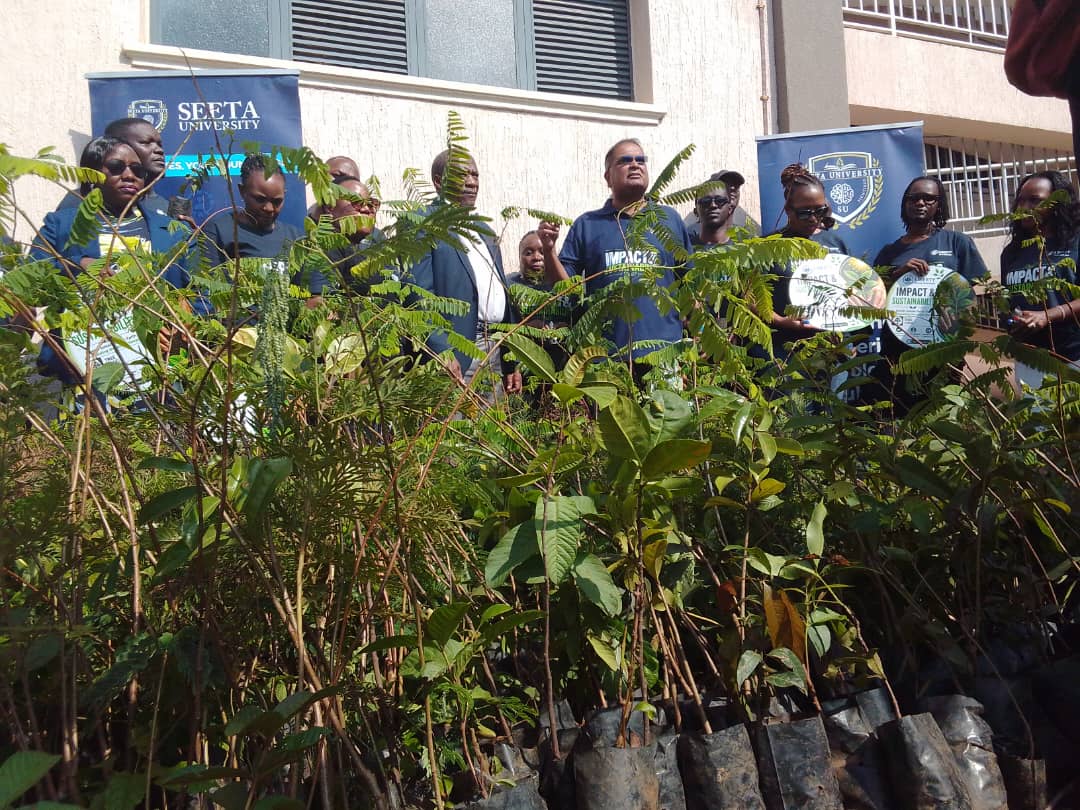
MUKONO – Liberty Life Assurance Uganda has launched a major environmental sustainability campaign by donating 5,000 tree seedlings toScience, Environment, Engineering, Technology and Agriculture (SEETA) University, marking the beginning of a long-term partnership with Climate Hub International aimed at promoting afforestation, climate education and carbon reduction.
The initiative, unveiled at Seeta University, is the first phase of a broader programme that will see Liberty partner with institutions of higher learning across Uganda to plant trees and strengthen environmental conservation.
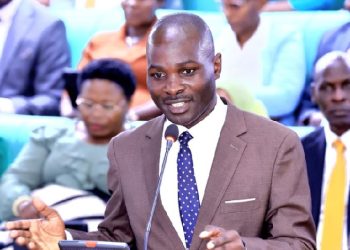
Speaking during the launch, Liberty Life Assurance Uganda Managing Director Joseph Almeida said the partnership reflects the company’s commitment to environmental, social and governance (ESG) principles, with environmental protection taking priority.
“Today marks the beginning of our partnership with Climate Hub International. We chose Seeta University because it represents Science, Environment, Engineering, Technology and Agriculture, making it the ideal institution to launch this project and maximize our impact,” Almeida said.
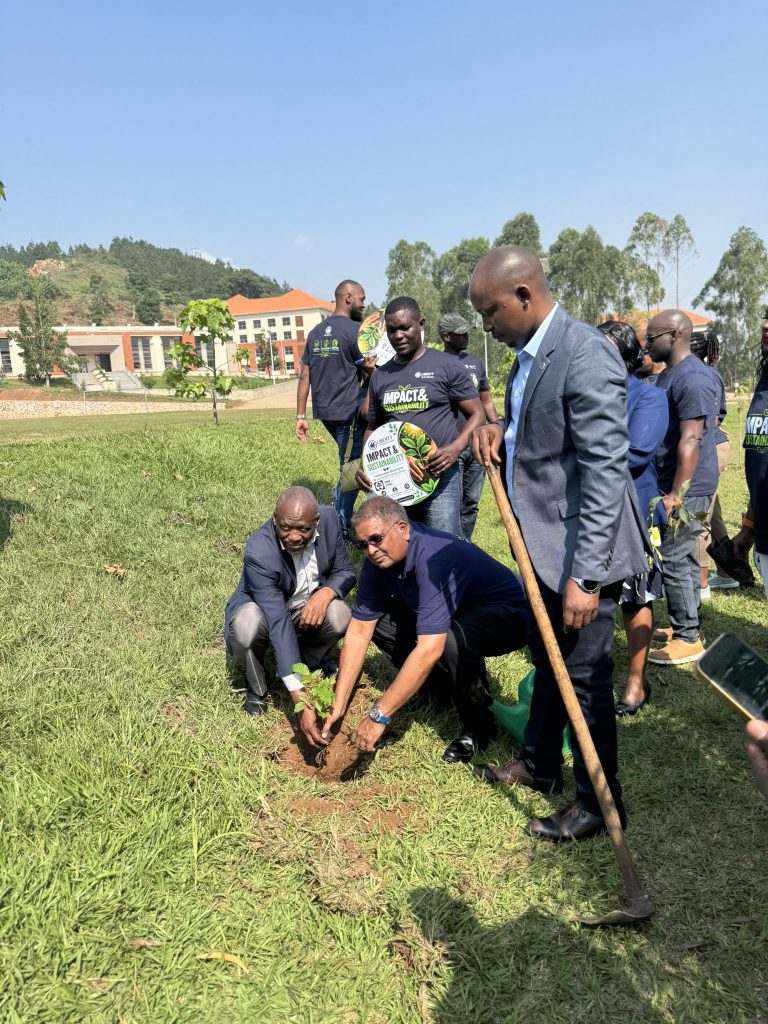
He revealed that Liberty plans to expand the initiative to other universities throughout the year as part of efforts to create a cleaner environment through afforestation.
Almeida said the company has adopted a scientific approach to ensure accountability by mapping every tree planted using geographical coordinates, unique identification codes and species records.
“This is not just about planting trees. We want measurable results. We are recording the exact location and type of every tree so we can monitor its growth and understand its contribution to carbon absorption,” he said.
The 5,000 seedlings include indigenous and fruit-bearing species such as grevillea, soursop, macadamia, mango and jackfruit, selected for their ability to absorb carbon emissions while also providing economic and nutritional benefits.
Seeta University Acting Vice Chancellor Dr. Maurice Tamale welcomed the initiative, describing it as a timely intervention that aligns with the university’s strong agricultural and environmental focus.
He said the institution’s leadership immediately embraced the partnership and pledged to ensure the success of the project.
“We have received 5,000 trees, which will be planted across our more than 100-acre campus. We shall establish a dedicated team to supervise the project and ensure the trees grow successfully, with support from Liberty and Climate Hub International,” Dr. Tamale said. He added that the partners are also committed to replacing any seedlings that fail to survive, giving the university confidence that the initiative will deliver lasting environmental benefits.
Climate Hub International Uganda Country Lead Dr. Clinton Mawanda described the programme as the start of a three-year partnership focused on climate action, environmental education and sustainability.
He said the collaboration seeks to integrate climate action frameworks into higher education while helping businesses move beyond symbolic environmental campaigns.
“This is not a one-off event. It is a three-year initiative aimed at advocating, training and teaching communities how to respond to climate change and mitigate global warming,” Dr. Mawanda said.
He emphasized that the project’s success will be measured by tree survival rather than the number of seedlings planted.
“We always say this is about growing trees, not simply planting them. Climate Hub International will return every one to three months to monitor the seedlings, collect growth data and ensure accountability. Any trees that fail will be replaced,” he said.
According to Dr. Mawanda, the monitoring system uses tracking placards displaying the geographical location, polygon coordinates, unique seedling identification codes and tree species, allowing the partners to verify environmental impact and prevent greenwashing.
He added that the initiative will help Liberty Life offset part of its corporate carbon emissions while positioning the insurer to generate verifiable carbon credits over the next three years through measurable carbon sequestration.
The partners said the project demonstrates how collaboration between the private sector, environmental organisations and academic institutions can contribute to Uganda’s climate resilience while promoting sustainable development and environmental stewardship.