


When Gen. Edward Katumba Wamala took over as Uganda’s Inspector General of Police in 2001, Asan Kasingye was not expecting that his new boss would become one of the most influential mentors in his career.
But their relationship began on a day Kasingye remembers vividly.
It was a Friday, and Kasingye was at Makerere University graduating with a Master of Arts degree in Public Administration and Management.
When his name was called, the congregation erupted.
Kasingye noticed the outgoing Inspector General of Police, John Kisembo, saying something to Katumba Wamala.
A few days later, on his first Monday in office, Katumba summoned Kasingye.
At the time, Kasingye was a Superintendent of Police. Following the interdiction of his superior, who had been affected by the Sebutinde Commission, Katumba appointed him acting head of the Community Affairs Department.
The new IGP did something Kasingye had not expected.
Rather than remain behind his desk, Katumba walked over and sat on the visitors’ sofa where the young officer was seated.
“He told me that he watched me from far and heard all my radio programmes on CBS Radio with Mulindwa Muwonge,” Kasingye recalls.
Katumba told him he had great hope in him as a young officer and gave him a clear assignment: deepen and strengthen community policing as a way of preventing crime.
Kasingye says he took the responsibility seriously.
The two soon became familiar faces together at public meetings and on radio and television programmes, discussing policing and public safety.
Whenever something needed to be done quickly at Police headquarters, Kasingye says, he often became Katumba’s first point of call.
He also wrote many of the IGP’s speeches.
At one point, Katumba even asked Nkumba University to invite Kasingye to speak to its Political Science students — another indication, Kasingye says, of the intellectual trust his boss placed in him.
But the relationship went beyond official duties.
One day, Katumba summoned Kasingye to his office. Inside, he found Bishop Kawuma of Namirembe Diocese, who was seeking to have a police officer trained as a Reverend at Bishop Tucker Theological College in Mukono.
It was during that meeting that Katumba said words Kasingye says he has never forgotten.
“He said the most beautiful words about me that no IGP has ever said.”
From that day, Katumba began calling him “son.”
The mentorship became even more personal.
In another meeting that same week, Kasingye found his confidential and open files spread across Katumba’s desk.
The IGP asked him questions not only about his work, but also about his family, business, health and life outside the Police.
Then came advice that Kasingye says has stayed with him throughout his public-service career.
Katumba told him that if he wanted to become a good officer and serve his country well, he needed to understand that his family, his health and what he did outside the office were among the most important things in his life.
The promotions followed.
In 2002, Kasingye became Senior Superintendent of Police. In 2004, he was promoted to Assistant Commissioner of Police, and in 2005, to Commissioner of Police.
He put on the rank of Commissioner on the very day Katumba handed over the office of IGP to Maj. Gen. Kale Kayihura.
Kasingye is keen to correct what he describes as a common misconception about his career.
Contrary to claims that he earned his promotions under Katumba’s successor, he says three of his promotions came during Katumba’s four-year tenure as IGP.
Kayihura later recommended him for the rank of Assistant Inspector General of Police in 2009 — the rank at which Kasingye eventually retired from the Police.
Katumba also entrusted him with other responsibilities, including the management of Police FC and the chairmanship of the Police Council Appeals Court.
Kasingye held those positions until his own retirement in 2022.
For him, those appointments were another sign that Katumba understood his strengths.
Their professional relationship continued even after Katumba left the Police.
When Katumba later served as Chief of Defence Forces, he continued to check on Kasingye, particularly when Kasingye was serving as Director of INTERPOL and later as Commander of the Police Counter Terrorism Centre.
And when Kasingye was preparing to publish his book, Chosen, Katumba offered to write the foreword.
Kasingye says he still treasures every word his former commander wrote.
More than two decades after that first meeting at Police headquarters, Kasingye’s gratitude remains unmistakable.
“I will always remain indebted to your counsel, command, mentorship and advice,” he writes.
“I looked up to you in whatever you did till today. You trusted me, I didn’t let you down even in a single instance.”
For Kasingye, Katumba’s influence cannot be measured simply by the ranks he attained or the offices he held.
“The legacy you left in my life is cemented with the strongest concrete in the world,” he says.
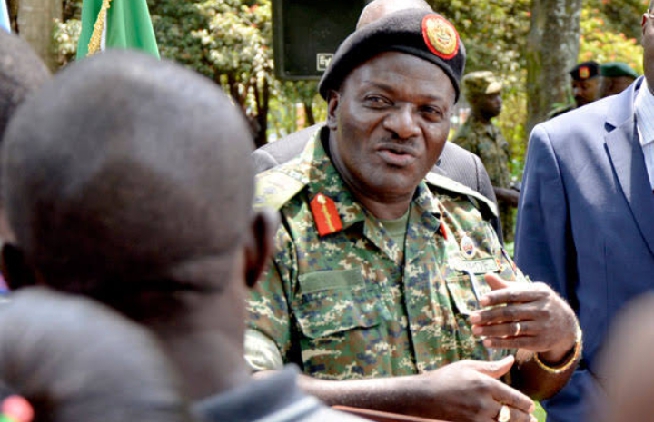
As Gen. Katumba Wamala prepares to retire from the Uganda Army, Kasingye describes the former commander not simply as a senior officer, but as a visionary leader, Pan-Africanist, patriot, commander, mentor and father.
And there is a final, deeply personal message.
Kasingye says he has little to give his former commander as he enters retirement, except words.
“I don’t have what to give you. Only this tribute.”
He wishes Katumba a peaceful and fulfilling retirement from the army, and success in his continued service to Uganda as Minister.
For Kasingye and his family, however, the debt is not one that can be settled with a gift.
It is a debt of mentorship, trust and a relationship that began when a young police superintendent walked into the office of a newly appointed IGP, and walked out with a commander who would eventually call him son.
“May God continue to bless you and your family, my commander,” he concluded his tribute which he published on his X handle on August 9, 2026.
Many social media users thanked him for having appreciated his boss while still, a gesture they say should be borrowed by other people.
“In Uganda, there is a tendency of people praising you when you are dead, I think we need to borrow a leaf from afande Kasingye. Appreciate people when they are still here not when they are no more,” @akundaboona wrote.