What began as a political quarrel between members of Uganda’s ruling establishment has evolved into a wider dispute over public money, land, institutional authority and the boundaries of political influence.
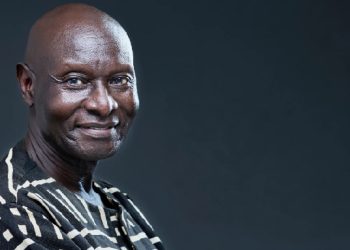
At the centre of the confrontation is Odrek Rwabwogo, President Yoweri Museveni’s son-in-law and chairman of the Presidential Advisory Committee on Exports and Industrial Development (PACEID), and officials aligned with the Patriotic League of Uganda (PLU), the political organisation chaired by the President’s son, and the Chief of Defense Forces (CDF) Gen Muhoozi Kainerugaba.
The latest battle centres on an alleged US$14 million payment and questions over PACEID’s activities and legal status.
PLU figures, led publicly by Kasambya MP Daudi Kabanda, have raised allegations surrounding the payment and questioned the legitimacy of PACEID.
But several of the claims circulating in the political dispute remain allegations rather than established findings.
One strand of the controversy reaches back more than a decade.
Ugandan companies supplied goods to South Sudan between 2008 and 2010, generating a compensation dispute involving claims of about US$41 million owed to 10 companies under the Uganda South Sudan Grain Traders and Suppliers Association. Parliament subsequently investigated the matter.
But that historical dispute does not, by itself, establish PLU’s current allegation concerning a US$14 million payment or claims involving the supply of a helicopter. Those issues require separate documentary and official verification.
Kabanda has also revived allegations concerning land in Nshaara, Kiruhura District.
He alleges that Rwabwogo initially introduced a Chinese company to President Museveni for a proposed beef-processing project. According to Kabanda, after the project failed to materialise, interests in the land changed hands and titles were subsequently altered.
Kabanda further alleges that Rwabwogo is now using the property for grazing.
Those claims have not been established through a court judgment or an official finding. Establishing what happened would require examination of land records, transaction documents and responses from Rwabwogo and other parties involved.
The competing narratives illustrate the difficulty of separating political accusation from independently established fact as the dispute intensifies.
The political confrontation has also coincided with reports concerning Matthew Bagonza, head of the PACEID secretariat and an associate of Rwabwogo.
Reports indicate that security personnel picked Bagonza up from his home. However, the circumstances surrounding his reported detention, including the precise grounds and any charges, had not been fully established in public statements.
Rwabwogo has called for due process, arguing that allegations should be taken before a competent court and determined through a fair and impartial process.
The episode has added to concerns among Rwabwogo’s supporters that political accusations could increasingly become intertwined with law-enforcement action.
Rwabwogo has rejected the allegations against PACEID and mounted a detailed defence of the organisation.
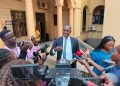
Speaking to journalists on Wednesday, he said PACEID was established on 16 March 2022 to help open export markets for Ugandan products before being placed under the Office of the President on 25 May that year.
He argued that because President Museveni created the organisation, only the President could terminate its mandate. Rwabwogo said he had been told that no such termination order had been issued.
He also defended PACEID’s performance, saying it had worked on food safety, export compliance, transport and infrastructure arrangements and access to affordable financing for businesses with confirmed export orders.
According to Rwabwogo, the committee exceeded its original target of generating US$6 billion in exports.
He attributed part of the increase in Uganda’s exports, which he said had risen from roughly US$4.5 billion after the COVID-19 pandemic to approximately US$13 billion, to PACEID’s work.
PACEID’s own public communications describe its mandate in similar terms, including export-market access, standards, infrastructure and export financing.
Rwabwogo said the organisation was entering a second phase involving aggregation, cooling and drying centres across 18 zones, aimed at addressing supply constraints faced by exporters.
The confrontation is therefore about more than two political camps trading accusations.
It raises fundamental questions about the legal status of PACEID, the mechanisms through which public resources associated with its activities are authorised and accounted for, and the documentary basis of the alleged US$14 million transaction.
For PLU, the issue is one of accountability and scrutiny.
But for Rwabwogo, the campaign risks becoming an attempt to discredit an institution he says was created by the President and has delivered measurable economic results.
The unresolved allegations over the South Sudan claims, the Nshaara land, the reported detention of Bagonza and the disputed payment now sit within a much larger political contest.
The increasingly public clash between Rwabwogo and PLU exposes tensions within those networks at a particularly sensitive moment.
The facts will ultimately depend on records, investigations and, where necessary, courts.