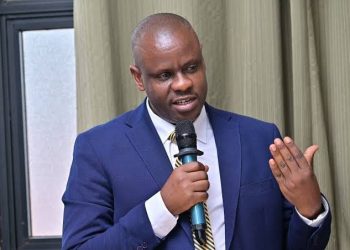
KAMPALA Uganda (UGNEWSLINE) – The Uganda Institute of Banking and Financial Services (UIBFS), the Food and Agriculture Organization of the United Nations (FAO) and the European Union (EU) have partnered to strengthen access to financing for Uganda’s sustainable forestry and wood industry.
The partnership seeks to equip financial institutions with the knowledge and skills needed to finance forestry businesses, support smallholder tree farmers and unlock investment opportunities across the wood value chain.
The initiative was discussed during a stakeholder workshop convened by UIBFS and FAO in Kampala to validate a Market and Institutional Assessment report and a specialised Sustainable Forestry and Wood Value Chain Financing Curriculum.
The assessment examined the readiness and capacity of financial institutions to finance the forestry sector, identifying existing opportunities, institutional challenges, sector-specific risks and financing gaps.
Based on the findings, UIBFS developed a specialised training curriculum commissioned by FAO and funded by the European Union to help banks and other financial service providers understand, assess and finance sustainable forestry and wood-based enterprises.
The curriculum will equip financial sector professionals with practical skills to identify investment opportunities, assess risks, develop suitable financing products and support sustainable businesses across the value chain.
Speaking at the workshop, UIBFS Chief Executive Officer, Goretti Masadde, said Uganda’s forestry and wood sector presents significant opportunities for investment, job creation, enterprise development and economic transformation.
She said appropriate financing was needed to help smallholder tree farmers move from subsistence production to commercially viable businesses.
“Uganda’s forestry and wood sector represents more than an environmental opportunity. It is a powerful driver of sustainable investment, enterprise growth, job creation and economic transformation,” Masadde said.
She noted that financing should go beyond tree planting and timber production to cover the entire value chain, including smallholder farmers, small and medium-sized enterprises (SMEs), wood processing and market development.
“The opportunity before us is much bigger than financing trees or timber. It is about financing an entire value chain and unlocking economic value,” she said.
Masadde added that specialised financial knowledge and innovative financing solutions would help modernise wood-processing enterprises, expand market opportunities and improve Uganda’s competitiveness in export markets.
She emphasised that the training curriculum should translate into practical skills and financial solutions that support sustainable livelihoods, import substitution and Uganda’s ambition of achieving a USD 500 billion economy by 2040.
Leonidas Hitimana, FAO Uganda’s Sector Head of Forestry, Climate and Environment, called for a shift from traditional funding approaches towards sustainable, long-term financing for the forestry sector.
He commended UIBFS for developing the specialised curriculum, noting that its success would depend on continuous training, practical application and sustained engagement with financial institutions.
Hitimana also recognised the support of the European Union, Denmark and the Government of Uganda in promoting sustainable forestry development and strengthening the country’s wood value chain.
Johan Tejpar, a Programme Officer at the European Union Delegation to Uganda responsible for forestry and the focal point for the FAO value chains programme, said limited access to finance remains one of the major challenges holding back the growth of Uganda’s forestry and wood industry.
He called for innovative financing solutions that respond to the unique needs of forestry businesses, particularly because investments in the sector often take several years to generate returns.
Tejpar said financial institutions need to adopt financing models that accommodate the long investment cycles associated with sustainable forestry enterprises.
He also highlighted the EU forestry programme, co-financed with Denmark, which supports reforestation, forest governance, conservation and the development of wood and non-wood forest value chains.
Following the validation workshop, UIBFS will pilot the curriculum before rolling it out to professionals in financial institutions.
The training is expected to strengthen the ability of banks and other financial service providers to develop appropriate financial products and increase lending to sustainable forestry and wood-based enterprises.