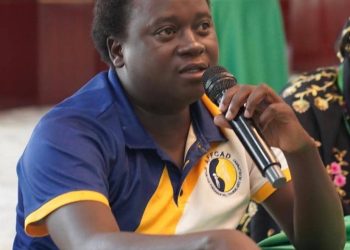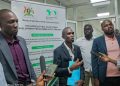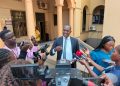



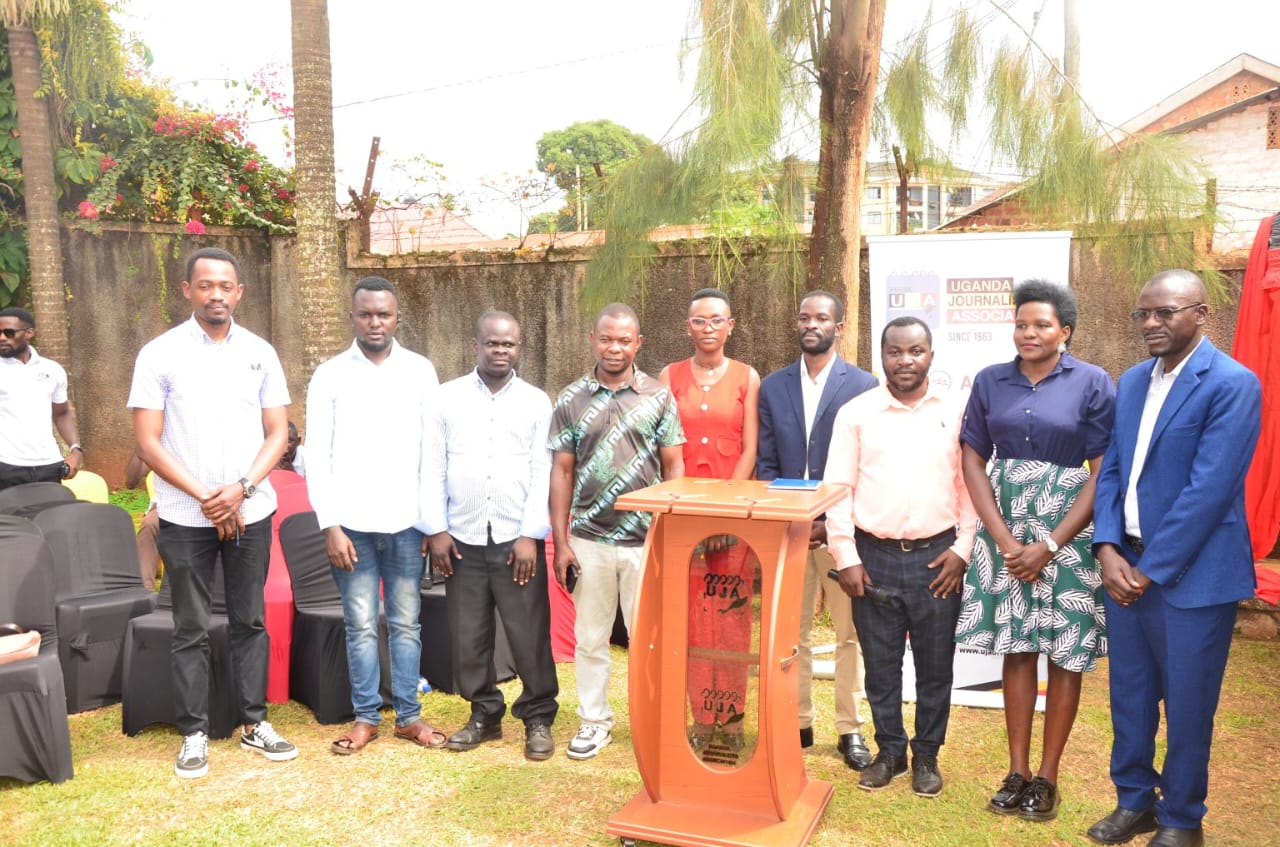
KAMPALA Uganda (UGNEWSLINE) – New Vision journalist Emmanuel Kirunda has been elected president of the Uganda Journalists Association (UJA), succeeding Mathias Rukundo in leadership elections held on Saturday, November 7, 2026.
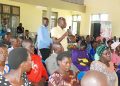
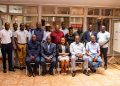
Kirunda, who previously served as the association’s Secretary General, was elected during the UJA Annual General Assembly held at its offices in Keti Falawo, Kawempe.
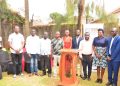
The elections were presided over by renowned advocate Gilbert Mbonye, who served as the returning officer.
Kirunda’s election followed the withdrawal of his main challenger, Jay Rizik Kalungi Agonzibwa of Vision Group, from the presidential race after the two candidates were asked to hold discussions on the way forward.
Following the agreement, Kalungi was declared Vice President, filling a position that had remained unoccupied in the election process.
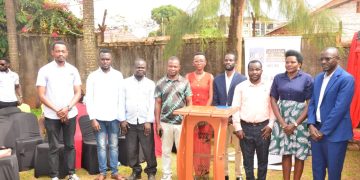
Other members elected to the new UJA leadership include Kabuye Ronald as Secretary General, Kigongo Issa as Treasurer, Damba Tadeo as Organising Secretary and Rachael Namuli Nakabugo as Secretary for Production.
Mukisa Daniel was elected Secretary for External Relations, while Mubiru Hakim took the position of Secretary for Health and Social Welfare.
The regional representatives are Ismail Bategeka for Western Uganda, Ivan Keziron Wakibi for Eastern Uganda and Joseph Omagor for Northern Uganda.
Before the presidential contest was concluded, both Kirunda and Kalungi presented their manifestos, outlining their priorities and proposed strategies for strengthening the association, defending press freedom and improving journalists’ welfare.
Kalungi placed particular emphasis on journalists’ economic welfare, financial security, unity and inclusion.
She proposed establishing a Savings and Credit Cooperative Organisation (SACCO) to enable journalists to access affordable loans at lower interest rates.
She argued that journalists needed an organised financial support system similar to those available to professionals in other sectors, saying it would help them address their financial challenges.
Kalungi also pledged to establish a support mechanism for journalists facing medical emergencies, particularly those unable to raise money for treatment and surgical procedures.
On professional development, she promised to advocate for scholarships and educational opportunities for female journalists while promoting mentorship programmes for young and upcoming media practitioners.
She also expressed concern about divisions within UJA, arguing that the association should operate as a family rather than a political organisation.
Kirunda, on the other hand, based his campaign on institutional reorganisation, press freedom, journalists’ safety, economic rights, unity and professional development.
Introducing himself as a journalist and outgoing Secretary General, Kirunda said he was seeking the presidency to redefine journalism and give the association renewed direction.
He outlined seven key priorities that would guide his leadership, beginning with reorganising UJA and revitalising its existing programmes and initiatives.
He argued that the association needed stronger structures and more effective leadership to fulfil its mandate and respond to the challenges facing journalists.
On press freedom and journalists’ safety, Kirunda highlighted his previous involvement in legal efforts to challenge attacks against media practitioners.
He cited the 2022 court petition filed following the assault of journalists at the United Nations offices in Kololo, saying he was among those who challenged the Attorney General and eight individual military officers over the incident.
He described the resulting court decision, which he said declared the beating of journalists while performing their professional duties unconstitutional, as a significant achievement in the fight for press freedom.
Kirunda also highlighted his involvement in securing the release of journalist Remmy Asiteza, who had spent more than two months in detention before his intervention helped secure his freedom.
He pledged to continue defending journalists facing arrest, detention, intimidation and other forms of harassment while carrying out their professional duties.
The president-elect further argued that press freedom should extend beyond the right to publish stories to include journalists’ economic rights, particularly fair remuneration and better working conditions.
His other priorities included empowering journalists to occupy online spaces and challenge imposters, promoting unity through initiatives such as the World Press Freedom Day Media Football Sports Gala, expanding partnerships and strengthening professional development.
He also pledged to extend the sports gala to other regions to bring journalists together and promote solidarity across different media houses.
Additionally, Kirunda promised to attract more development partners to support UJA programmes and strengthen the association’s institutional capacity.
The presidential contest took an unexpected turn after the candidates presented their manifestos.
Following the presentations, returning officer Mbonye asked Kirunda and Kalungi to hold a brief meeting of about five minutes to discuss the way forward.
The two candidates subsequently retreated into the offices alongside their respective campaign agents before returning to the assembly.
Upon their return, Mbonye announced that Kalungi had agreed to withdraw from the presidential race, paving the way for Kirunda to assume leadership of the association.
Kalungi was subsequently declared Vice President, bringing the presidential contest to an end and completing the election of the new UJA leadership.