


LONDON — Absa Bank Uganda has called for greater focus on turning Uganda’s growing pipeline of investment opportunities into financed projects and productive businesses as the country seeks to accelerate investment in energy, infrastructure, minerals, manufacturing and technology.
The bank says attracting investor interest is only part of the challenge, noting that converting such interest into actual investment requires projects and businesses with sound governance, reliable cash flows, viable commercial structures and clear risk allocation capable of securing financing and moving to execution.
“Uganda has significant investment opportunities. The more important question now is how we convert that potential and investor interest into bankable projects and productive investment,” said David Wandera, Managing Director and Chief Executive Officer of Absa Bank Uganda.
“The real test is whether we can build projects and businesses that can attract capital, withstand financial and commercial scrutiny and ultimately move into execution.”
Recent transactions, according to Absa, demonstrate how investment can be translated into productive projects.
In 2026, Absa provided a US$50 million five-year facility to Uganda Electricity Distribution Company Limited (UEDCL), marking the utility’s first debt financing. The facility is intended to support investment in Uganda’s electricity distribution network and is expected to enable more than 200,000 additional electricity connections.
Absa also partnered with the Uganda Energy Credit Capitalisation Company (UECCC) on a Shs11.085 billion concessional credit facility, providing capital for onward lending to eligible energy companies.
The bank said the arrangement demonstrates how commercial and development finance can work together to address financing constraints and channel capital towards productive investment.
The transactions build on Absa’s financing and advisory activities across telecommunications, sustainable real estate, green mobility, waste management and capital markets.
The bank has also participated in a US$100 million syndicated facility for MTN Uganda and served as Lead Transaction Advisor on Airtel Uganda’s initial public offering (IPO).
“The opportunity is to connect more capital with the right opportunities and create the conditions for that investment to succeed,” Wandera said.
“Different projects require different types of capital. The role of banks is increasingly to understand what an opportunity needs, structure it appropriately and connect international capital with the local knowledge and execution capability required to make it work.”
Uganda’s strengthening financial markets provide a foundation for increased investment, with the country rising from tenth place when the Absa Africa Financial Markets Index was launched to third in the 2025 edition.
The improvement reflects progress in Uganda’s financial ecosystem and its capacity to support investment and economic growth.
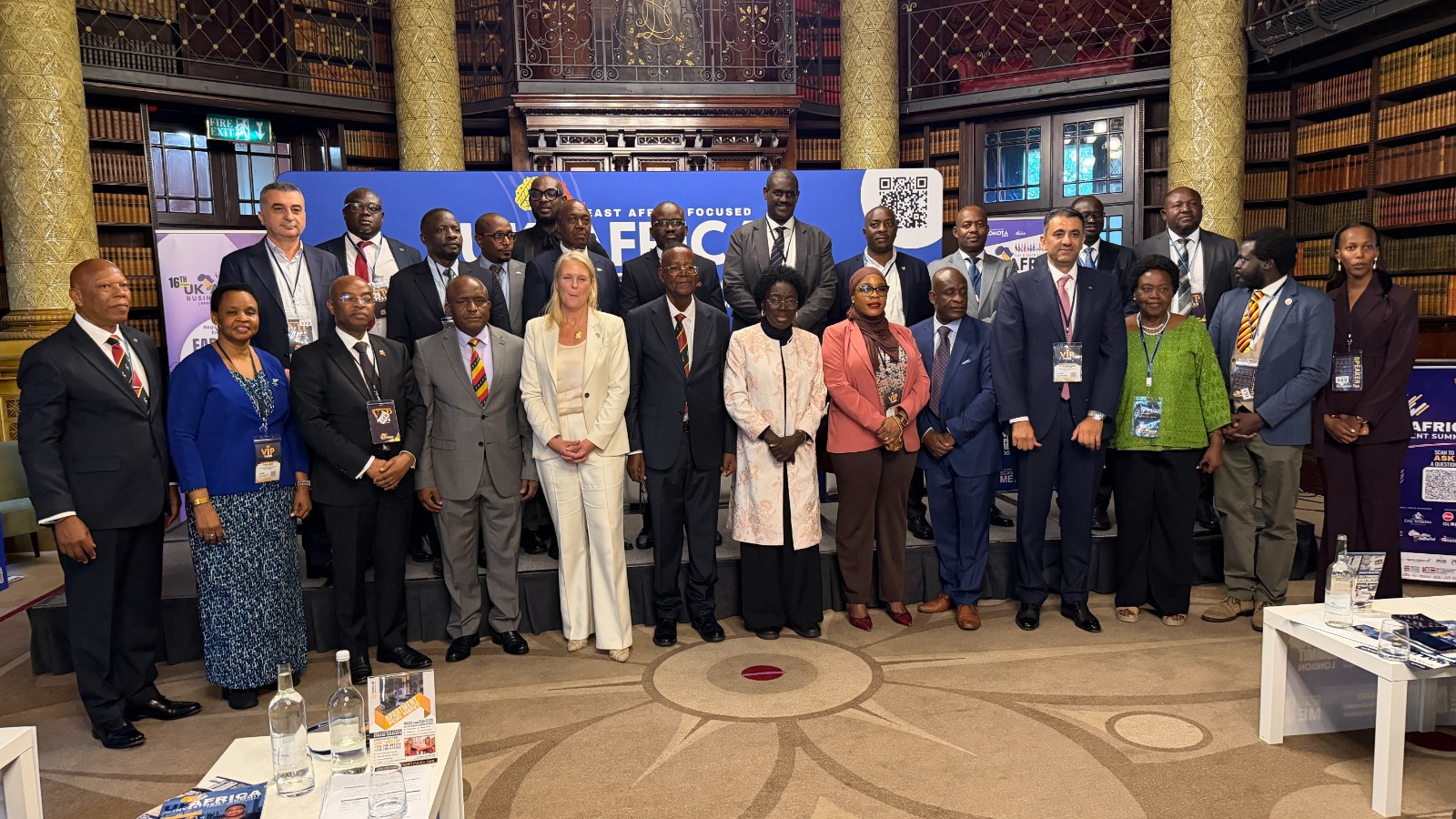
Wandera is making the case for greater investment execution at the UK-Africa Investment Summit in London, where discussions are focused on moving African economies from access to production.
He is participating in discussions on institutional finance and financial infrastructure, as well as a closed working session focusing on critical minerals and industrial value addition.
“Uganda’s next investment story should be measured not simply by the interest it attracts, but by the productive capacity that interest helps create,” Wandera said.