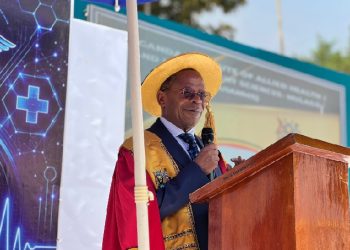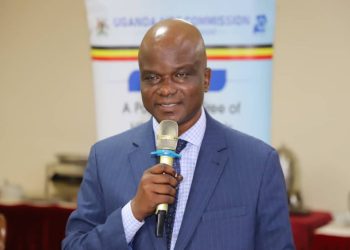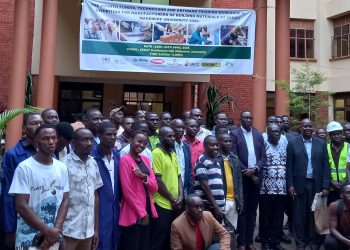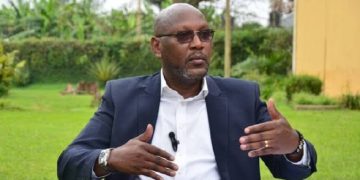


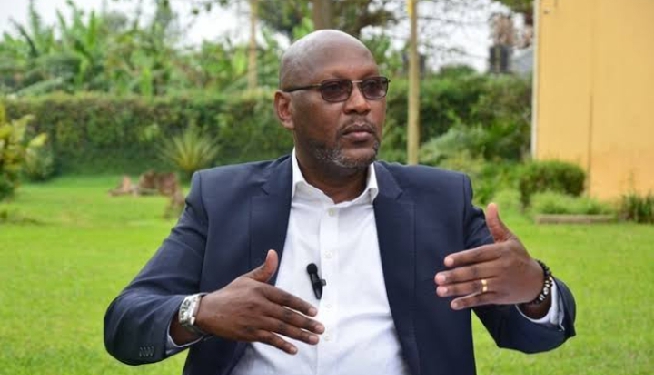
FORT PORTAL, Uganda, (UGNEWSLINE) — Tooro Kingdom has been plunged into fresh leadership uncertainty after its Prime Minister, Calvin Armstrong Rwomire Akiiki, resigned, warning that growing divisions within the cultural institution are threatening its unity and diverting attention from its responsibility to serve the people.
Rwomire, who also holds the traditional title of Omuhikirwa, announced on Saturday, November 21, that he had formally submitted his resignation to the reigning monarch, Omukama Edward Rukiidi Nyabongo I, following what he described as a difficult and deeply personal decision.
In a statement, the outgoing premier said his departure was primarily intended to create room for reconciliation and allow the kingdom to move forward, amid increasing disagreements within its leadership.
“Tooro has become increasingly polarised, and I am deeply concerned that the divisions within our Kingdom are diverting attention from our shared responsibility to serve the people,” Rwomire said.
He added that the interests of the kingdom should take precedence over individual ambitions and positions, including his own.
“I firmly believe that unity, reconciliation and the greater interests of the Kingdom must take precedence over personal interests, ambitions or positions, including my own,” he said.
Rwomire disclosed that he had separately written to the Omukama, outlining the circumstances and considerations behind his decision, suggesting that there were additional issues informing his departure beyond those contained in his public announcement.
His resignation comes at a sensitive time for the western Ugandan cultural institution, which has been navigating leadership changes, administrative disagreements and questions surrounding the management of its affairs following the death of its former monarch, Omukama Oyo Nyimba Kabamba Iguru Rukidi IV.
Oyo died on August 27, 2026, aged 34, after receiving treatment for cancer in the United States. His death brought to an end a reign that began in 1995, when he ascended to the throne at the age of three, becoming one of the world’s youngest monarchs.
The succession that followed generated considerable uncertainty within the kingdom, including disagreements over the late monarch’s heir and the future leadership of the institution.
Religious leaders in Tooro subsequently called for calm and unity as the kingdom navigated the succession process, with competing positions emerging over whether the late monarch had left an heir.
The transition culminated in the coronation of Edward Rukiidi Nyabongo I as the new Omukama on September 29, 2026.
Less than a week later, on October 5, the new monarch retained Rwomire as acting Prime Minister for an initial six-month transitional period, with the responsibility of overseeing kingdom affairs and supporting continuity in administration.
However, the transition soon exposed disagreements over the administration’s direction and the powers of the Prime Minister’s office.
In October, the Daily Monitor reported that the new monarch had directed Rwomire to submit an accountability report detailing activities and projects undertaken during the previous administration. The kingdom’s Supreme Council, the Orukurato, was tasked with reviewing the report before submitting its findings to the monarch.
During the council meeting, the King reportedly clarified that Rwomire’s appointment was intended to facilitate the transition rather than establish an entirely new administration. He also called on kingdom leaders to reduce disagreements and work together to strengthen unity.
The developments highlighted the challenges facing the new administration as it sought to reconcile existing leadership structures with the priorities of the incoming monarch.
In a report published on November 21, Nile Post also highlighted allegations of deteriorating trust, consultation and institutional discipline within the kingdom’s leadership. The publication cited a separate communication by Rwomire to the King in which he reportedly raised concerns about the working environment surrounding his office.
UG Standard had earlier reported on allegations by the Prime Minister that some individuals were undermining his office and interfering with the execution of his responsibilities. These claims have not been independently established.
Rwomire’s public resignation statement, however, places reconciliation at the centre of his departure, with the former premier insisting that stepping down should not be interpreted as abandoning the kingdom.
“My resignation is not an abandonment of Tooro, but a difficult personal decision made in the hope that unity, reconciliation and institutional stability will prevail,” he said.
He also expressed gratitude to the late Omukama Oyo for entrusting him with the responsibility of leading the kingdom’s executive administration and to the reigning monarch for allowing him to continue serving during the transition.
“Serving Tooro under two Kings has been an extraordinary honour that I will forever cherish,” Rwomire said.
He thanked members of his cabinet, the wider kingdom administration and his family for their support throughout his tenure, saying he was leaving office proud of the work accomplished and hopeful about the institution’s future.
The resignation also raises questions about the future of the kingdom’s executive leadership, particularly as the new monarch continues efforts to establish an administration capable of overseeing cultural affairs, development programmes and the interests of the Batooro.
Tooro is among Uganda’s traditional kingdoms restored under the 1993 constitutional arrangements. Although traditional rulers do not exercise governmental political authority, the institution remains an important custodian of the cultural identity, heritage and traditions of the Batooro people.
The kingdom, headquartered at Karuziika Palace in Fort Portal, has historically played a significant role in community mobilisation, cultural preservation, education and development initiatives across the Tooro region.
Rwomire’s departure therefore marks another significant development in a transition that has tested the kingdom’s leadership structures following the death of King Oyo.
It remains unclear who will immediately take over the responsibilities of the Prime Minister’s office or whether the monarch will appoint an interim replacement as the kingdom moves to address the divisions identified by the outgoing premier.
For Rwomire, however, the message accompanying his departure was clear: the future of the kingdom must be placed above individual positions and disagreements.
“Positions are temporary, but our Kingdom and our collective responsibility to its future must endure,” he said.
“Tooro must come first. Always,” he concluded.