


For generations of Ugandans, the sound of a saxophone at a Kampala music venue was almost inseparable from the name Moses Matovu.
The veteran musician spent close to six decades on stage, helping build Afrigo Band from a group of young musicians into one of Uganda’s longest-running musical institutions.
His career ended on Thursday (September 24, 2026) in a violent and unexplained attack.
Matovu, 77, died at Kibuli Hospital after he was allegedly attacked by unidentified assailants at Kibuli Market Zone B in Makindye Division, Kampala, according to police.
The death has prompted a murder investigation and sent shockwaves through Uganda’s entertainment industry, where Matovu was regarded as one of the most enduring figures in the country’s live-band tradition.
Kampala Metropolitan Police spokesperson Rachael Kawala said Kabalagala Police Station had registered a case of suspected murder.
“Police at Kabalagala have registered a case of suspected murder involving Matovu Moses, a musician with Afrigo Band.”
Police said the musician was attacked on the morning of 24 September 2026 and was taken to Kibuli Hospital for medical attention, where he later succumbed to his injuries.
“Our task team is currently at the scene conducting investigations to establish the circumstances surrounding the incident,” Kawala said. “Efforts are also underway to identify and apprehend the suspected assailants.”
She added that more information would be released as investigations progressed.
Police have not publicly established the motive, identified the attackers or disclosed whether any suspects had been arrested.
Details surrounding Matovu’s final hours remained limited on Thursday.
Unverified reports indicated that the musician had been attacked as he made his way to a mosque for morning prayers while other reports said Matovu suffered serious injuries before being taken to Kibuli Hospital, where he died.
By press time, investigation was continuing at the scene, with police saying their task team was working to establish exactly what happened.
For a musician whose public life had been spent largely in front of audiences, the circumstances of his death were a stark contrast to the career that made him a household name.
From church choir to Uganda’s biggest band
Matovu was born in Kawempe, Kampala, on 19 June 1949 to Abdallah Bukenya and Solome Nakitto.
His musical journey began unusually early. He sang in the Namirembe Cathedral choir as a child before pursuing his education at Namirembe Primary School, Kibuli and later Pillai’s Secondary School.
His formal education was disrupted during the political upheaval of the 1960s. Matovu had been studying on a Buganda Kingdom scholarship, but the abolition of traditional institutions in 1966 affected his education.
Music soon became his profession.
He joined the Thunderbirds Band in 1967 as a vocalist, moved to the Police Band in 1968 and later joined Cranes Band. His years with those groups helped establish him as a vocalist and instrumentalist and introduced him more deeply to brass-band music.
Before committing himself fully to music, Matovu had also pursued football. He played for several Ugandan clubs, including Express, Police and Fiat, before eventually choosing music as his career.
The birth of Afrigo
The next chapter changed Ugandan music.
In the mid-1970s, Matovu and fellow musicians established Afrigo Band. Sources generally place the band’s formation in 1975, although accounts of its earliest beginnings sometimes date the group’s formation process to 1974.
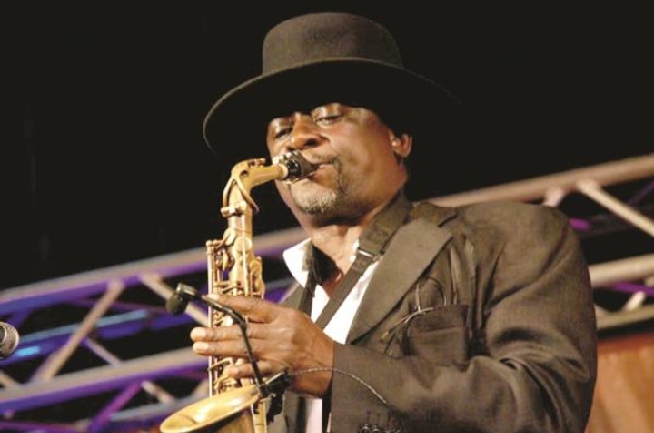
Matovu became its defining figure, singer, saxophonist, composer and bandleader.
Afrigo developed a sound that blended Ugandan rhythms with Congolese rumba, jazz, funk and prominent live instrumentation. Much of its music was performed in Luganda and dealt with subjects familiar to ordinary Ugandans, including love, marriage, poverty and everyday life. Unlike many contemporary music acts whose careers can be measured in a few years, Afrigo endured for decades.
The group survived political upheaval, changes in musical fashion and successive generations of performers. Matovu remained at its centre, recruiting and mentoring younger musicians and helping preserve the live-band tradition.
A career measured in generations
Matovu’s influence extended beyond his performances.
Afrigo became a training ground for musicians and one of the most recognisable names in Ugandan entertainment. The band celebrated its 50th anniversary in 2025, marking half a century since its emergence as a major force in Uganda’s music scene.
Matovu’s repertoire with Afrigo included songs such as Afrigo Batuuse, Nantongo, Speed, Jim, Rose Guma, Obangaina and Olumbe Lw’obwavu, among others. His work helped maintain an audience for live instrumentation at a time when Uganda’s music industry was becoming increasingly dominated by newer forms of recorded and digitally distributed music.
He was also known for his discipline and commitment to developing younger performers.
Although Afrigo was a collective, Matovu’s saxophone became one of the sounds most closely associated with the group.
Ugandan profiles have described him as a singer-songwriter, saxophonist, flutist and bandleader.
Questions surrounding Matovu’s death are now criminal rather than musical.
Police have classified the case as suspected murder and said investigators were working at the scene in Kibuli.
Authorities have not announced a motive, the number of attackers or the weapon allegedly used. They have also not announced any arrests.
Kawala said police were pursuing efforts to identify and apprehend those responsible.
“More details will be shared as the investigation progresses,” she said.
The circumstances leave a number of questions unanswered: why Matovu was attacked, and who was responsible.
End of an era
For Uganda’s music industry, however, the significance of Matovu’s death extends beyond the criminal investigation.
He belonged to a generation of musicians who built careers around live performance, brass instruments and bands rather than the contemporary studio-driven model.
He helped keep that tradition alive for almost 60 years.
His story began with a child singing in a church choir, passed through football fields and Uganda’s early professional bands, and eventually led to Afrigo, a group that became synonymous with Uganda’s live music culture.
On Thursday, the saxophone fell silent.