


KAMPALA, Uganda- Permanent Secretary in the Ministry of Education and Sports, Kedrace Turyagenda, has appealed to teachers currently engaged in industrial action to return to class and avoid disadvantaging innocent learners.
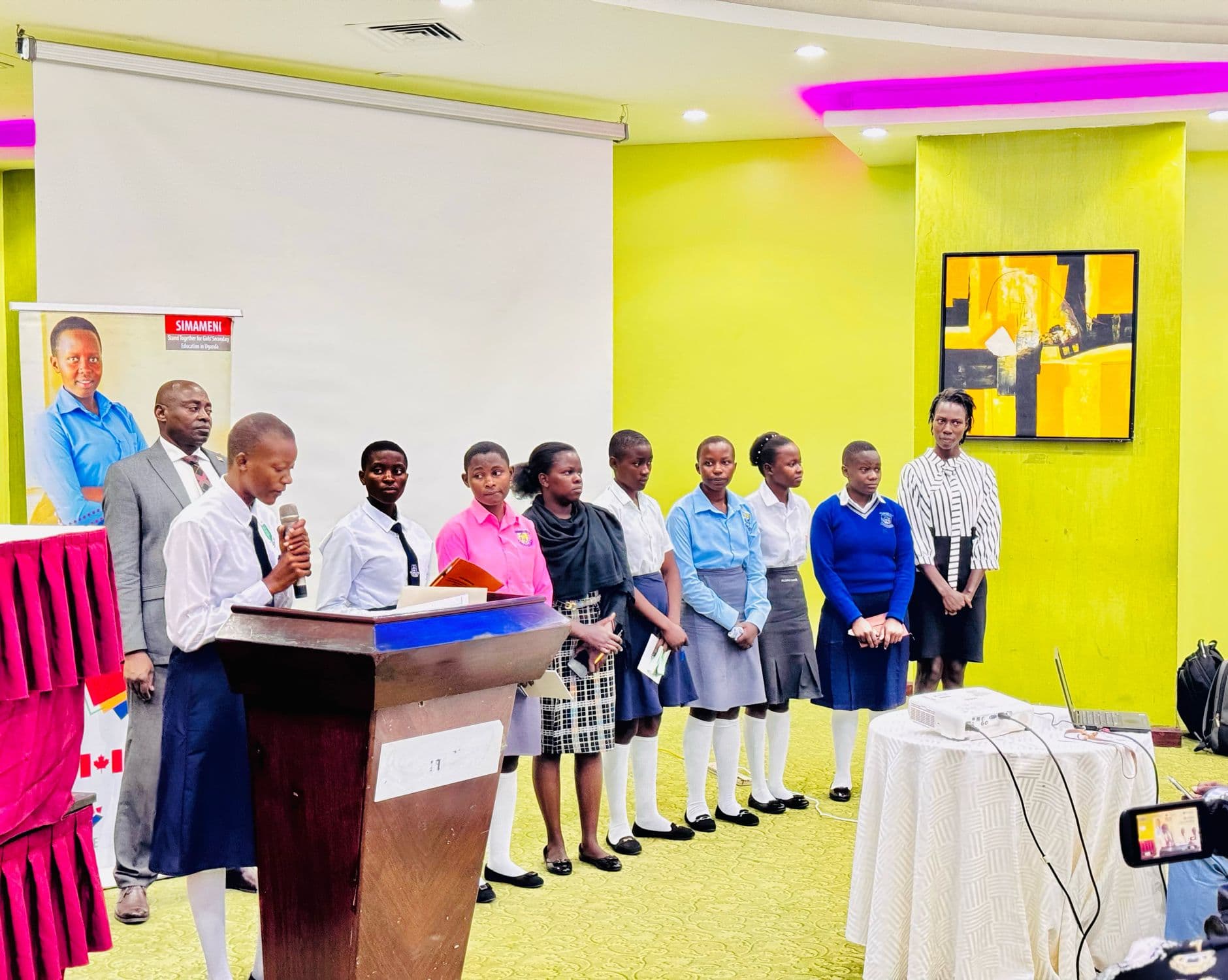
Turyagenda made the appeal while presiding over a Simameni Project results meeting organized by the Uganda National Teachers’ Union (UNATU), in partnership with the Canadian Teachers’ Federation, held at the Imperial Royale Hotel in Kampala.
Educators across the country launched a nationwide strike two weeks ago in protest against the government’s failure to equalize their pay with that of science teachers. They have vowed not to return to the classroom until their salaries are increased.
Speaking to journalists, Turyagenda urged teachers to resume their duties, emphasizing the negative impact their absence has on students.
“I want to really appeal to my friends, my teachers, my very colleagues, whom I love and treasure, that let us not disadvantage the innocent children,” she said.
She called on teachers to leave the salary negotiations to their leaders—who are engaging the government on their behalf—and to continue serving the country’s children.
“Go and teach as you continue to let your leaders fight on, and eventually, the government will definitely fulfill its promise,” she added.
Turyagenda further reminded teachers that the government had committed to enhancing salaries for all public servants, including teachers, and urged them to be patient.
“Government promised to enhance not only teachers, but all public servants, and it’s coming in phases because your country does not have enough money. You know how much debt it has. So, it doesn’t have enough money and can only do things in pieces,” she said.
The Permanent Secretary also commended the Simameni Project for its role in empowering and supporting the girl child, emphasizing that this aligns with the core mission of teachers. She urged them to continue acting as caregivers and advocates for girls’ education in Uganda.
She pledged continued support from the Ministry of Education to ensure all girls have access to quality education.
Meanwhile, UNATU General Secretary Filbert Baguma distanced the union from the ongoing strike, attributing it to a separate group of arts teachers.
“As the Uganda National Teachers’ Union, we are not on industrial action. This is a decision taken by the leadership—our highest-level structure—the annual delegates’ conference,” he revealed.
However, Baguma urged the government to resolve the issue of discriminatory salary enhancement, warning that it is harming the education sector rather than helping it.
“This is a call to government to make sure that this issue of discriminatory enhancement is put to an end because it is doing more harm than good. Even those who have been enhanced are not at peace due to hostility in their workplaces. Therefore, the earlier it is resolved, the better for the education of this country,” he added.
On the Simameni Project, Baguma highlighted its success in improving girls’ education and increasing parental and community involvement through mobilization efforts.
Launched in 2019, the Simameni Project aimed to improve access to, retention in, and educational opportunities for secondary school girls in selected communities within the Western and Teso regions.
The project targeted the districts of Serere, Ngora, Kumi, and Bukedea in the Teso region, as well as Kamwenge, Kyenjojo, Kibaale, and Kyegegwa in the Western region.
Its focus included supporting girls’ transition to secondary education, reducing dropout rates, equipping teachers with gender-sensitive teaching tools, creating safe and inclusive school environments free from violence and discrimination, mobilizing communities to participate in education, promoting life skills for both girls and boys, and developing learning resources such as a Teachers’ Guide for Creating a Gender-Responsive Learning Environment.
Funded by the Canadian Teachers’ Federation, Global Affairs Canada, and the Ministry of Education, and implemented by UNATU over five years, the project has impacted thousands of girls in the targeted areas.
Sr. Florence Imalingat, Headteacher of St. Elizabeth Girls’ Secondary School Kidetok in Serere District, praised the project for building teachers’ capacity. She noted that her school initiated a teacher-led club to financially support underprivileged girls.
She shared that the number of female students at her school had significantly increased due to the project’s influence.
“In 2020, we had 250 girls in school from S1 to S6, but currently, we have 700 girls at St. Elizabeth—and all this is because of Simameni.”
She further explained that, after receiving training, teachers began going into villages to seek out girls who had dropped out of school. She added that cases of male teachers engaging in inappropriate relationships with students had also declined as a result of the program.
Dorothy Nalayita, an S6 student from western Uganda and a beneficiary of the program, shared her personal story, revealing how the project helped her return to school after COVID-19 disrupted her education.
“After COVID, my stepmom and dad couldn’t even buy me scholastic materials. I had no school fees, and at some point, I wanted to get married in S3 because life had become hard. But this project came as a savior,” she said.
She added that they learned how to make sanitary pads, helping them manage without relying on costly commercial products.
Claudia Guidolin, a representative from the Canadian Teachers’ Federation, applauded the project implementers for their work. She highlighted the project’s success in reducing early pregnancies by lowering school dropout rates.
She noted that 1,000 teachers were trained under the project and encouraged them to use their expertise to help build a strong society. “Educating a girl child is educating the whole nation,” she said.