


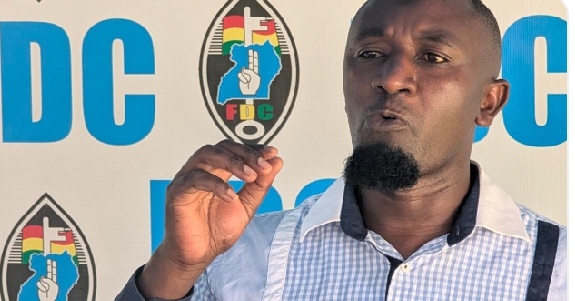
The Forum for Democratic Change (FDC) has accused the government of imposing excessive taxes on Ugandans while warning that a proposed centralisation of teacher training could worsen the country’s education crisis.
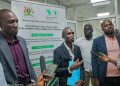
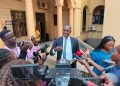
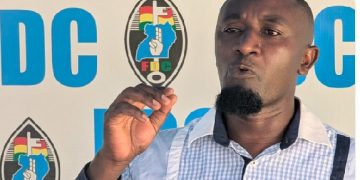
Speaking at the FDC media briefing on Monday, the party’s Deputy Secretary for Publicity, Publication and Documentation, Walid Mulindwa Lubega, said Uganda needs a fairer tax system rather than additional taxes that burden small businesses and ordinary citizens.
The FDC criticised what it described as new and oppressive measures affecting mobile money transactions, rental income, tax enforcement and the Electronic Fiscal Receipting and Invoicing Solution (EFRIS), arguing that excessive taxation is discouraging entrepreneurship and undermining investment.
“A fair tax system expands the tax base. An unfair tax system kills the base,” Lubega said.
The party particularly opposed the enforcement of EFRIS without adequate public sensitisation, saying small traders should not be penalised for failing to understand a complex tax system.
The FDC also questioned Uganda’s growing public debt despite increased domestic revenue collection. According to the party, Uganda Revenue Authority collections have risen from less than Shs1 billion in 1986 to more than Shs40 trillion today, while national debt has exceeded Shs100 trillion.
The party attributed the continued borrowing to what it described as misuse, extravagance and theft of public resources.
Lubega said the FDC wants the government to adopt a progressive taxation system in which higher-income earners contribute more while low-income earners and small businesses are protected.
“Uganda does not need MORE taxes, but FAIR taxes,” he said.
The FDC also criticised a proposed Ministry of Education and Sports policy that would centralise teacher training in a limited number of government-designated institutions.
The party said the proposal would phase out the country’s 33 Primary Teachers Colleges and five National Teachers Colleges while ending teacher training at public and private universities.
According to the FDC, the government’s objective is to create greater uniformity in teacher training and align training with the Competence-Based Curriculum. However, the party warned that closing existing institutions could reduce the number of teachers produced annually and make training less accessible to students from poor families and those living far from centralised institutions.
The FDC said Uganda already faces a shortage of teachers, with more than 15 million learners served by about 300,000 teachers.
The party instead called for existing teacher-training institutions to be strengthened and for tutors and teachers to receive continuous professional development in the Competence-Based Curriculum.
“Uniformity does not need monopoly,” Lubega said, arguing that the government can establish a national curriculum and strengthen quality assurance without shutting down teacher-training institutions.
The party urged the Ministry of Education to consult widely with teachers, universities, colleges, parents, students, local governments and the Uganda National Teachers’ Union before implementing any changes.
As Uganda prepares to mark Independence Day on October 9, the FDC also criticised the state of governance and public services, saying independence should have delivered self-government, accountable leadership, better public services and greater control of the country’s resources by Ugandans.
The party cited challenges including shortages of medicines and health workers, poor roads, corruption and alleged abuses of citizens’ rights.
The FDC called on Ugandans to continue demanding free elections, accountable leadership and functioning public services.
The opposition party also wished candidates sitting national examinations success, with Uganda Certificate of Education (UCE) examinations scheduled to begin on October 8, Primary Leaving Examinations (PLE) on October 30 and Uganda Advanced Certificate of Education (UACE) examinations on November 7.
The FDC called on the Uganda National Examinations Board (UNEB) to ensure the examinations are credible, secure and fair, including for candidates with special needs.
The party concluded by urging the government to reduce what it described as the tax burden, improve public services and ensure that economic and education policies serve ordinary Ugandans.


Five-month-old baby found dead in pit latrine, parents arrested
KAWEMPE, WAKISO — Police in Kawempe have launched an investigation into the death of a five-month-old baby whose body was...