


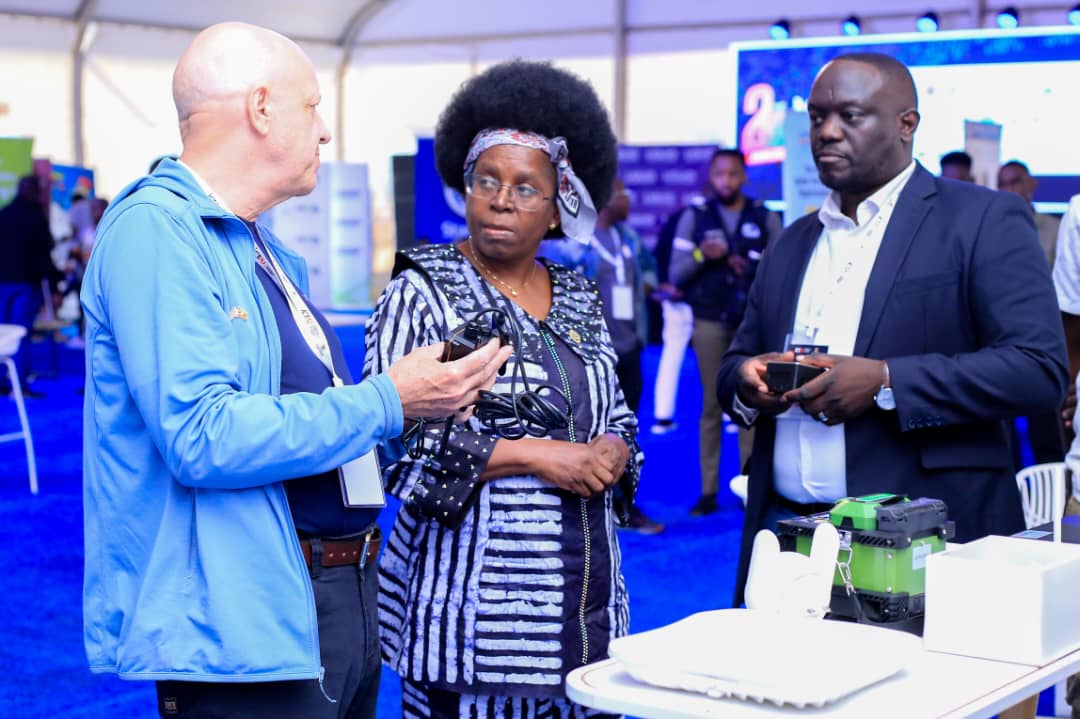
Kampala,Uganda– The Minister of Science, Technology, and Innovation (STI) in the Office of the President, Dr. Monica Masanza Musenero, has praised Simplifi Networks for its strategic role in powering key national infrastructure—including hospitals, refugee settlements, research centers, and businesses—with reliable internet connectivity, which has contributed to economic growth.
Dr. Musenero made the remarks during a guided tour of the ICT Expo at the closing ceremony of the 2nd National ICT Summit 2025, held at the Uganda ICT Innovation Hub in Nakawa.
The high-level event, organized by the ICT Association of Uganda (ICTAU) in collaboration with the Ministry of ICT and National Guidance, was held under the theme “Harnessing Digital Innovation for Sustainable Economic Growth.” The summit attracted over 200 delegates from various sectors.
Dr. Musenero noted that Simplifi Networks, which has operated in Uganda for the past 12 years, has significantly impacted national infrastructure by serving as a communications and network specialist. The company has invested heavily in building scalable, secure, and locally relevant connectivity systems, supporting a more connected Africa.
This development has enabled organizations such as the National Agricultural Research Organisation (NARO), the Uganda Wildlife Authority (UWA), and other government bodies to strengthen their communications and network systems.
Kenneth Stober, Group Managing Director of Simplifi Networks, highlighted their collaboration with various stakeholders to deploy digital weather forecasting sensor systems across the country. These systems provide farmers with early warnings and accurate weather data, resulting in timely agricultural decisions and doubled harvest yields.
Elizabeth Ntege, Chairperson of ICTAU, described the summit as Uganda’s leading platform for national dialogue, innovation exchange, and aligning policy with action on digital transformation.
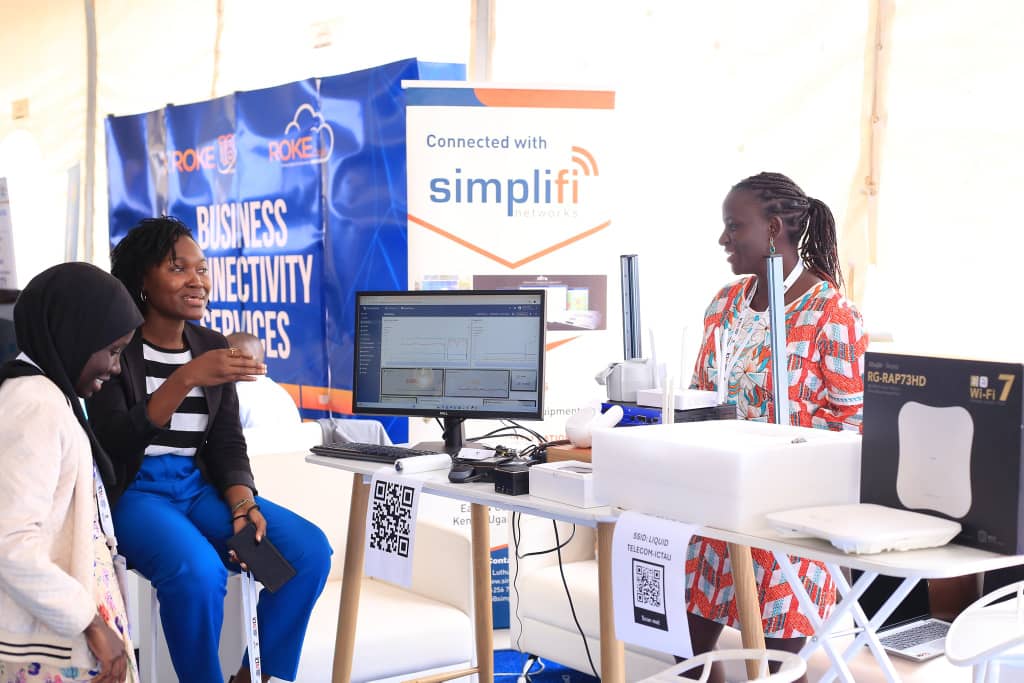
Building on the success of the inaugural summit, this year’s edition focused on translating national strategies into scalable, inclusive, and future-proof digital solutions. It emphasized Uganda’s preparedness to leverage Digital Public Infrastructure (DPI), Artificial Intelligence (AI), 5G, FinTech, cybersecurity, and data ecosystems to create economic value, enhance public service delivery, and strengthen national systems.
These technologies are to be practically applied across four priority sectors: AgriTech, HealthTech, EduTech, and BPO/Digital Economy Enablement, including SME automation and digital trade.
Rooted in the Digital Uganda Vision 2040, the Fourth National Development Plan (NDP IV), and Uganda’s Digital Transformation Roadmap (2023/24–2027/28), the 2025 summit moved beyond inspiration to execution—mobilizing partnerships, showcasing innovation, and accelerating the adoption of both local and global solutions aimed at transforming lives and livelihoods.