


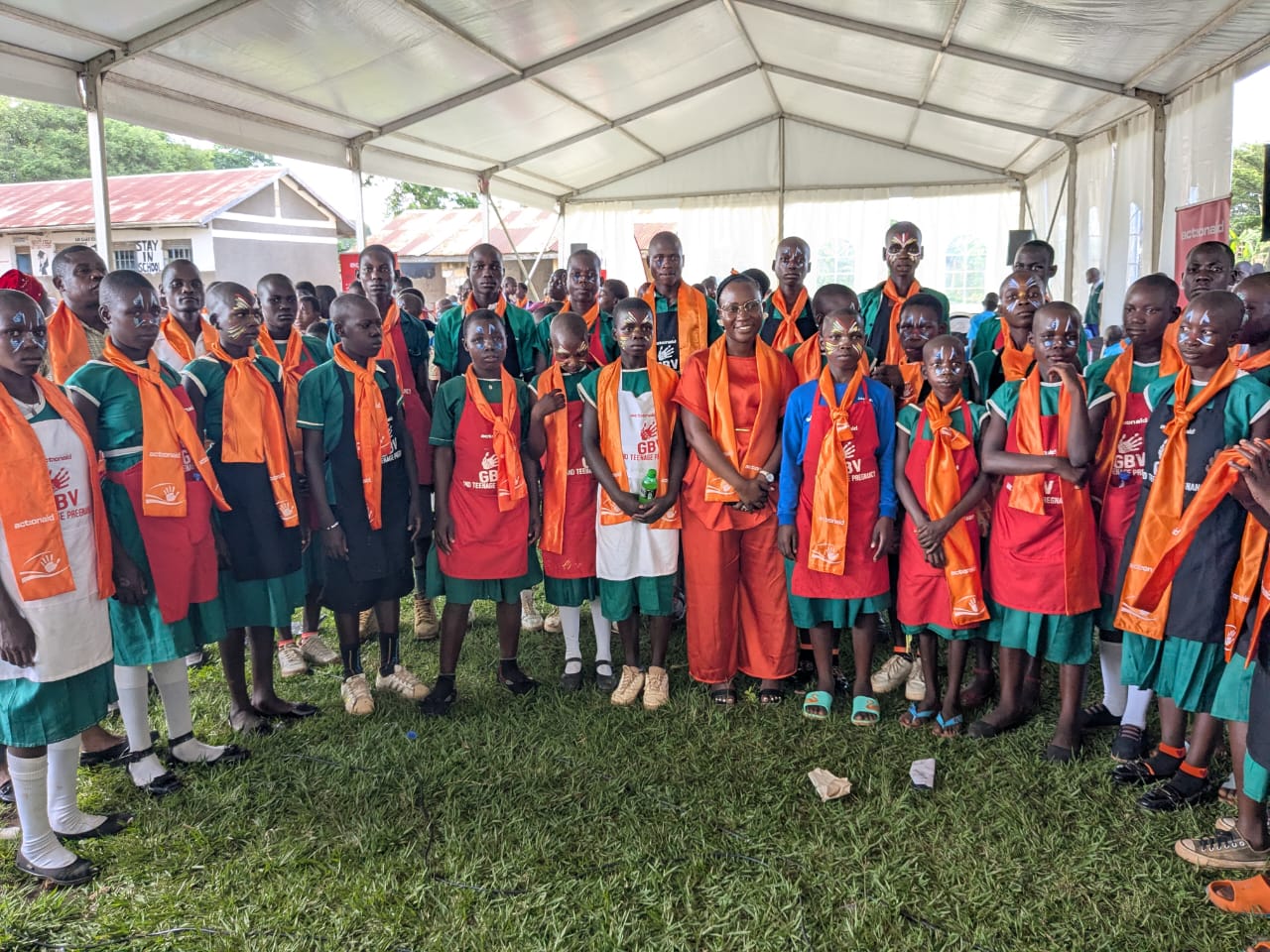
NAMUTUMBA, Uganda (UGNEWSLINE) – ActionAid International Uganda is stepping up efforts to combat child marriage, teenage pregnancies and gender-based violence through its “I Will Marry When I Want” campaign, which seeks to empower girls to stay in school, defend their rights and determine their own futures.
The campaign also aims to mobilise resources to support vulnerable girls and challenge harmful community practices that expose them to early marriage, teenage pregnancies and school dropout.
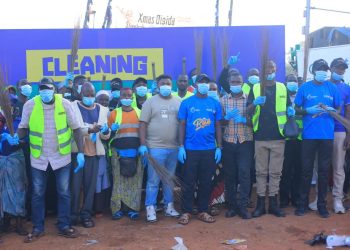
Agnes Patricia Nakabugo, a Child Sponsorship Officer at ActionAid Uganda, made the remarks during the launch of the 16 Days of Activism Against Gender-Based Violence organised by ActionAid International Uganda in partnership with Namutumba district leadership at Buwongo Primary School on November 25.
Nakabugo said the “I Will Marry When I Want” campaign was conceived following an increase in child marriages and teenage pregnancies in communities, particularly in Namutumba, after the COVID-19 lockdown, which left many girls out of school and vulnerable to early marriage.
She said the situation threatened the girls’ future by denying them opportunities to acquire education and skills that would enable them to contribute meaningfully to their communities.
“The concept of ‘I Will Marry When I Want’ was conceived from the fact that after the COVID-19 lockdown, we realised that in our communities in Namutumba, child marriages and teenage pregnancies were on the increase,” Nakabugo said.
She explained that ActionAid Uganda, together with its funding affiliate ActionAid Italy, adopted the concept from a poem written by a Zambian child, Aileen Firi, to address the shared challenge of early marriage and teenage pregnancy across sub-Saharan Africa.
The campaign, which was launched in Milan, Italy, is a fundraising initiative intended to support girls to stay in school while strengthening families and communities to protect them from harmful practices.
Nakabugo called on district authorities to allocate adequate resources towards fighting gender-based violence, warning that insufficient funding undermines efforts to protect survivors, prevent abuse and sustain support services.
Nakabugo further explained that responding to gender-based violence requires resources for community monitoring, psychosocial support, medical examinations, police investigations and access to justice.
She noted that survivors seeking assistance through shelters often have to follow referral procedures involving the police, health facilities and courts, but the costs associated with these services are sometimes left to non-governmental organisations or the survivors themselves.
“Without a budget, we may not know exactly where the problem is. If somebody in the community is facing gender-based violence, they would die in their pain without anyone knowing about it,” she said.
Nakabugo revealed that some shelters supported by ActionAid and its partners have faced closure because of funding challenges, affecting the availability of essential protection services for women experiencing violence.
She urged district leaders to prioritise funding for the fight against gender-based violence to ensure that support services remain accessible and sustainable.
Namutumba Chief Administrative Officer Jessica Ndagire Nsobya urged parents to take the lead in fighting gender-based violence, noting that many cases originate within families.
She encouraged parents to have open and honest conversations with their children, particularly adolescents, about sexual abuse, early marriage and other forms of violence, including where to seek help when their rights are violated.
Ndagire said despite government interventions, existing laws and efforts by development partners, gender-based violence remains prevalent in families and communities.
The launch was held under the theme “UNiTE for Justice: Protect Survivors and End Impunity Across Online and Offline Spaces Against All Women and Girls in Uganda.”
Ritah Nanyonga, the Programmes Coordinator at ActionAid International Uganda, said early and forced marriages, teenage pregnancies, sexual harassment, sexual exploitation and school-related gender-based violence continue to threaten the safety, education and future of girls.
She warned that many children remain silent about abuse because they fear being blamed, shamed or punished, while others do not know where to report cases.
“Violence is never a private matter to be hidden. Survivors deserve protection, support and justice. Perpetrators must be held accountable,” Nanyonga said.
She also raised concern about technology-facilitated abuse, including cyberbullying, blackmail, online harassment and sharing private pictures without consent.
Nanyonga urged parents, teachers and community leaders to listen to children, believe them when they report abuse and ensure they receive the necessary protection.
ActionAid Uganda is also using children’s rights clubs in schools and women’s groups in communities to educate people about their rights and responsibilities, promote reporting of abuse and encourage children to participate in protecting themselves and their peers.
The organisation says children should not merely be recipients of protection but active participants in preventing violence within their communities.
The campaign comes against the backdrop of persistent domestic violence cases in Uganda.
According to the 2025 domestic violence statistics from Uganda Police, 12,361 people were recorded as victims, comprising 7,520 female adults, 4,116 male adults, 489 male juveniles and 236 female juveniles.
The leading causes included disputes over family property, failure to provide for families, drug and alcohol abuse, and infidelity.
By the end of 2025, 1,761 domestic violence cases had been taken to court. Of these, 644 resulted in convictions, 18 ended in acquittals and 197 were dismissed, while 902 remained pending.