



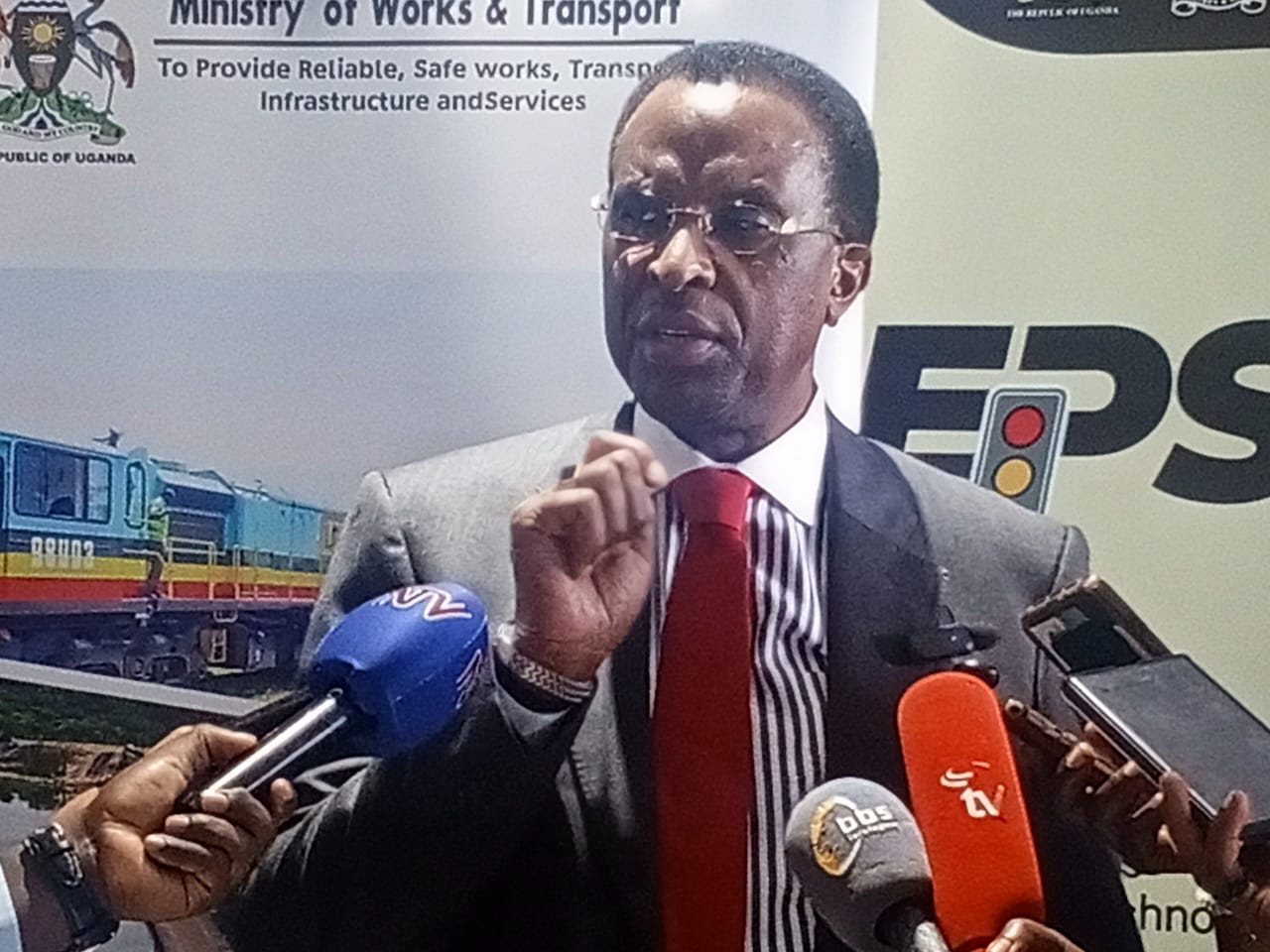
The Ministry of Works and Transport insists that the express penalty fines issued under the Express Penalty System (EPS) should be directed to vehicle owners rather than drivers, arguing that owners are ultimately responsible for the conduct and compliance of their vehicles on the road.
Speaking during the final stakeholders’ validation workshop on the reintroduction of the Express Penalty System, Commissioner for Transport Regulation and Safety, Winston Katushabe, said the move is intended to strengthen accountability and improve enforcement of road safety regulations.
The Express Penalty System, which relies heavily on traffic cameras and technology-based enforcement, is expected to return soon as part of government efforts to reduce traffic violations, speeding, and road crashes across the country.
Katushabe explained that one of the major challenges with assigning penalties directly to drivers is the difficulty of tracing them after offences are committed.
“The driver can easily abandon the vehicle and move to another company. It becomes very difficult to trace such individuals. That is why we believe it is easier and more effective to target the owner of the vehicle,” he said.
According to the commissioner, vehicle owners have a legal obligation to know who operates their vehicles and to maintain records of their drivers. These records should include copies of driving licences, national identification cards, next-of-kin information, and other relevant details that can assist authorities during investigations.
He noted that many drivers involved in crashes disappear after incidents, making investigations difficult. Holding vehicle owners accountable, he said, will encourage them to keep proper employment records and cooperate with law enforcement agencies.
Owners Expected to Track Drivers
Under the proposed framework, owners of public service vehicles such as buses and taxis will be required to formally employ drivers through contracts and maintain updated personnel records.
When an offence is detected through the camera-based system, the penalty notice will be sent to the registered owner of the vehicle. The owner will then be expected to identify the driver who was operating the vehicle at the time of the offence.
“If the ticket comes to me as the owner, I should be able to determine who was driving on that particular day and ensure that appropriate action is taken,” Katushabe said.
He added that owners who fail to identify offending drivers may still be held liable for penalties.
Demerit Point System Planned
Beyond financial penalties, the Ministry is also planning to introduce a demerit point system linked to driving licences.
Under the arrangement, drivers who commit traffic offences will not only face fines but will also accumulate penalty points on their licences. Repeated violations could lead to further disciplinary measures.
Katushabe said vehicle owners would play a crucial role in helping authorities identify offending drivers so that the demerit point system can be effectively implemented.
New Measures to Tackle Driver Fatigue
The Ministry also unveiled plans to modernize monitoring of public service drivers through a digital clock-in and clock-out system.
The proposed system would require drivers to register biometrically before beginning their journeys, allowing authorities to monitor working hours and ensure compliance with rest requirements.
Officials believe driver fatigue has become a significant contributor to speeding and road crashes.
“We want to know what time a driver starts work, how many journeys they make, and whether they have sufficient rest before beginning another trip. Fatigue is one of the major causes of road accidents,” Katushabe explained.
The reforms are expected to begin in the next financial year and will apply particularly to commercial passenger transport operators.
Proposal to Adjust Traffic Light Operations
The commissioner also revealed that the Ministry is discussing changes to traffic light operations with the Kampala Capital City Authority (KCCA) and the Uganda Police Force.
One proposal under consideration would allow traffic lights to switch to flashing mode during late-night hours, potentially between 10:00 p.m. and 5:30 a.m.
The measure is intended to reduce unnecessary delays at intersections during periods of low traffic while addressing security concerns raised by motorists who become vulnerable to criminal attacks while waiting at red lights late at night.
The Ministry is also advocating for synchronization of traffic lights across major intersections to improve traffic flow and reduce congestion within the city.
Technology and Police Enforcement to Work Together
While cameras will remain the backbone of the Express Penalty System, Katushabe emphasized that technology will not completely replace traffic police officers.
He noted that cameras cannot determine whether a driver possesses a valid licence or identify other compliance issues that require physical inspections.
“We shall continue using cameras, but enforcement will be hybrid. Traffic police will still have a role in stopping motorists and checking documents such as driving licences,” he said.
Legal and Technical Preparations Underway
The Ministry is now preparing a Cabinet paper incorporating views collected during the stakeholder consultations.
Katushabe acknowledged that some proposals may require amendments to existing laws before full implementation can proceed. Such amendments would need Cabinet approval and subsequent consideration by Parliament.
In addition to legal reforms, the government plans to ensure that roads are properly marked, signposted, and equipped before enforcement begins.
Officials say these measures will help eliminate complaints from motorists who may claim they were unaware of road rules or camera locations.
Public Sensitization to Continue
The Ministry has pledged to continue public awareness campaigns alongside enforcement.
However, Katushabe stressed that education alone is not enough to improve road discipline.
“Education without enforcement becomes entertainment,” he remarked, emphasizing the need for a balanced approach that combines sensitization with strict enforcement.