


A majority of universities in Uganda are still operating under provisional licences, according to Makerere University Academic Registrar, Prof. Mukadasi Buyinza.
He says only a small fraction of private institutions have successfully met the stringent requirements needed to obtain a charter.
Unlike public universities, which automatically operate under a charter because they are established, assessed and endorsed by the Parliament of Uganda, private universities must prove their capacity before they can be fully accredited.
Prof. Buyinza explains that newly established private universities begin with a two-year provisional licence. After this period, the NCHE assesses their progress and may grant an additional two years if improvements are evident. Only institutions that consistently meet the required standards, including infrastructure, erequired staffing, and resources, among others, qualify to apply for a charter.
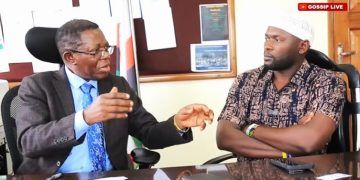
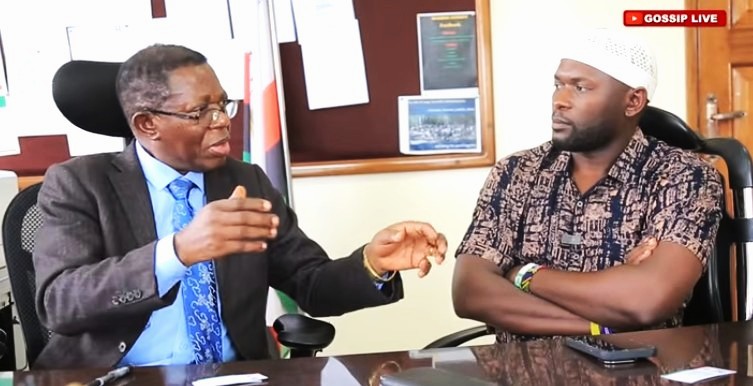
“If they see that you have adhered to the conditions and made improvements in all required areas, then you can go ahead and apply for a charter,” Prof. Buyinza said in an interview with the Gossip Live YouTube channel, {https://youtu.be/kuy6la4NPN0} hosted by journalist Sarkozy Farouk.
Uganda currently has about 60 universities, but Prof. Buyinza notes that most private institutions still lack charters.
According to the Ministry of Education and Sports website, Uganda has 11 public universities, including Makerere University, Kyambogo University, Mbarara University of Science and Technology, Gulu University, Lira University, Busitema University, Kabale University, Muni University, Soroti University, Mountains of the Moon University, and Makerere University Business School.
The site also indicates that 16 private universities have successfully secured charters. They are: African Bible University, Bishop Stuart University, Bugema University, International University of East Africa, ISBAT University, Islamic University in Uganda, Kampala International University, Kampala University, Muteesa I Royal University, Ndejje University, Nkumba University, Uganda Christian University, Uganda Martyrs University, University of Kisubi, Victoria University, and Africa Renewal University.
Prof. Buyinza emphasised that obtaining a charter significantly boosts the global recognition of academic documents.
“When a university is chartered, even when you present your documents abroad, they are recognised and respected. But for universities without charters, graduates often have to explain themselves,” he said.
He also revealed that Makerere University conducts similar checks when admitting international students. “We always verify the background of universities from which foreign students come to ensure they are genuine and chartered,” he said.
Charters for universities are granted by Parliament after a thorough assessment, and are later endorsed by the President.
Schools urged to guide students on universities
Prof. Buyinza called on secondary schools to play a more active role in guiding learners as they apply to universities.
He stressed that Directors of Studies, in particular, should provide accurate information about which universities hold charters so that students and parents can make informed decisions.
“Schools have a big responsibility to guide their candidates to choose the right institutions so that nothing backfires,” he said.