


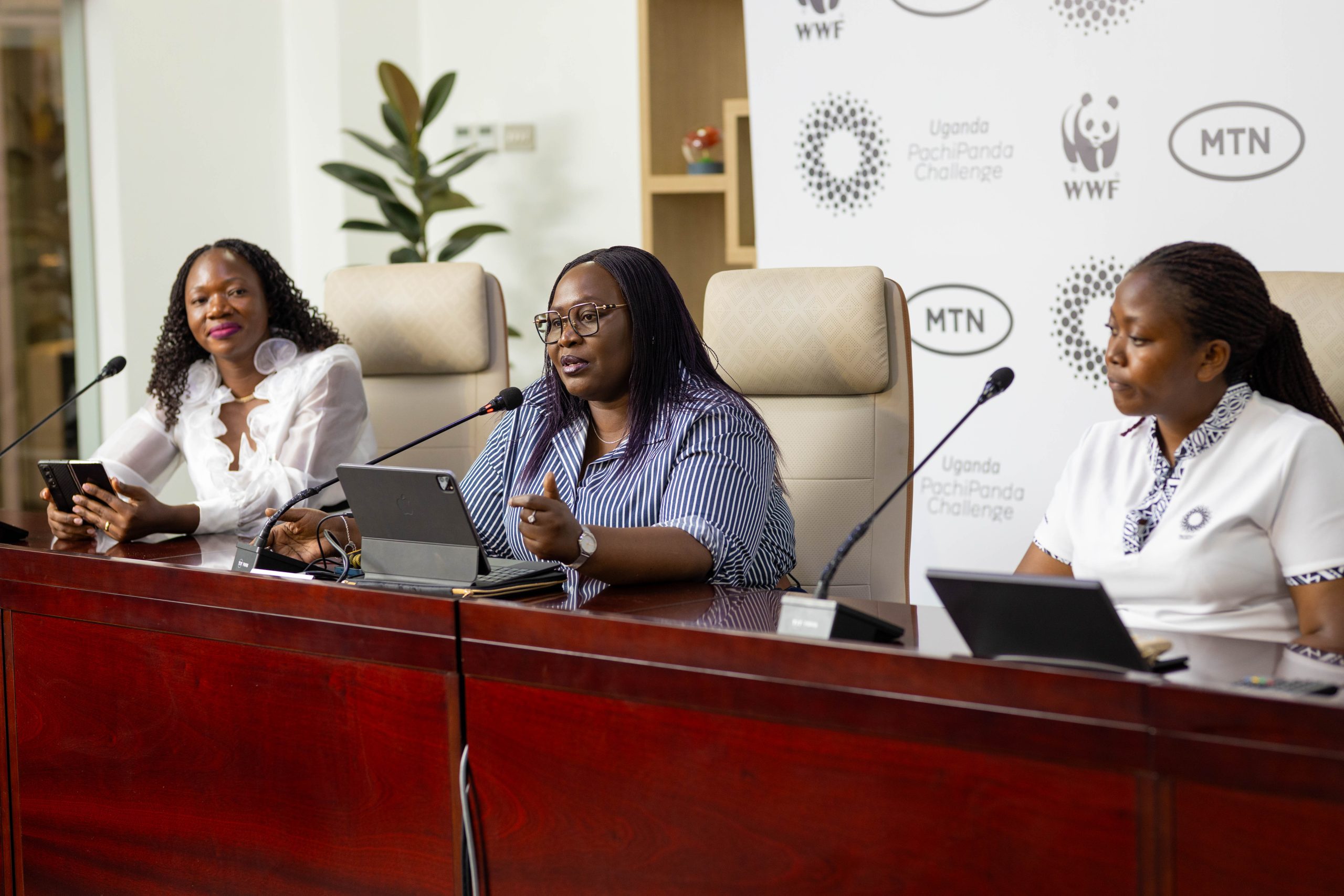
MTN Uganda, in partnership with the World Wide Fund for Nature (WWF) Uganda, has launched the 2026 PachiPanda Innovation Challenge, calling on young Ugandans to develop commercially viable solutions that protect nature while creating jobs and livelihoods.
The challenge, themed “Nature Meets Innovation: Unlocking Africa’s Green Economy,” targets young people aged 18 to 35, university and college students, entrepreneurs and youth-led small and medium-sized enterprises.
Enid Edroma, the General Manager, Corporate Services at MTN Uganda, said the initiative reflects the company’s belief that technology and entrepreneurship can help address environmental challenges while creating new economic opportunities.
“The environmental challenges facing our communities are also opportunities for innovation, enterprise and job creation. Through PachiPanda, we want to give young Ugandans the platform, mentorship and networks to turn their ideas into solutions that create value for both people and the planet,” she said.
The 2026 challenge will focus on four areas: nature-based climate resilience, sustainable livelihoods and green enterprises, biodiversity and natural-resource conservation, and digital solutions for Africa’s green economy.
Rita Kyategeka, the Partnerships, Fundraising and Communications Manager at WWF Uganda, said the partnership is aimed at helping young innovators develop solutions that can move beyond ideas into scalable enterprises.
“We need solutions that protect nature while improving livelihoods. PachiPanda gives young Ugandans an opportunity to demonstrate that conservation and economic development can reinforce each other, particularly when technology and entrepreneurship are brought into the equation,” she said.
The 2026 edition builds on Uganda’s inaugural PachiPanda challenge in 2025, which produced three national winners — FarmGate Digital, KampalaBuzzline and Bottle for Cash Eco-Drop — who represented Uganda at the continental competition in South Africa earlier this year.
FarmGate Digital, led by Ruth Kyobutungi, uses market information to help reduce post-harvest food losses by improving decisions around pricing, storage and the timing of sales.
Kyobutungi said participating in PachiPanda went beyond the financial prize, giving her the skills, confidence and exposure to develop and pursue her idea.
“The money was important. Of course it was a big thing. But it wasn’t the biggest thing,” she said.
“The biggest thing was the visibility it gave me. It gave me hope and, more importantly, it gave me the confidence to believe in what I was building.”
She said the boot camp was particularly important in helping her understand how to communicate her innovation and demonstrate its commercial potential.
“I had never been taught how to pitch, how to present an innovation or how to convince people that what you were building was a bankable solution – that if they supported you, you could take it to the next level,” she said.
Since participating in the challenge, FarmGate Digital has expanded its partnerships with farmers and cooperative societies, connecting it to more than 4,000 members and moving 217 tonnes of food, including 50 tonnes of perishable produce.
Kyobutungi said the experience also opened doors to new opportunities, including international exposure and further support for the business.
“PachiPanda gave me confidence. It gave me exposure. It gave me opportunities; and, yes, it gave me the money to take the journey further,” she said.
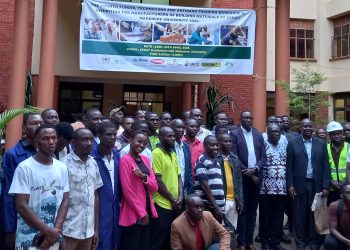
KampalaBuzzline focuses on restoring pollinator habitats through community conservation, digital mapping and green livelihoods, while Bottle for Cash Eco-Drop uses technology to encourage plastic collection and recycling.
Hannington Sserwanga, founder of KampalaBuzzline, said MTN’s support helped give his innovation the traction it needed to grow.
“MTN gave traction to my innovation,” Sserwanga said, explaining that the support enabled the project to move from an idea into a growing conservation enterprise.
With the grant received through the innovation challenge, KampalaBuzzline helped expand a nursery in Kawempe, which now has more than 10,000 nectar-rich and pollen-nutritious plants and flowers. The nursery generates about Shs500,000 in monthly revenue from customers who buy the plants.
Sserwanga said the impact had gone beyond conservation, with the project creating employment for workers at the nursery and generating income for casual workers.
“The grant is transforming lives,” he said. The experience also helped Sserwanga gain the confidence to present his idea beyond Uganda. He has since pitched the innovation in South Africa and on other international platforms, while the Kampala Bee-Run concept has been taken to Costa Rica.
He urged young innovators to take the opportunity seriously and apply. The top three winners of the 2026 Uganda challenge will receive Shs15 million, Shs10 million and Shs5 million, respectively. The winners will be announced in October 2026, with Uganda’s top innovators going on to represent the country at the continental PachiPanda competition in South Africa in February 2027.
Applications are open until September 30, 2026. MTN Uganda and WWF are encouraging applicants to submit solutions with a proof of concept, pilot project, existing customers, measurable impact or clear potential to scale.
Young innovators can apply online through the official PachiPanda Challenge portal.