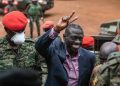



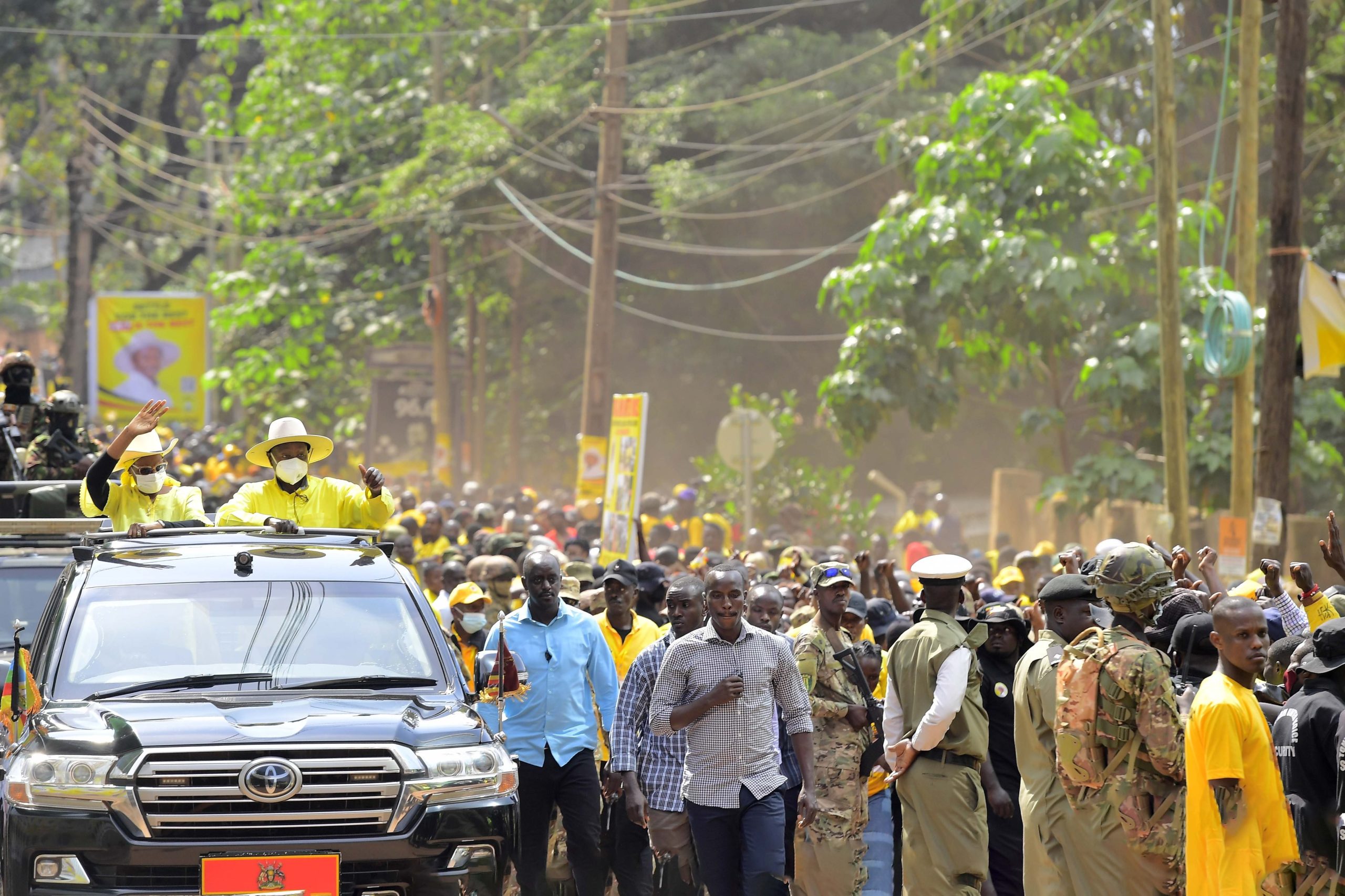
President Yoweri Kaguta Museveni has officially declared his candidacy for Chairman of the National Resistance Movement (NRM) for the 2025–2031 term and as the NRM’s presidential flag bearer for the 2026–2031 elections, reaffirming his commitment to steering Uganda into a high middle-income economy.
In a lengthy national address delivered following his nomination by the NRM Electoral Commission, Museveni thanked supporters and party structures for their continued trust. He invoked the historical mission of the NRM, recalling its origins as a student movement in 1965 that sought to overcome sectarianism and political fragmentation in a deeply divided post-independence Uganda.
“Our journey began when Uganda was disintegrating, politically polarized along tribal and religious lines, with weak institutions and an economy on life support. By 1986, the country had suffered three major traumas: political collapse, institutional decay, and economic ruin,” Museveni said.
He described the NRM’s legacy in five sweeping phases: liberation (1965–1986), stabilization (1986–2025), recovery of key export sectors (the “3Cs and 3Ts”: coffee, cotton, copper, tobacco, tea, and tourism), expansion of the economic base, and diversification into commercial agriculture, value addition, and the knowledge economy.
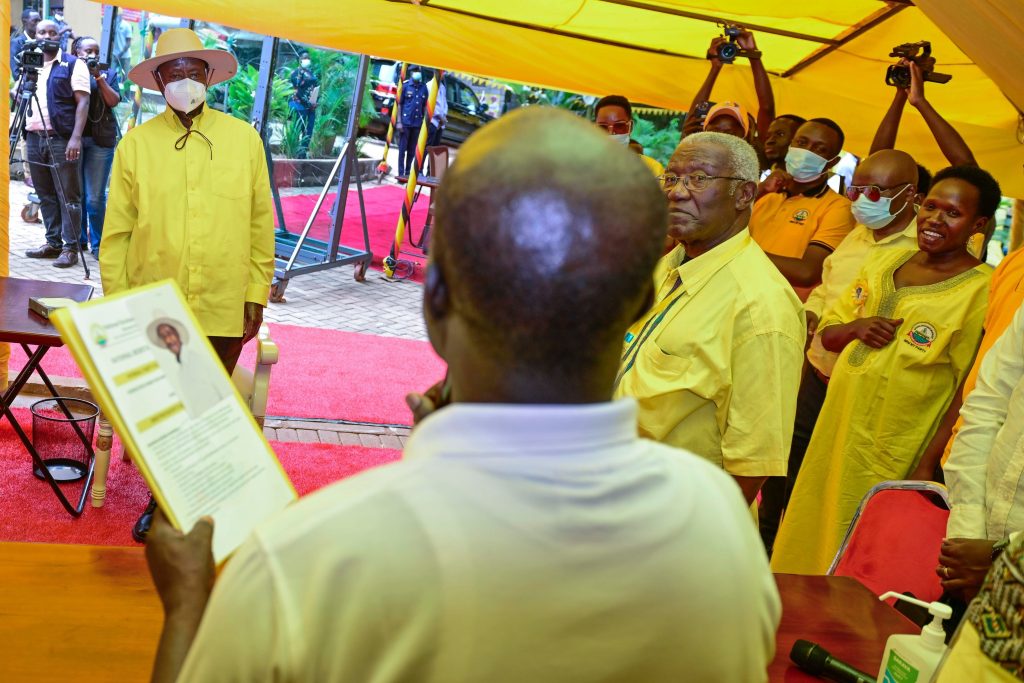
According to Museveni, these deliberate efforts have transformed Uganda from a failed state into a modern economy with a current GDP of USD 61 billion by the exchange rate method and USD 172.2 billion by purchasing power parity. “Uganda is no longer a Least Developed Country. We have reached lower middle-income status with a GDP per capita of USD 1,263,” he said.
But the journey, he added, is far from over.
Nation poised for a leap
Museveni said his return to the political arena is driven by two core missions: first, to solidify national understanding of six pillars of prosperity, peace, development, wealth creation, job creation, delivery of essential services, and access to markets through regional integration. Second, to oversee Uganda’s transformation from a USD 66 billion lower-middle-income economy (projected by June 2026) to a USD 500 billion high middle-income economy in the next few years, not by 2040, which he called “too far.”
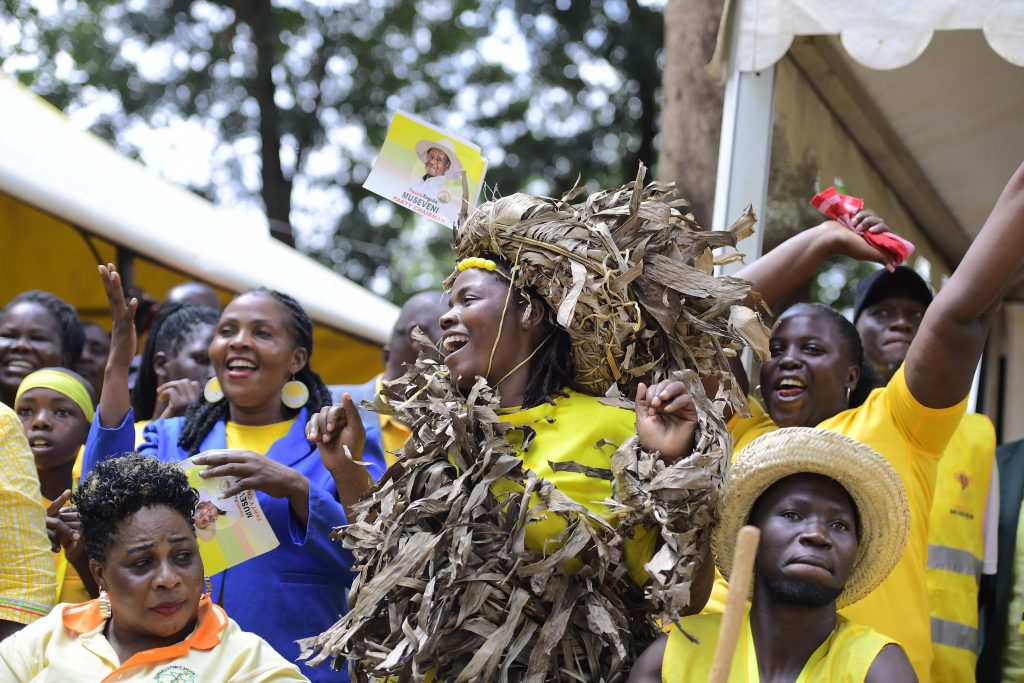
“Agricultural raw materials alone cannot take us to that next level,” Museveni said. “We must embrace full-scale value addition and industrialization. Coffee sold as raw beans fetches USD 2.5 per kg; when roasted, ground, and packaged, it sells for USD 25 to 40. That’s where the transformation lies.”
He cited the example of Uganda’s refined tin ore, which fetches USD 33.66 per kg at 99.85% purity, double the price of unrefined ore. Museveni said similar gains are possible with gold, copper, and other minerals if Uganda embraces vertical and horizontal industrial integration, attracting manufacturers to build value-added industries within the country.
Museveni also emphasized the role of science, technology, and innovation, pointing to sectors like automobile assembly, pharmaceuticals, electronics, and ICT. “With a well-educated population and natural resources, we have everything we need to leap forward,” he declared.
Future of the NRM
Museveni used the address to welcome newly elected NRM leaders across Uganda, most of them young, and reminded them that leadership must be grounded in ideology, not biology or personal ambition.
“Politics is not about ‘jobology’. It’s about ideology, vision, and conviction,” he said. “The three historical missions remain: ensuring prosperity, guaranteeing strategic security for Africa, and building African brotherhood (Undugu).”
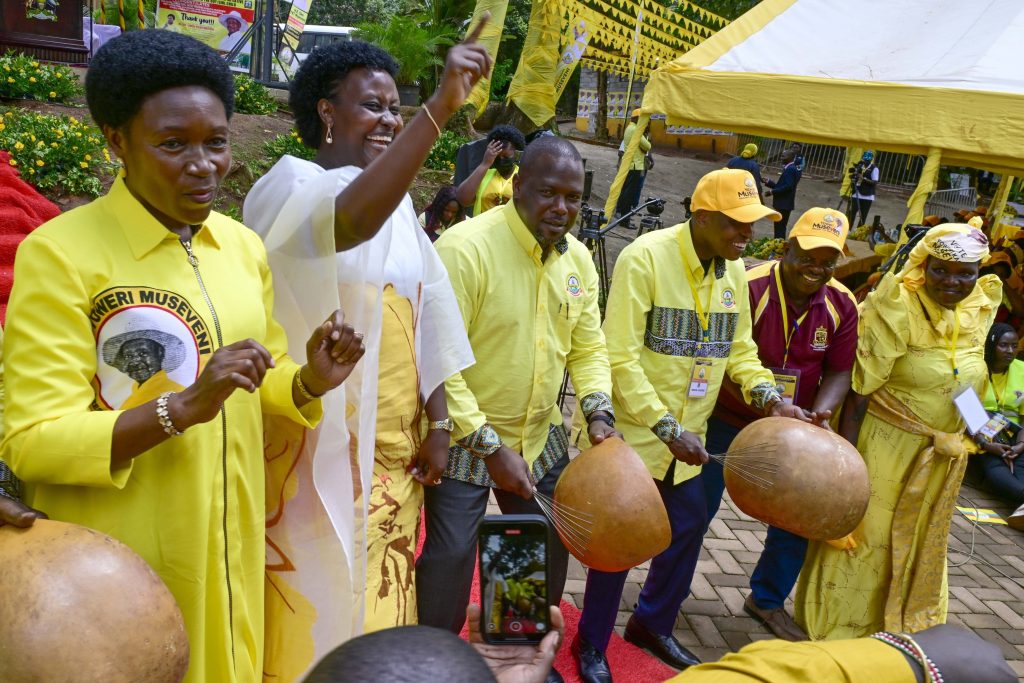
He urged the new leaders to focus on wealth creation and to resist the temptation of treating politics as a livelihood. “If we had embraced that mindset, Uganda would not have been rescued. My generation,Kategaya, Ruzindana, Rwaheeru and others, left secure government jobs to fight for Uganda’s freedom,” he said.
He encouraged young leaders to use government programs like the Parish Development Model (PDM) and Emyooga to become economically self-reliant and to lead by example.
Museveni once again identified corruption as the most significant barrier to Uganda’s progress, insisting that its elimination is not only possible but essential. “We have done well. But we can do far better if we eliminate corruption,” he declared.
He reiterated that Uganda’s development cannot be isolated from the wider African continent. “Our efforts must also contribute to Africa’s integration,” he said. “A fragmented Africa cannot guarantee strategic security or market access for our wealth creators.”
He concluded his address with a rallying cry to Ugandans: “The next five years are critical. If we build on what we have achieved, deepen industrialization, and maximize value addition, Uganda will not just grow — it will leap. I am ready to serve.”