


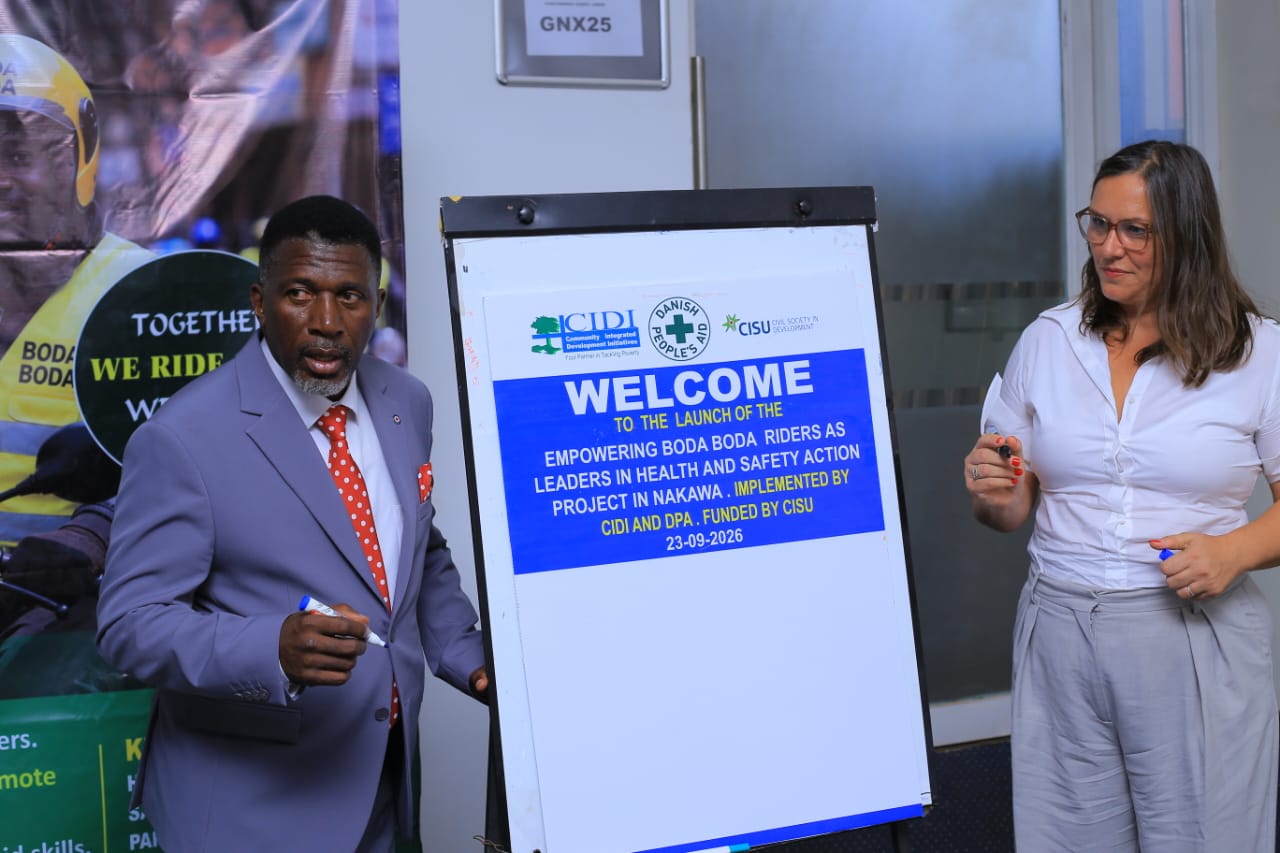
A new three-year project has been launched in Kampala to improve the health and safety of boda boda riders and passengers, with an initial focus on Nakawa Division.
The initiative, dubbed Boda Health and Safety, is being implemented by Community Integrated Development Initiatives (CIDI) with support from Danish People’s Aid and other partners under the theme “Driving Change, Empowering Boda Boda as Leaders in Health and Safety.”
The project will initially cover about 25 boda boda stages in Nakawa. It will train riders in safe riding, emergency response and first aid skills, while also strengthening their ability to identify and advocate for health and safety challenges affecting their sector.
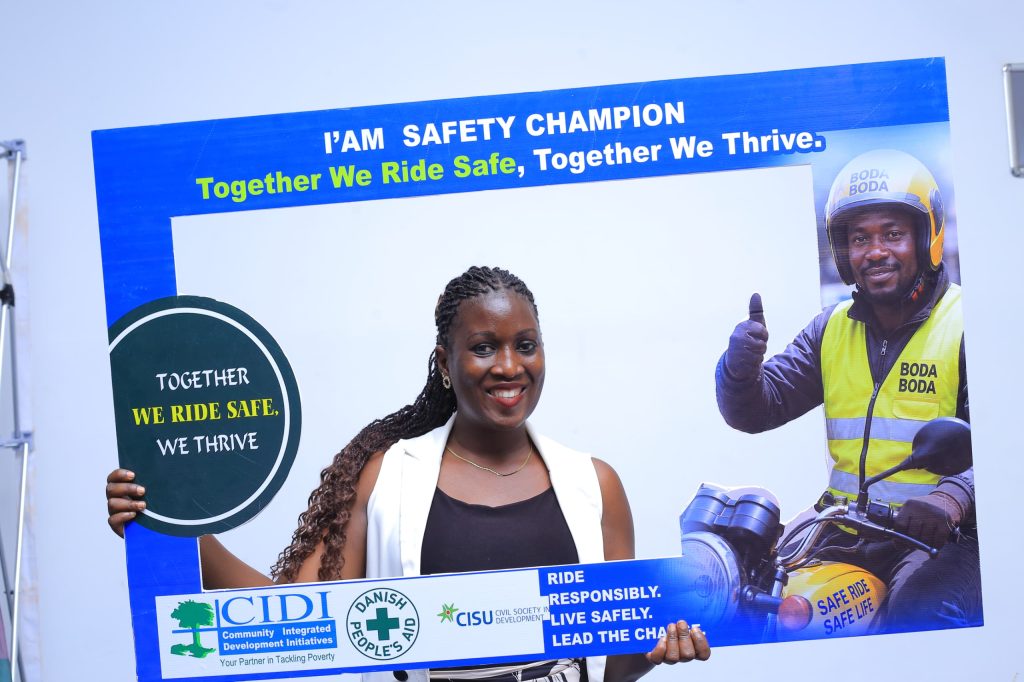
Speaking at the launch, CIDI Project Manager Rachel Nagadya said the project will work through boda boda associations to ensure that the skills and structures created can continue beyond the project period.
She said health committees will also be established within the associations to promote sustainability and create platforms through which riders can engage duty bearers and other stakeholders.
“The change we want to see is increased safe riding among boda boda operators, the ability to provide first aid to victims of accidents, and platforms where they can engage duty bearers and stakeholders on health and safety,” Nagadya said.
She added that the project could later be expanded to other boda boda stages and, depending on available funding, to all five divisions of Kampala.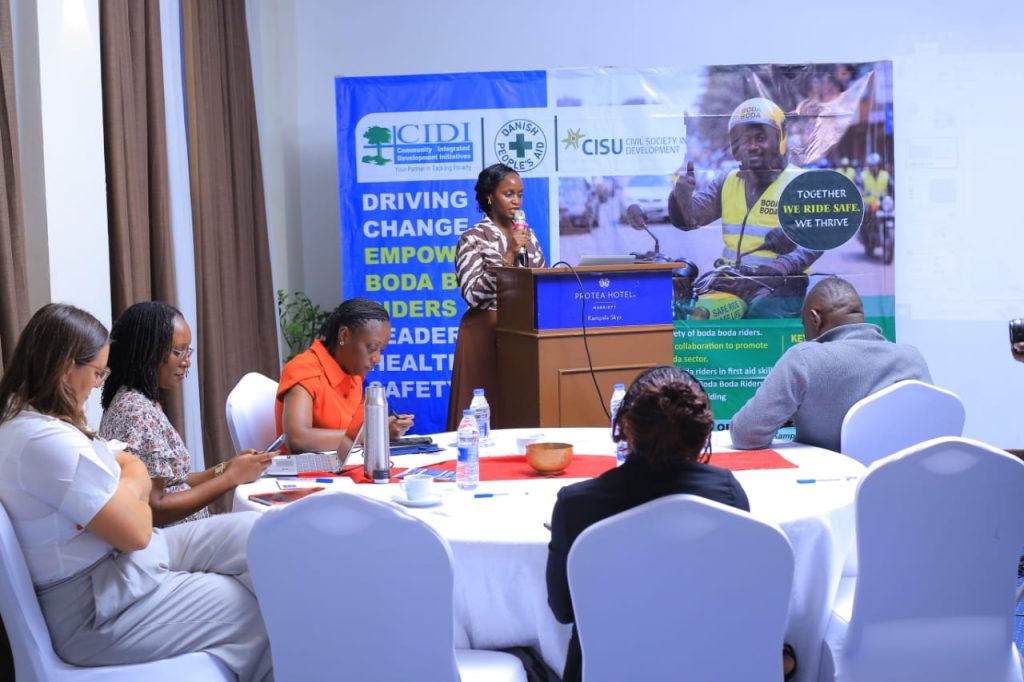 First aid at the centre of project
Benaville Nagudi, the project lead at Danish People’s Aid, said the initiative goes beyond encouraging riders to wear helmets and observe road safety regulations.
She said riders will be equipped with practical skills to respond to emergencies when crashes occur, including providing basic first aid before victims reach health facilities.
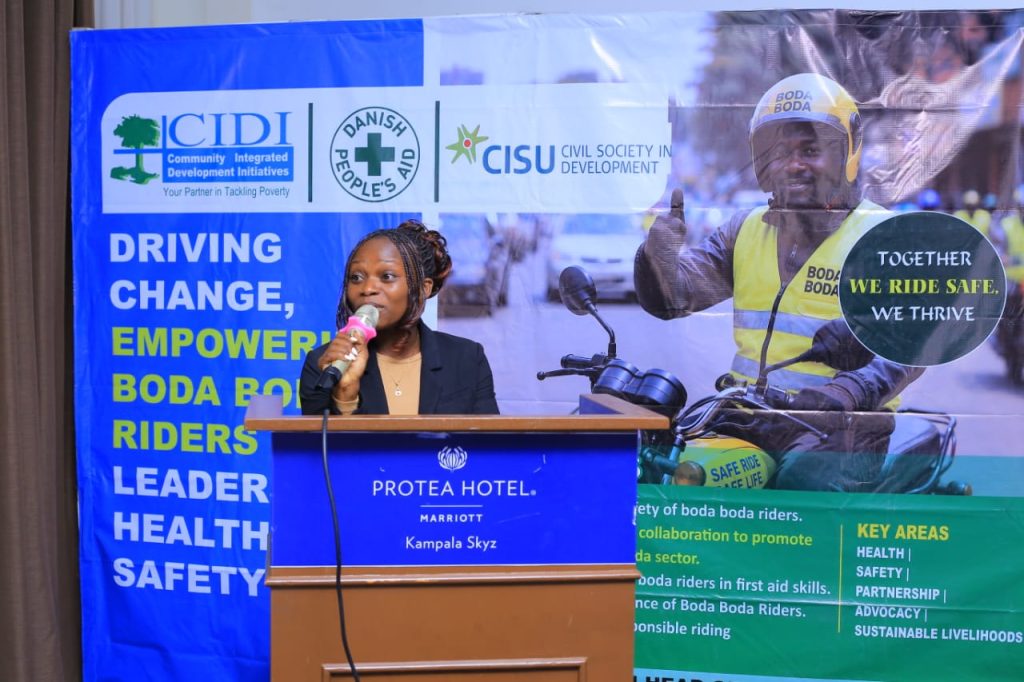
The training will be conducted in partnership with organisations including the Red Cross, CIDI and health facilities.
Nagudi said first aid is a key area of Danish People’s Aid’s work and the project is adapting that experience to the boda boda sector, which employs a large number of Ugandans but faces significant health and safety challenges.
Police warn of preventable crashes
Assistant Superintendent of Police Umar Kitaka, Officer in Charge of Traffic at Jinja Road Police Division, welcomed the initiative, saying motorcycle-related crashes constitute a significant proportion of road traffic injuries.
He said many accidents can be prevented through greater awareness and responsible behaviour among riders and passengers.
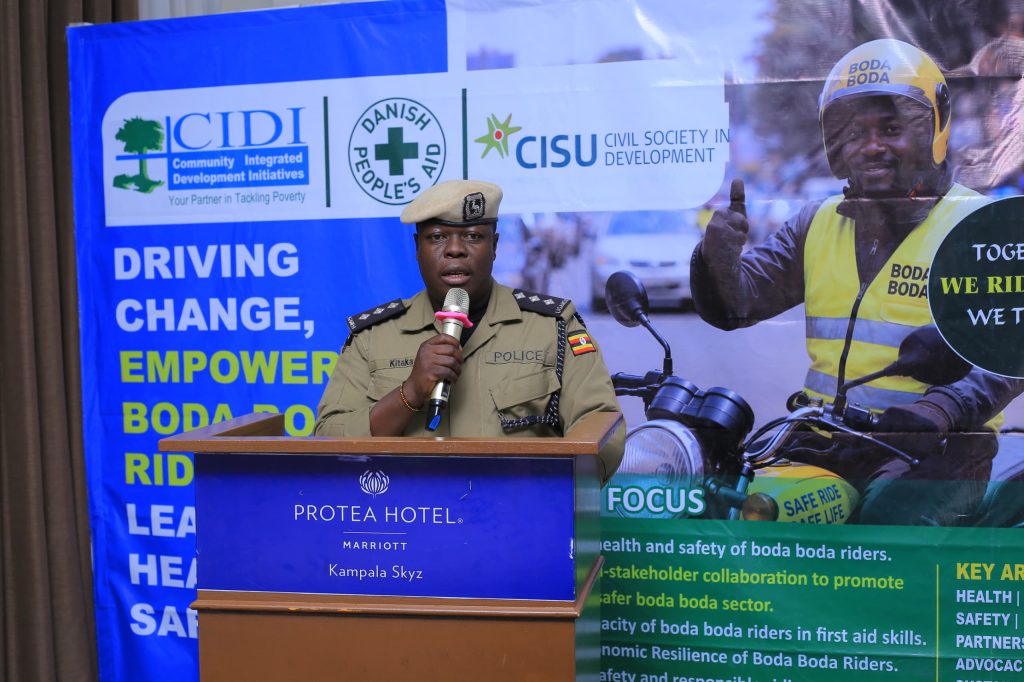
Kitaka identified riding under the influence of alcohol or drugs and failure to use protective gear as some of the factors that increase the risk of serious injuries.
He urged riders and passengers to wear crash helmets, saying proper use of protective equipment can reduce the severity of injuries and save lives.
Ministry cites high burden of boda injuries
Dr Marion Nakyeyune from the Ministry of Health Emergency Medical Services Department said boda boda crashes account for a major share of injuries treated within Uganda’s health system.
She said the ministry’s role includes planning and developing policies for emergency prevention and response, as well as strengthening ambulance services.
According to Nakyeyune, the project will help riders understand what to do immediately after a crash, how to protect victims at the scene, what first aid to provide and which emergency services to contact.
She said the Ministry of Health emergency helpline is 0800 1000 066, while the 912 short code is currently being used within the Greater Kampala metropolitan area for emergencies.
Nakyeyune said ambulance coverage currently stands at more than 56 percent nationally, with government having committed funds for an additional 52 ambulances to improve emergency response and reduce delays in taking injured people to health facilities.
She added that more than 1,000 health workers have been trained in basic emergency care, while efforts are continuing to strengthen emergency services at lower-level health facilities, including Health Centre IIIs and IVs.
Naguru handles thousands of trauma cases
Dr Irene Nayiga, head of China-Uganda Friendship Hospital Naguru, said the hospital treated about 14,000 trauma and emergency cases during the last financial year, with accidents accounting for the largest share.
She said many of the cases involved boda boda riders, passengers or collisions between motorcycles and other road users.
Nayiga said the hospital receives an average of five to 10 boda boda-related accident cases a day, involving riders, passengers and sometimes pedestrians.
She said the hospital has strengthened its emergency services by renovating its emergency area and acquiring new diagnostic equipment, including a CT scan, X-ray and ultrasound machines.
However, she stressed that prevention remains more important than treatment because many of the injuries and deaths can be avoided.
“The biggest message is about prevention,” Nayiga said, noting that treating serious injuries such as head trauma can be costly while the loss of life and future potential cannot easily be measured in monetary terms.
Lord Mayor calls for stronger emergency care
Kampala Lord Mayor, Ronald Balimwezo Nsubuga who was the chief guest called for the upgrading of Health Centre IIIs so that they can effectively handle boda boda-related emergencies and other road traffic injuries.
He described the boda boda sector as a major source of employment and called for greater organisation within the industry.
Balimwezo said boda boda activities support not only riders but also mechanics, motorcycle washers, spare-parts dealers, fuel suppliers and other businesses linked to the sector.
He called for efforts to strengthen the sector’s organisation and ensure that riders are protected, sensitized and supported to grow their businesses.
KCCA pledges support
KCCA Deputy Speaker Namazzi Olive said the project comes at a time when the city is dealing with challenges linked to road crashes, leadership disputes among riders and economic difficulties within the boda boda sector.
She said KCCA recently developed the KCCA Transport Management Ordinance, which focuses on regulating boda boda riders and taxi operators.
Namazzi said findings from the CIDI project could help KCCA improve implementation of the ordinance and develop practical guidelines for the sector.
She said boda bodas account for about 1.5 million trips in Kampala each day, making them a critical part of the city’s transport system.
She called for closer cooperation between KCCA, the Ministry of Health, Ministry of Works and Transport, Police and other stakeholders to address safety, health and economic challenges facing riders.
Namazzi said stakeholders should establish a common platform to coordinate interventions rather than working separately.
The Boda Health and Safety project is expected to use the three-year period to build the capacity of riders, promote responsible riding, strengthen emergency response and first aid skills, and create mechanisms through which boda boda associations can engage authorities on issues affecting their health, safety and livelihoods.