


Uganda’s new national identity cards have come under fresh scrutiny after MPs raised concerns that faulty QR-code verification is leaving some citizens unable to access essential services.
Aswa County MP Patrick Okello told Parliament that some holders of the new cards are being turned away by banks and telecom companies because the QR codes on their IDs are not responding during electronic verification.
“Ugandans are crying out,” Okello told MPs during Thursday’s plenary sitting, chaired by Speaker Jacob Marksons Oboth.
He said the problem was affecting people seeking banking services, buying new SIM cards and replacing lost or damaged SIM cards — services that increasingly rely on electronic identity checks.
Okello said the National Identification and Registration Authority (NIRA) had acknowledged the QR-code problem on 9 February 2026 and promised that the system would be operational by 31 March.
But months after that deadline, he said, some citizens were still facing the same problem.
He called on the Minister for Internal Affairs and NIRA to explain the delay and provide a clear date by which the new IDs would be fully operational.
“I therefore pray and request that the Minister for Internal Affairs and NIRA explain to the country and give a deadline when the national IDs will be operationalised,” he said.
Sh5,000 charge questioned
Okello also questioned a Sh5,000 charge for a NIRA letter issued to people whose cards cannot be electronically verified.
The letter is intended to help affected cardholders have their details integrated into the verification system.
Under the Registration of Persons Act, 2015, NIRA is responsible for creating and maintaining the National Identification Register, issuing national identity cards and verifying and authenticating information relating to people’s registration and identification.
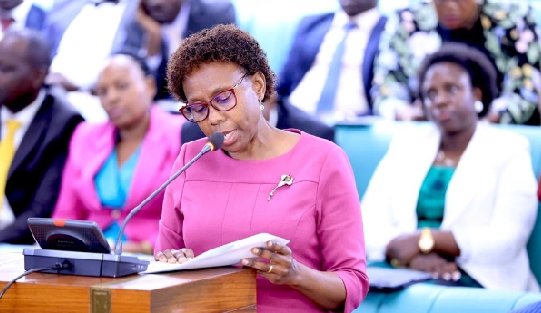
Government Chief Whip Jane Ruth Aceng acknowledged the concerns and said the matter would be referred to the Minister of Internal Affairs for a response.
“Government has taken note of the question. I will ask the Minister of Internal Affairs to respond,” Aceng told Parliament.
Mass registration drive planned
The QR-code concerns came as Prime Minister Robinah Nabbanja outlined plans for a nationwide registration and ID issuance exercise.
Nabbanja told MPs that the exercise is expected to reduce the number of unregistered Ugandans from about 11.9 million to below two million.
The government also hopes to cut the number of registered people who have not yet received their national ID cards from about seven million to fewer than 500,000.
The Prime Minister was responding to concerns from Busongora County North MP Sowedi Kitanywa, who called for the decentralisation of ID registration and issuance to parish level.
Nabbanja said parish chiefs would be used to support NIRA with registration and mobilisation, bringing the service closer to communities.
The government also plans to expand NIRA’s staffing from 571 to 997 employees, with the aim of deploying three officers in every district.
For millions of Ugandans, however, the immediate question remains whether the new cards will work when they need them most — at the bank, at a telecom shop or anywhere else proof of identity is required.


Tooro Kingdom Amasaza Cup : Burahya Win 3-2 on Aggregate to Reach Final
KAMPALA, Uganda (UGNEWSLINE) -Burahya County booked their place in the final of the fifth edition of the Tooro Kingdom MTN...