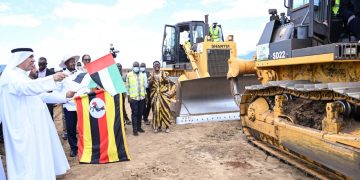



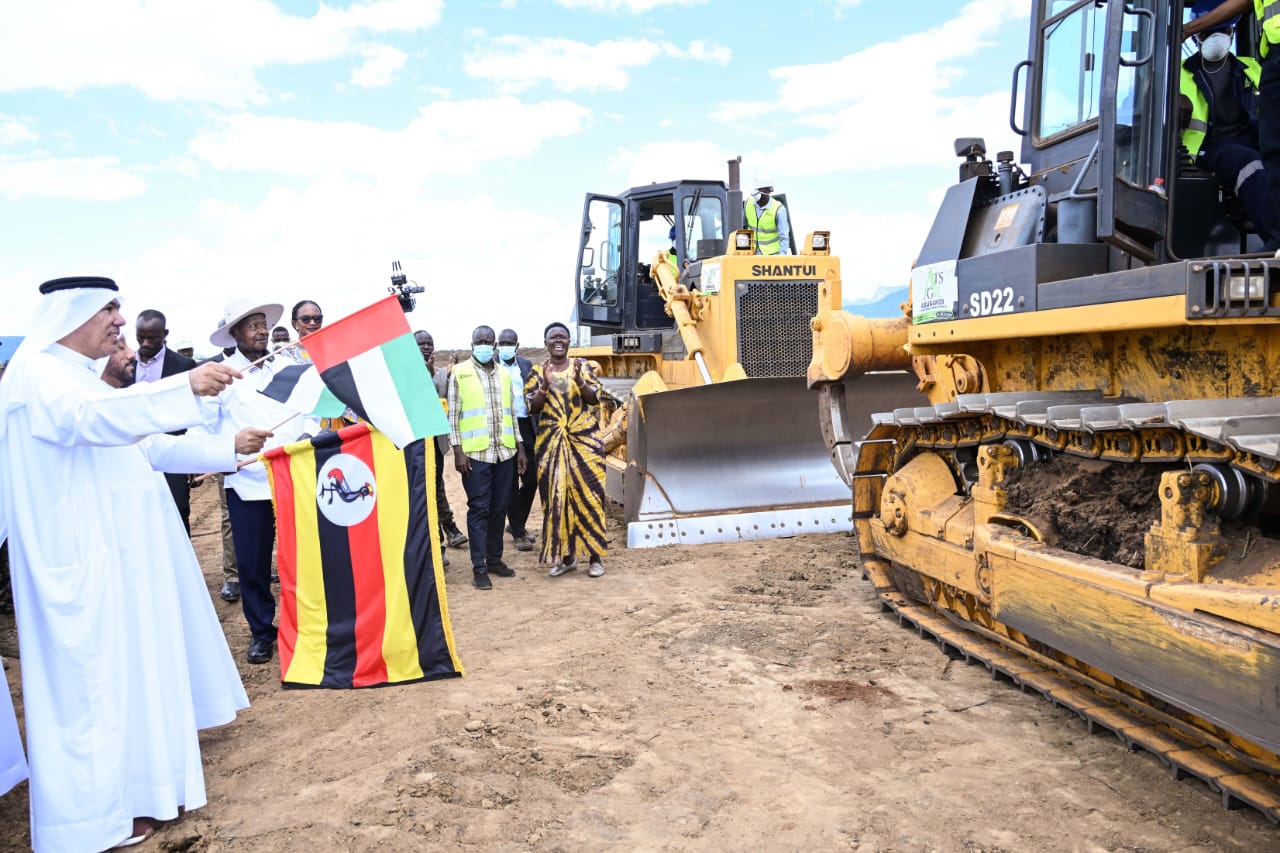
President Yoweri Kaguta Museveni has officially launched the construction of Kidepo International Airport in Karenga District, marking a major milestone in Uganda’s efforts to unlock the economic potential of the Karamoja Sub-region through tourism, trade and investment.
The ambitious airport project, estimated to cost more than USD 72 million, is being funded by the Sharjah Chamber of Commerce and Industry of the United Arab Emirates. Once completed, the airport will feature a 3.6-kilometre runway, a 7,408-square-metre passenger terminal, a 74,200-square-metre cargo terminal, and several other modern aviation facilities designed to support international travel and cargo operations.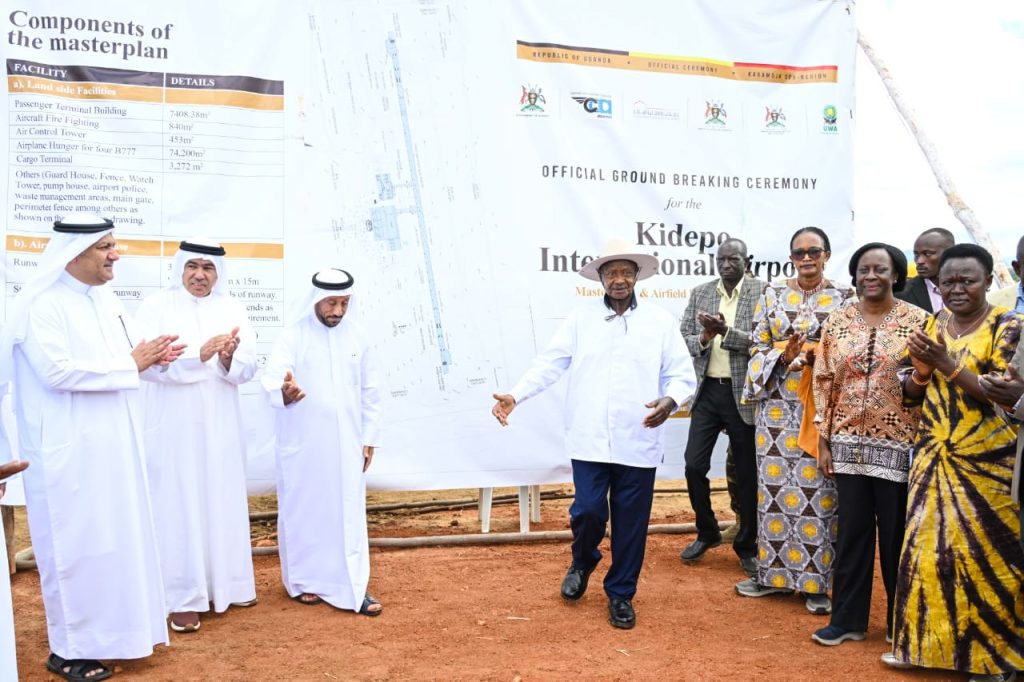 Speaking during the groundbreaking ceremony, President Museveni highlighted the immense opportunities that the international airport presents for Karamoja and Uganda at large. He emphasized the untapped tourism potential of Kidepo Valley National Park, one of Africa’s most spectacular wildlife destinations, noting that the airport would significantly improve accessibility and attract more international visitors, investors and businesses to the region.
“The construction of Kidepo International Airport is a strategic investment that will open up Karamoja to the world, stimulate tourism, create jobs, and enhance trade and investment opportunities,” President Museveni said. The President commended the communities in Karenga District for voluntarily offering land for the project, describing their cooperation as a demonstration of commitment to development. He assured residents that the airport would bring immense benefits through increased tourism, wildlife conservation initiatives, trade opportunities and infrastructure development.
Museveni also encouraged the people of Karamoja to broaden their participation in the four key sectors identified by the National Resistance Movement (NRM) government as drivers of wealth creation: commercial agriculture, manufacturing, information and communication technology (ICT), and services, particularly tourism.
Citing the global tourism industry’s estimated value of USD 11.6 trillion, the President urged communities to embrace modern economic activities and move away from traditional practices that have limited income growth.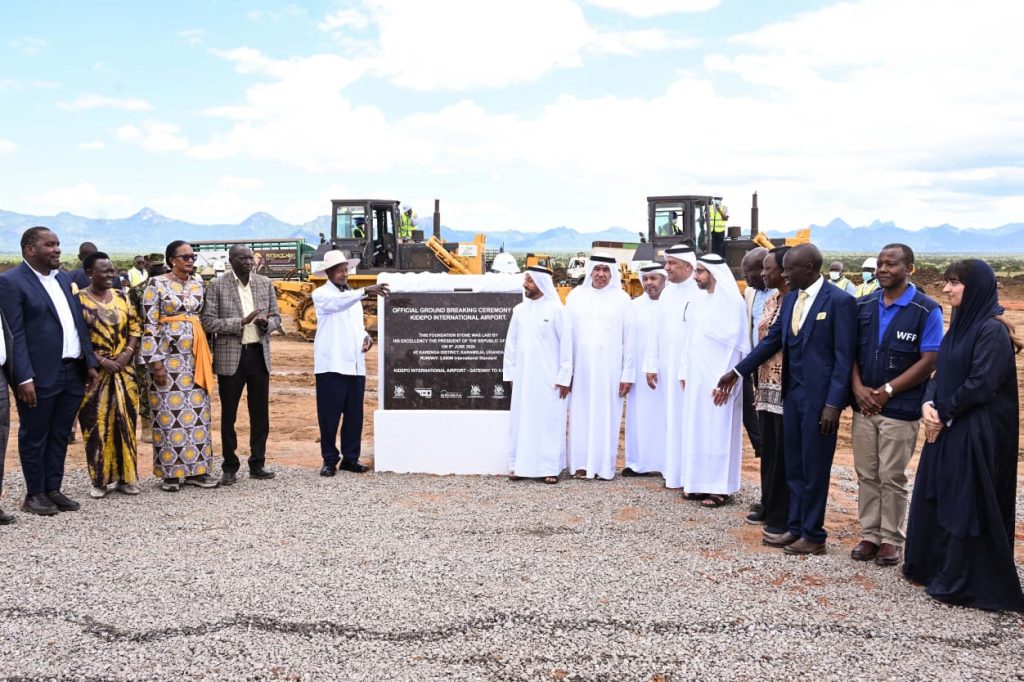 He further reaffirmed the government’s commitment to protecting Uganda’s tourism assets and advised communities living near Kidepo Valley National Park to support conservation efforts and adhere to government guidelines aimed at preserving wildlife and promoting sustainable tourism.
Addressing potential investors, President Museveni described Uganda and Africa as emerging investment destinations with rapidly expanding markets. He commended the Sharjah Chamber of Commerce and Industry for choosing Uganda as an investment destination and assured the investors of favorable returns and a growing consumer market.
According to the President, Africa’s population is projected to grow significantly over the coming decades, creating increased demand for goods and services and positioning the continent as a major global market.
Museveni also reflected on the transformation of Karamoja following the government’s disarmament exercise. He noted that the elimination of gun violence and cattle rustling had paved the way for peace, security, development and investment across the sub-region.
“The peace we are witnessing today has attracted investors and enabled government to undertake major development projects such as this airport,” he said.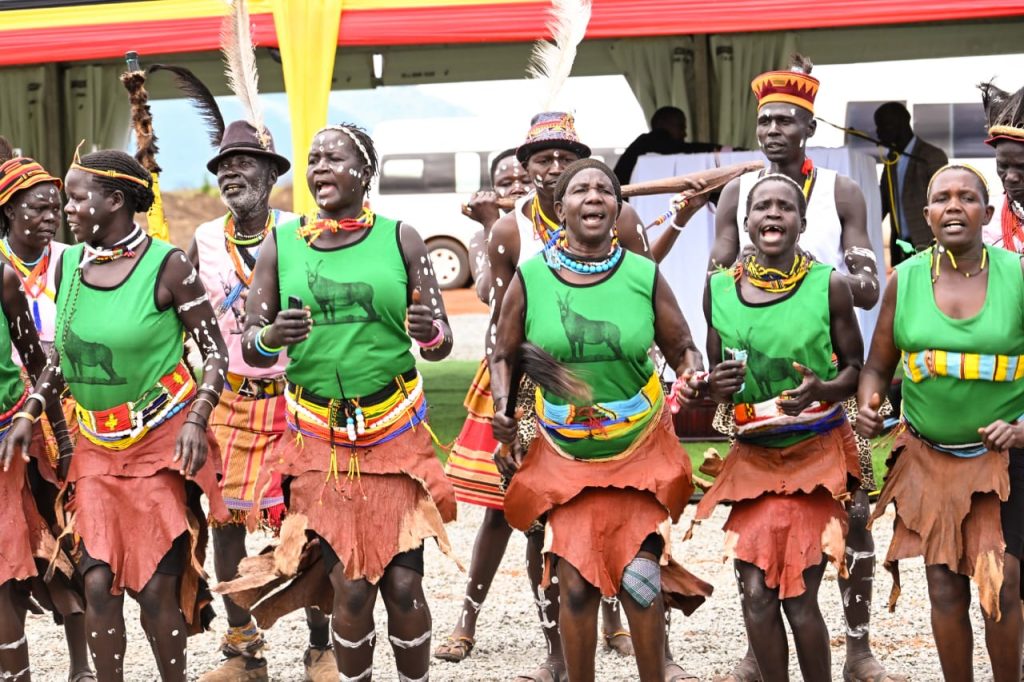 The President further revealed plans to expand the construction of communal water dams for livestock while exploring mechanisms to support individual farmers in establishing their own water reservoirs. He also cautioned residents against nomadic pastoralism and encouraged them to embrace settled farming and livestock production within designated areas.
Meanwhile, Abdallah Mohammad Sultan Al Owais, Chairperson of the Sharjah Chamber of Commerce and Industry, provided details of the airport project, describing it as a transformative investment that is currently employing 1,620 Ugandans.
Al Owais explained that the project will be implemented in three successive phases and praised the people of Karenga District for their hospitality and support toward the development.
“We appreciate the warm reception and cooperation from the local communities. This project will not only strengthen connectivity but also contribute to economic growth and job creation,” he said.