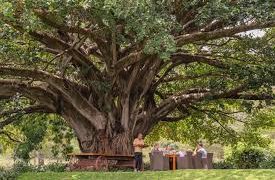



While all trees help fight climate change by absorbing carbon dioxide, some fig trees in Kenya have revealed an extraordinary ability: they can turn CO₂ into stone.
According to new research being presented at the Goldschmidt Geochemistry Conference in Prague, certain fig tree species are capable of locking carbon away in the form of rock-like minerals underground, a process that could be a game-changer in long-term carbon sequestration efforts.
How It Works
Most climate conversations around trees focus on organic carbon sequestration, where trees absorb CO₂ through photosynthesis and store it in their trunks, leaves, and roots.
But these fig trees do something more unusual: inorganic carbon sequestration.
In an article published on by “The Magazine” website, these trees produce calcium oxalate crystals, and when their parts decay, soil microbes and fungi convert those crystals into calcium carbonate, the same substance found in chalk and limestone.
Remarkably, even termites play a role by transporting leaf litter to their mounds, where microbes further aid in transforming the carbon into stable rock stored underground.
Fig Trees That Fight Climate Change
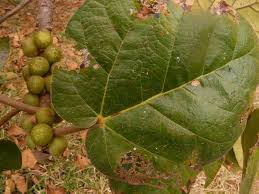
Researchers identified three species of fig trees in Kenya, including Ficus wakefieldii, that naturally use this “oxalate-carbonate pathway.”
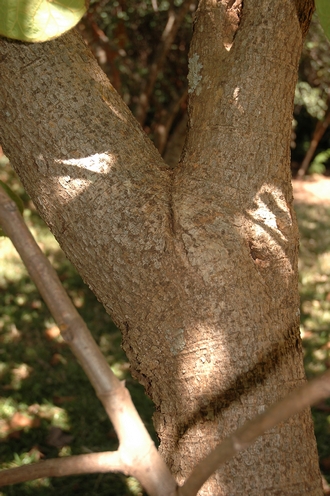
They discovered calcium carbonate forming not just in the soil around the trees but also on their trunks and deeper within their wood, a sign that carbon is being locked away more deeply than previously understood.
“As the calcium carbonate forms, the soil becomes more alkaline,” explained Mike Rowley, a biogeochemist from the University of Zurich. “This process sequesters carbon in a much more stable form, potentially lasting for centuries.”
A New Tool in Climate Strategy
Until now, this kind of carbon storage was mostly studied in non-fruit-bearing trees like the Iroko tree in West Africa, which can store about one ton of calcium carbonate in its lifetime. But the discovery of food-producing fig trees doing the same opens up new, promising possibilities, especially in agricultural and reforestation settings.
Since calcium oxalate is a common mineral in many plants, and the microbes needed for the conversion are widespread, scientists believe there may be many more trees capable of this hidden process.
Beyond their fruit, fig trees might offer a powerful tool in the global effort to fight climate change. By helping turn CO₂ into stable underground rock, they could become natural allies in storing carbon for the long term, and perhaps turn the tide in the battle against rising emissions.
The article was published by ‘The Magazine’……