


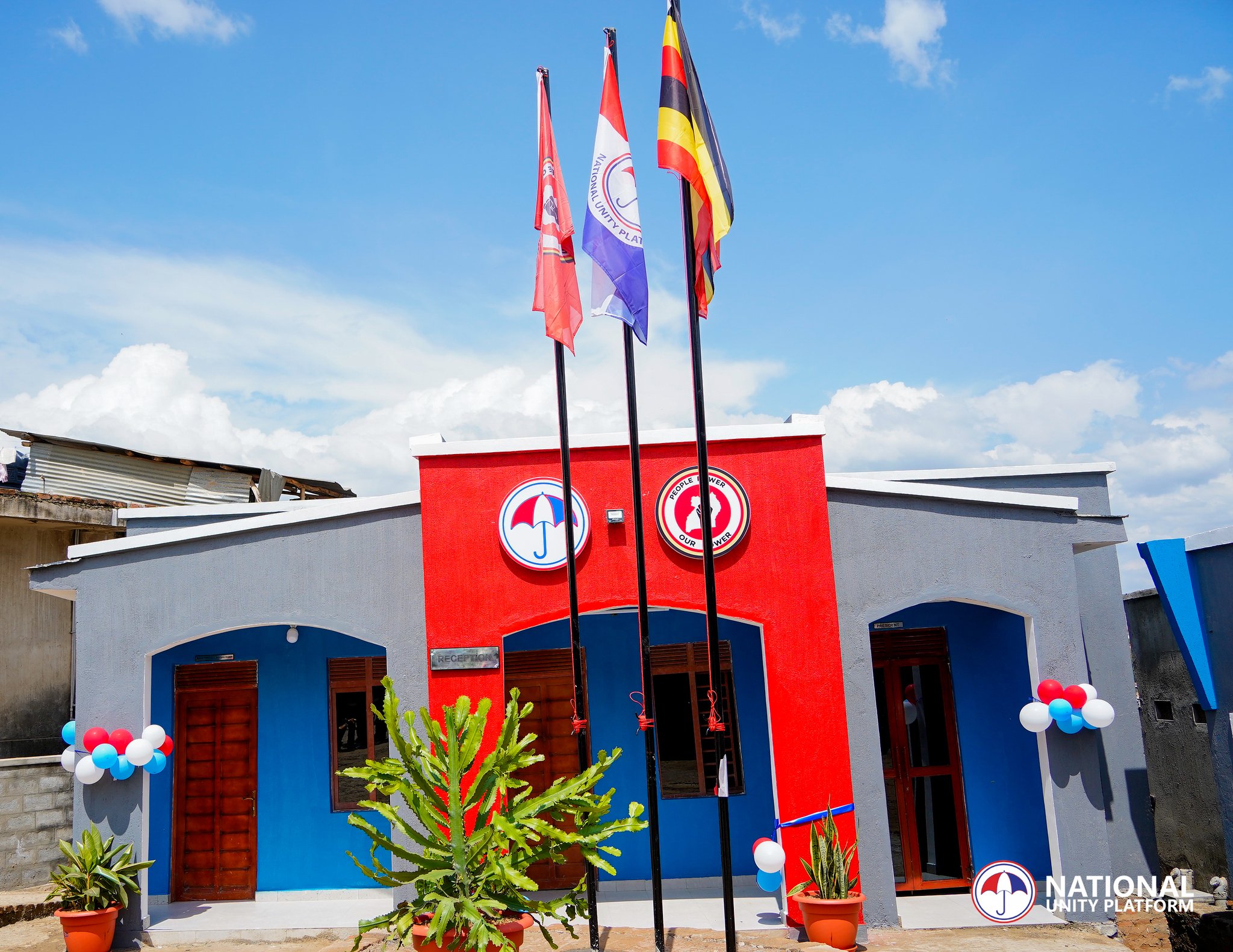
The National Unity Platform (NUP) leading opposition party has officially released the final list of approved flag bearers for the Buganda region, concluding a tense and controversial vetting process that has left several prominent party hopefuls sidelined, and their supporters asking hard questions.
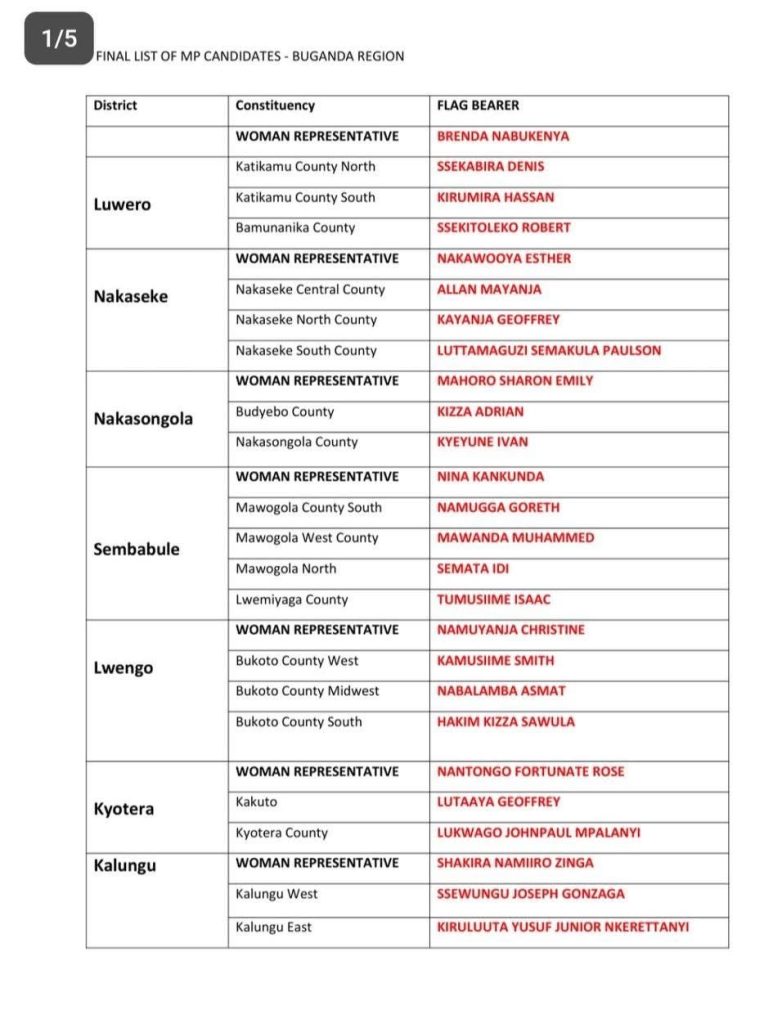
Announced via the party’s official X (formerly Twitter) handle, NUP urged all successful candidates to present their nomination forms at the party headquarters in Makerere-Kavule, Kampala for formal endorsement. According to the statement, the window for this submission is limited to October 14th and 15th, between 8:30am and 4:00pm.
“The successful candidates may now proceed to bring their nomination forms to the Party Headquarters (Makerere-Kavule) for endorsement,” read the party’s brief, signaling the end of a re-evaluation phase that followed internal petitions and appeals.
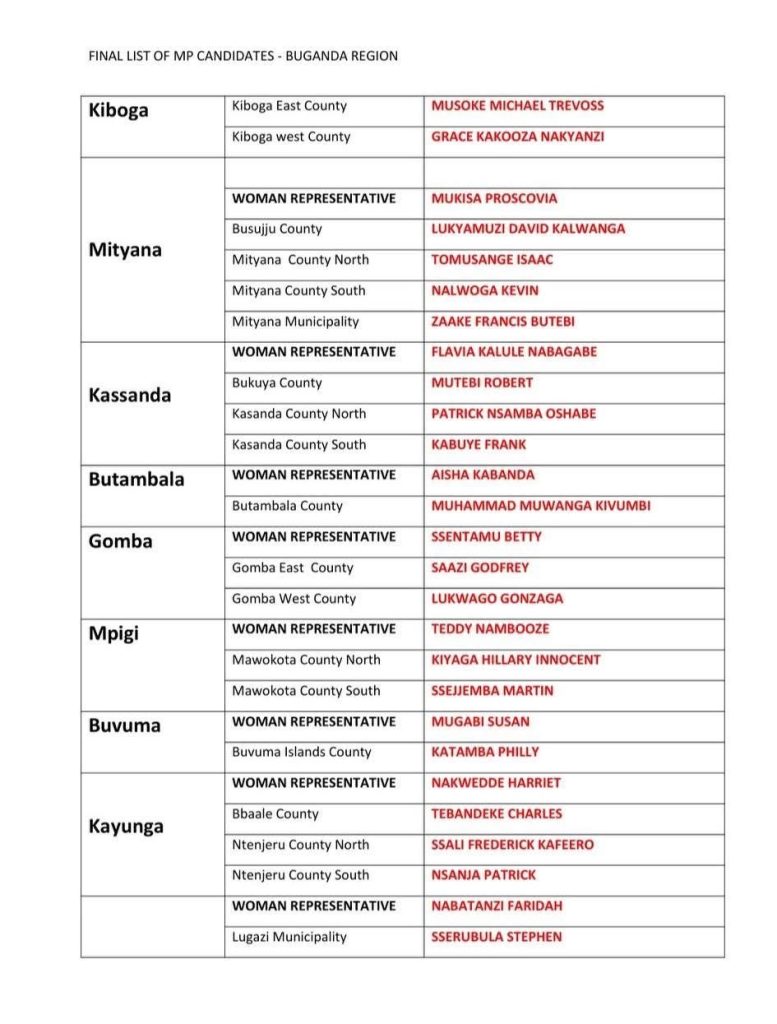
While some petitions did prompt internal reviews, the final list appears to largely reinforce the decisions of the party’s original vetting committee.
Most of those who were previously approved held onto their positions, while petitioners and challengers now find themselves out in the cold, and looking for a political path forward, many choosing to run as independents.
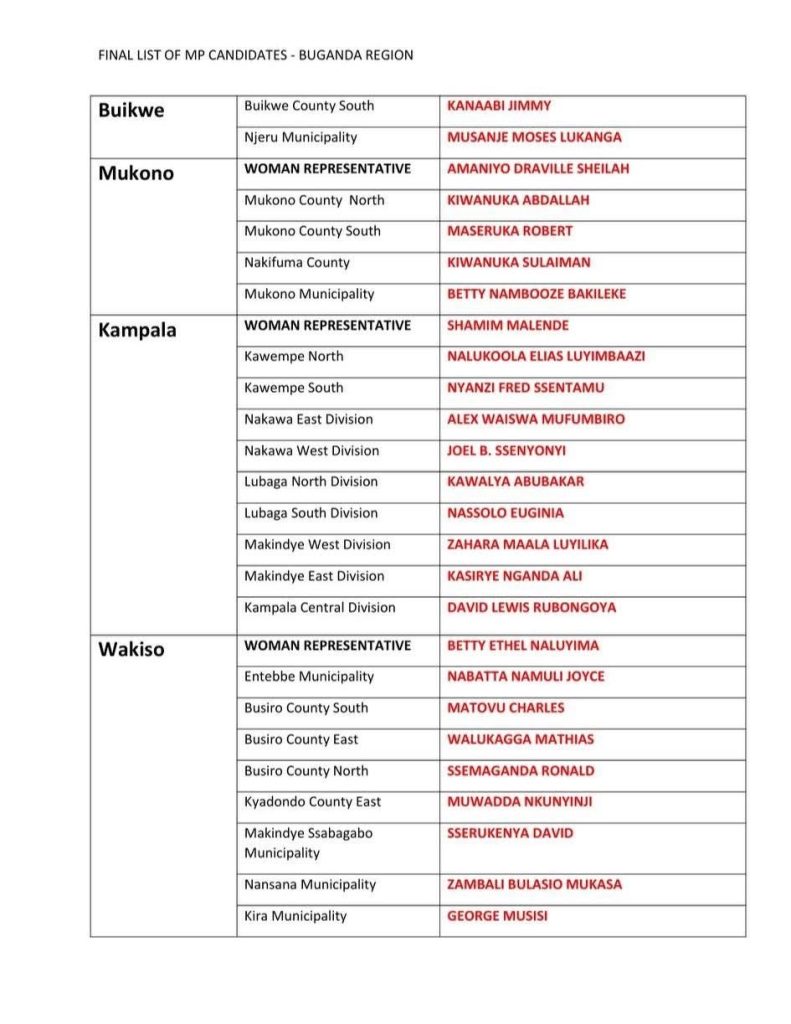
The fallout has been particularly striking in key constituencies. Medard Ssegoona, a well-known political figure, lost the party card for Busiro East to singer-turned-politician Mathias Walukaga.
Former legislator Latif Ssebagala was denied the flag for Kawempe Mayor, while Joseph Mutebi, the sitting Mayor of Kira Municipality, was also denied the chance to run again under the party banner.
In a dramatic and unexpected twist, Zahara Luyilika, who was initially eyeing the Kampala Woman MP seat, was shifted to Makindye West, replacing sitting MP Allan Ssewanyana, who, too, was denied the card under unclear circumstances. The reshuffle has raised eyebrows and prompted questions about transparency and internal dynamics within the party.
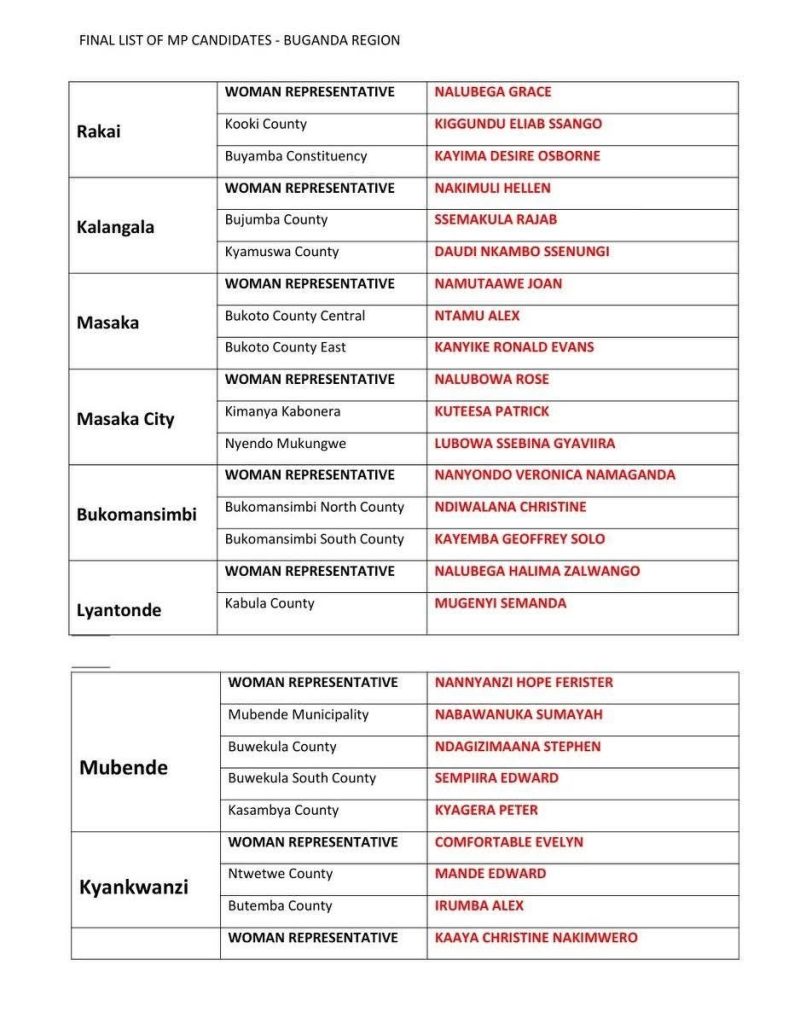
The decisions have not gone down smoothly. Several aspirants who lost out are already declaring independent bids, with many alleging betrayal and unfair treatment by the party’s vetting committee.
At the heart of the discontent is NUP’s unique candidate selection process. Unlike the ruling National Resistance Movement (NRM), which holds primary elections allowing registered party members in each constituency to vote for their best candidate, NUP employs a vetting system. In this model, candidates face a panel where they are assessed on both their answers to interview questions (weighing 40%) and their perceived grassroots support (weighing 60%).
It’s a process the party says ensures quality representation and discipline, but for those left out, the system feels opaque and exclusionary. Critics argue the system centralizes power and disconnects local constituents from the candidate selection process. They are now calling for reform.
As the dust settles, political observers are closely watching whether NUP will address the grievances of its disillusioned members, or risk deepening internal fractures ahead of the 2026 general elections. Having independent candidates at every post meaning dividing the votes, which political analysts say might affect the party.