


KAMPALA, Uganda (UGNEWSLINE) —Across parts of Africa, the circulation of illicit firearms continues to complicate efforts to contain armed violence, organised crime and cross-border insecurity, with weapons often moving beyond the reach of national regulatory systems.
Against that backdrop, Uganda is preparing to overhaul its firearms laws, with the Cabinet approving a proposed legislation intended to strengthen controls over the ownership, movement, storage and tracking of small arms and light weapons.
The proposed Small Arms and Light Weapons Control Bill, 2026, was approved at a Cabinet meeting chaired by President Yoweri Museveni at State House, Entebbe, on November 23, according to government officials.
The legislation is expected to introduce stricter licensing procedures, mandatory practical and theoretical training for firearm licence holders, improved weapons identification and tracing systems, and stronger enforcement against illegal possession and trafficking.
The responsible minister has been directed to present the Bill to Parliament for consideration. It has not yet become law.
The proposed changes come amid growing international concern about the proliferation of small arms, which the United Nations identifies as a major contributor to violent deaths, organised criminal activity and instability in conflict-affected societies.
Global security challenge
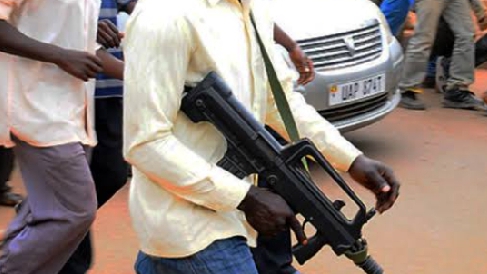
Small arms and light weapons are among the most widely circulated and easily concealed conventional weapons. They include pistols, revolvers, rifles, assault rifles and sub-machine guns, while light weapons include crew-operated systems such as heavy machine guns and certain grenade launchers.
Unlike major conventional weapons systems, many small arms can be transported and concealed relatively easily, making their monitoring and control particularly challenging.
Their effects extend well beyond conventional battlefields. Illicit firearms are associated with armed robbery, homicide, terrorism, organised criminal networks, domestic violence and attacks on civilians.
The United Nations Office on Drugs and Crime says firearm trafficking contributes to several forms of transnational crime, including human trafficking and drug-related offences.
In a 2024 address, UN Secretary-General António Guterres warned that small arms were a leading cause of violent deaths globally and were used in nearly half of all homicides.
A United Nations report published in 2025 also highlighted the devastating consequences of small arms in conflict settings. In sub-Saharan Africa, firearms accounted for up to 30 per cent of recorded deaths for which the cause could be established in the relevant reporting period.
The figures underline the difficulty facing governments attempting to control weapons in regions affected by political instability, porous borders and organised armed groups.
Why Uganda is concerned
Uganda occupies a strategically important position in East Africa, sharing borders with South Sudan, the Democratic Republic of Congo, Rwanda, Tanzania and Kenya.
Its geographical position exposes it to regional security challenges, including the movement of illicit goods and weapons across national boundaries.
Instability in neighbouring conflict-affected areas can create opportunities for illegal arms circulation, particularly where border surveillance and weapons-tracking systems are weak.
The proliferation of firearms presents several risks for Uganda.
First, the availability of illegal weapons can increase the capacity of criminal groups to carry out violent robberies, attacks and other offences.
Second, firearms can intensify communal conflicts, particularly where disputes over land, livestock, resources and local authority already exist.
Third, the circulation of unregistered weapons makes it harder for security agencies to establish their origins, identify their owners and determine how they entered civilian hands.
The risks are not confined to Uganda. Across the Great Lakes region and the Horn of Africa, illicit weapons have remained a concern in areas affected by armed conflict, insurgencies, cattle raiding and organised criminal activity.
Strengthening legal framework
Uganda currently regulates firearms through several pieces of legislation, including the Firearms Act, alongside provisions in laws governing the armed forces, police, prisons and counterterrorism.
Government officials say the existing framework has gaps that make it difficult to comprehensively regulate the possession, management, transfer and disposal of small arms and light weapons.
Announcing the Cabinet decision, Minister for ICT and National Guidance Justine Kasule Lumumba said the proposed legislation was intended to address weaknesses in the country’s existing firearms-control arrangements.
Among the identified shortcomings are inadequate provisions for practical and theoretical training, limited mechanisms for the management and disposal of weapons, weak border surveillance and insufficient controls over illegal manufacturing and the hiring out of firearms.
The proposed law seeks to establish a more coordinated system covering the entire lifecycle of firearms, from licensing and acquisition to storage, transfer, tracking and eventual disposal.
It is also expected to strengthen accountability among civilian firearm owners, private security organisations and state security institutions.
Regional and international commitment
Uganda’s proposed reforms form part of wider regional efforts to prevent the illicit circulation of small arms.
The Nairobi Declaration of 2002 established a framework for cooperation among countries in the Great Lakes region and the Horn of Africa. It was followed by the Nairobi Protocol in 2004, which provides a regional framework for preventing, controlling and reducing the proliferation of illicit small arms and light weapons.
The initiative recognises that individual countries cannot effectively address arms trafficking without cooperation on border security, information exchange, weapons registration and law enforcement.
At the international level, the United Nations Programme of Action on Small Arms and Light Weapons and the UN Firearms Protocol provide additional frameworks for tackling illicit manufacturing and trafficking.
These initiatives seek to improve the identification and tracing of weapons, strengthen national legislation and encourage cooperation between governments.
The challenge of enforcement
Despite international commitments, implementing effective firearms controls remains difficult.
Weak border infrastructure, corruption, inadequate record-keeping and the diversion of weapons from authorised stockpiles can undermine otherwise robust legislation.
The United Nations has repeatedly warned that weapons can enter illicit markets through theft, diversion, unauthorised transfers and trafficking networks.
For Uganda, the effectiveness of the proposed legislation will therefore depend not only on the legal provisions Parliament eventually approves, but also on the resources available to enforce them.
Questions surrounding the treatment of existing licensed firearm owners, the cost of compliance, licensing procedures and safeguards against arbitrary decisions are also likely to attract attention as the Bill undergoes parliamentary scrutiny.
The government will need to balance public safety and national security with the legitimate interests and rights of individuals and organisations authorised to possess firearms.
Ultimately, Uganda’s proposed legislation reflects a broader international recognition that controlling the spread of small arms is not simply a matter of regulating gun ownership. It is also an important component of preventing violence, strengthening institutions and protecting regional stability.