


With the rainforest outskirts of the Brazilian Amazon as their stage, world leaders are gathering at COP30 in Belém this month under a renewed sense of urgency.
But thousands of miles away in Kampala, Uganda is already ramping up its own climate action, not waiting for the global spotlight to shine, but claiming its place in it.
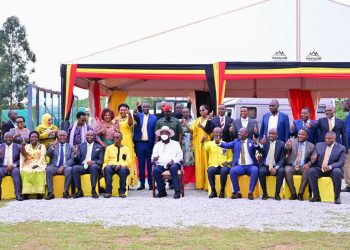
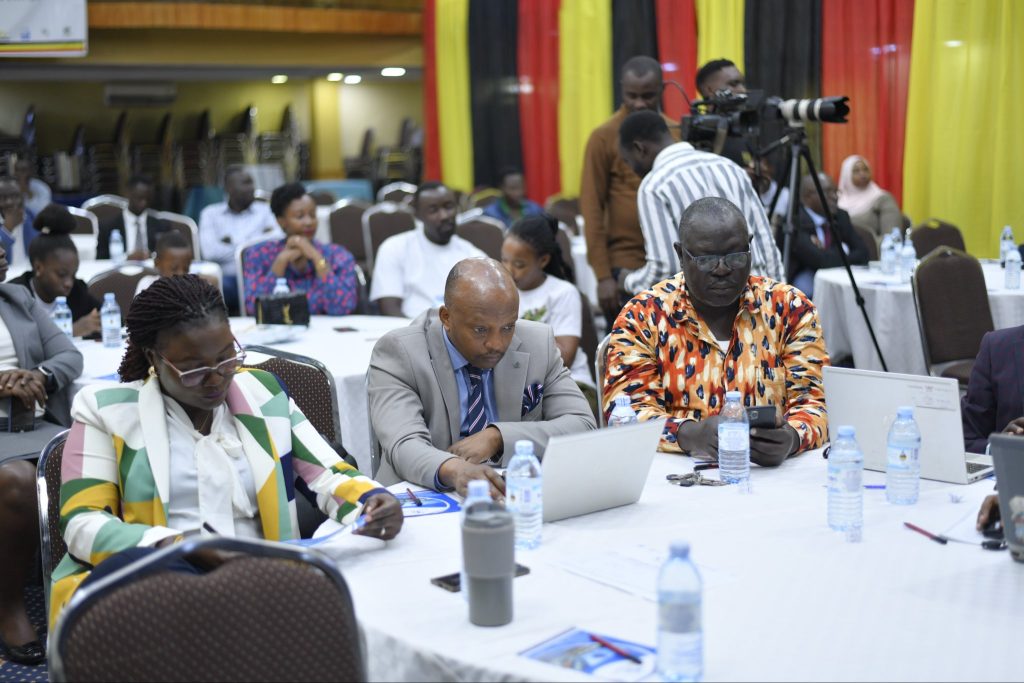
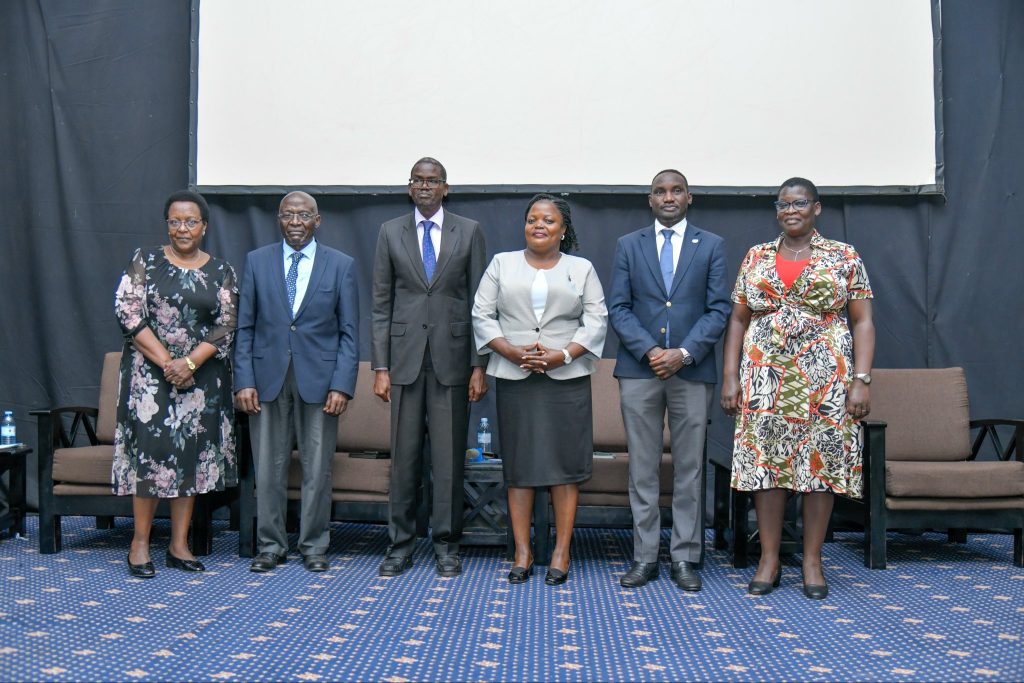
At the national Pre-COP30 forum held in Kampala on November 10, officials from the Ministry of Water and Environment, civil-society groups, youth leaders, children and private-sector actors joined hands to send a clear message: Uganda is ready to convert pledges into practice.
“Our communities are already feeling the weight of climate change,” declared Dr. Alfred Okot Okidi, Permanent Secretary in the Ministry, speaking on behalf of Environment Minister Beatrice Anywar, widely known as “Mama Mabira.”
He detailed how farmers are losing crops, families are forced to relocate by landslides and floods, and livelihoods are under threat. Climate change, he emphasized, “is not a distant threat, it is here, and it is now.”
Uganda’s green ambition in motion
Uganda, which has long been among the early signatories of the Paris Agreement and the UN Framework Convention on Climate Change, is formalising its approach: setting climate-resilience as a core pillar of national development, woven into its Vision 2040 and upcoming National Development Plan IV (NDP4).
The forum heard that the government has secured around US $31 million (approximately Ugandan shillings 108 billion) from the Green Climate Fund (GCF) in recognition of measurable progress in reducing deforestation and greenhouse-gas emissions.
The funding, Dr. Okidi said, reflects both national leadership and international trust in Uganda’s climate agenda.
He urged partners to stand “shoulder to shoulder” with Uganda in mobilising climate finance, tech transfer and capacity-building.
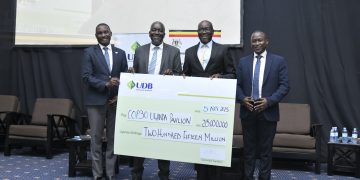
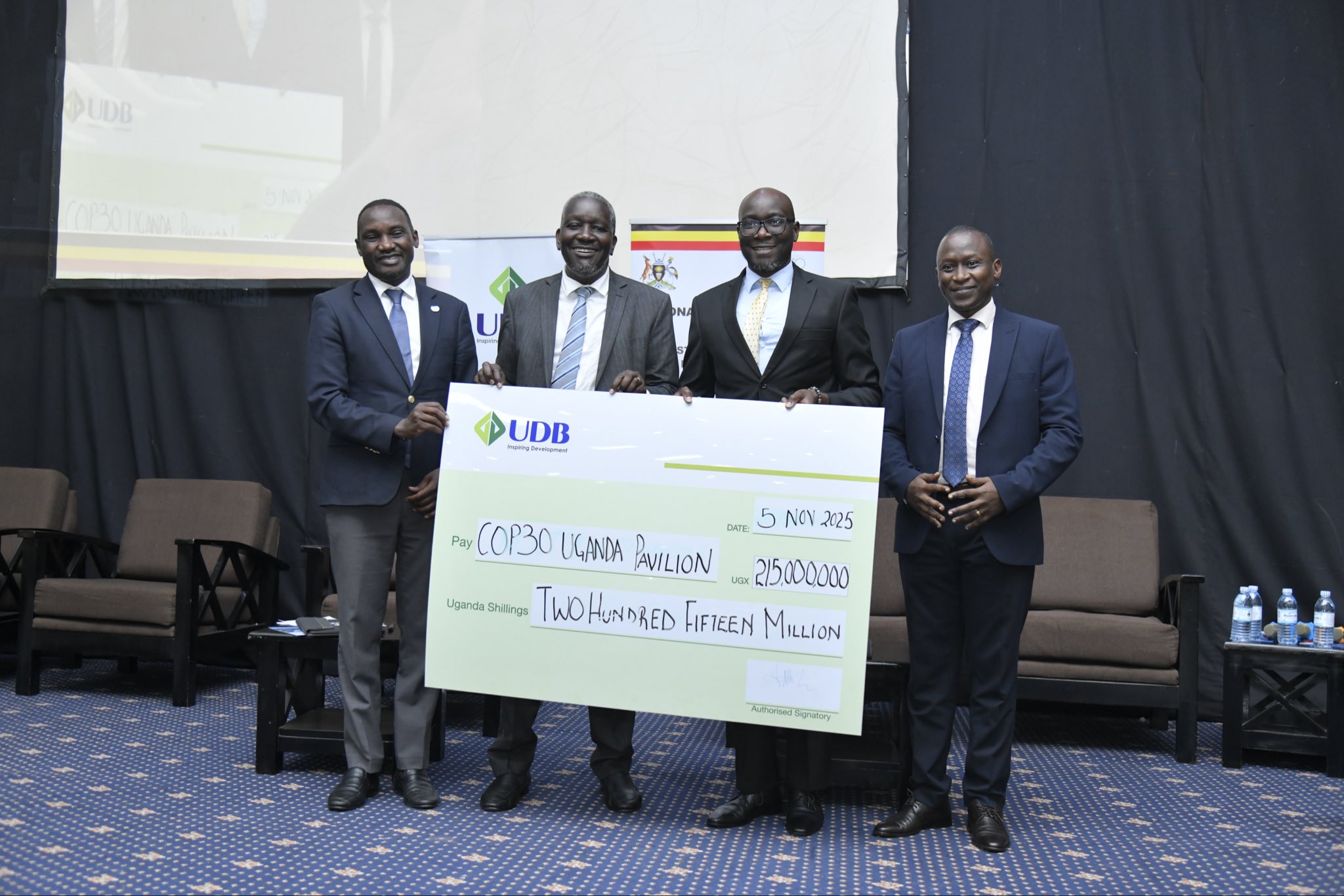
Among other milestones; the government has also finalised its policy and legal framework for carbon trading, a clear signal that Uganda is preparing to attract green investment, not just grant-based aid. The event also marked a new partnership between the Ministry of Water and Environment and the Uganda Development Bank (UDB), the latter co-sponsoring Uganda’s pavilion at COP30 with shs250million. UDB pledged to mobilise green finance through its Climate Finance Facility for adaptation, mitigation and biodiversity conservation.
What truly lifted the room was the energy from Uganda’s youth advocating for climate change. Led by Jemimal Kassibo of the Coordinator, Youth Climate Council Uganda, they spoke of more than protest: more than raising voices.
She noted that over 300 young innovators are already rolling out eco-education programmes, green enterprises and sustainable-livelihood solutions across the country.
“This year, we decided we are not just going to advocate, we are going to create action,” Kassibo said.
She called for a dedicated Youth Climate Fund that rural youth and refugee communities can access directly. “If we are to win this fight… support must reach the communities already taking action, from Kampala to Soroti to the Kyangwali refugee settlement,” she noted.
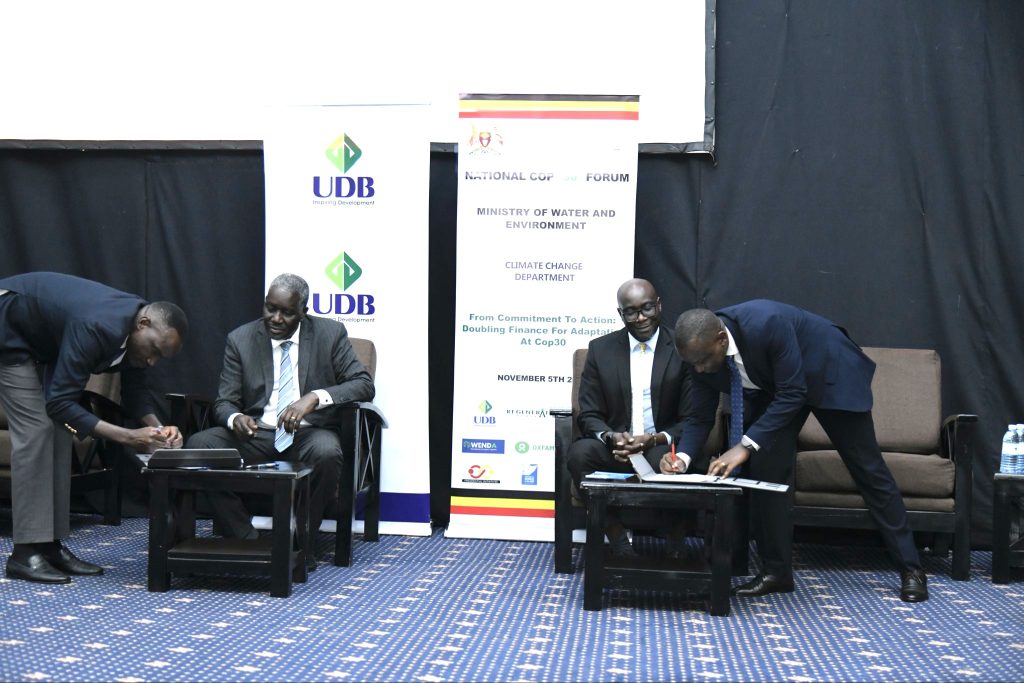
The forum also had symbolic and substantive moment: a Memorandum of Understanding between the Ministry and UDB, and the handing over of a joint civil-society paper guiding Uganda’s COP30 position.
The statement, signed by the Advocates Coalition for Development and Environment (ACODE), ActionAid International Uganda (AAIU) and others, called for inclusive, transparent and accessible funding mechanisms, full operationalisation of a loss-and-damage fund, a gender-ambitious climate action plan, technology transfer, and the strengthening of locally-led climate initiatives
Uganda’s forest under pressure
Amid these high-level engagements, one fact looms large: Uganda’s forest cover story is sobering. According to the Food and Agriculture Organization (FAO) Global Forest Resources Assessment 2025, Uganda’s forest area fell from about 4.55 million hectares in 1990 to roughly 2.37 million hectares in 2025, a nearly 48 per-cent drop over 35 years.
The annual deforestation rate slowed from 2.7 per cent in the 1990s to 0.8 per cent between 2020-25. At the same time, in 2025 forest cover stood at just 11.8 per cent of land area, well below the African average of 21 per cent and global average of 32 per cent.
Meanwhile, Uganda’s growing stock, the volume of living trees, fell from about 447 million m³ in 1990 to 233 million m³ in 2025.
According to the National Forest Authority (NFA), the forest cover increased from 9% in 2015 to 13.4% in 2023 following programs such as REDD+, Forest Landscape Restoration, community-based management, and private-sector tree planting.
Reports estimate annual forest-loss of up to 120,000 hectares in recent years, driven heavily by charcoal production, firewood harvesting, agricultural encroachment and illegal logging.
The government’s forestry target, to raise cover toward 24 per cent by 2040, is now in the public domain. For example, a partnership between NFA and the banking sector to restore portions of the Mabira Forest Reserve and others is underway.
But the challenges remain formidable: population pressure, land-tenure conflicts, weak enforcement, and the transformation of primary forest into less dense secondary stands undermine carbon storage capacity and biodiversity.
While the tree cover loss continues, the isolation of the worst drivers and the growth of restoration efforts present a turning point.
The timber-tunnel of the 1990s may be closing, but the forest-front remains open.
COP30 relevance for Uganda
At the core of Uganda’s national momentum is the realisation that global events such as COP30 matter, because they set the tone, the finance flows, and the rules for climate action.
Uganda’s carbon balance, hydrology, biodiversity and local livelihoods are intertwined with forest health, while the flows of climate funding, carbon markets and green investment which Uganda is positioning itself to tap are shaped through global negotiations.
Thirdly, as a vulnerable country, Uganda’s voice at COP30 will contribute to shaping frameworks around adaptation, loss and damage, just energy transitions and technology-sharing.
Hosted for the first time in the Amazon, the COP30 conference will run in Belém, Brazil, from 10-21 November 2025.
The early Summit of heads of state took place on November 6-7, designed to allow deeper reflection ahead of the broad negotiations.
Brazil’s presidency framed the conference around implementation: bringing ambition into reality, with close attention to forest and nature; food systems; Indigenous and local-community rights; adaptation finance; and closing the gap between talk and delivery.
The agenda is no longer simply about new big promises, but about closing the loop from commitment to accomplishment.
COP30’s setting in the Amazon also brings symbolic resonance: forests that soak up carbon, support biodiversity and underpin Indigenous communities are front and centre.
The same dynamics play out in Uganda’s forests, though on a different scale, which suggests that Uganda’s participation is timely and relevant.
According to the Guardian Paper, the opening of COP30 has already featured stark warnings: the António Guterres (UN Secretary-General) described missing the 1.5 °C target as a “moral failure and deadly negligence.”
According to Okidi, climate action is no longer optional, nor is it simply a side-issue. He said it is central to national development.
The ministry’s positioning of resilience, investment and international partnership signals an alignment of environment, economy and diplomacy.
In practice this means multiple threads are converging as forest-restoration efforts link to carbon financing and green investments; youth-led innovations link to local livelihoods and climate adaptation; the legal framework for carbon trading links to private-sector engagement and exports; while Uganda’s pavilion at COP30 offers a platform to showcase innovations, to engage investors, and to deepen south-south partnerships.
For transparency, for accessible finance for vulnerable communities, for gender-smart climate policies and for locally-led solutions, the civil-society statement emphasised that funds should be grant-based, equity-driven and accessible to non-state actors. It called for a gender action plan at COP30, technology transfer and inclusion of health in the climate agenda.
The challenges ahead
On the global stage, COP30’s ambition to shift from talk to delivery will test Uganda’s capacity to translate its strengthened voice into real investment, real action and real outcomes.