


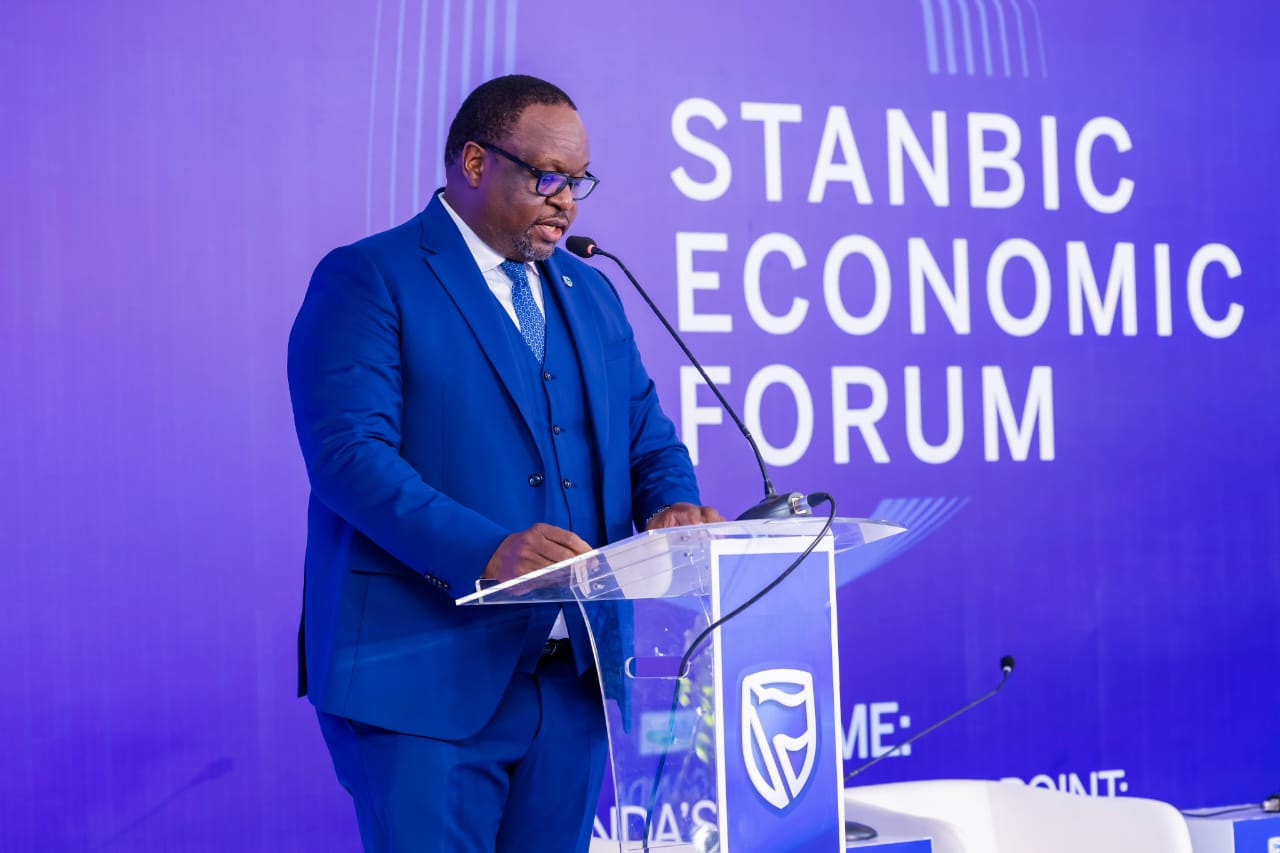
KAMPALA, Uganda- Stanbic Bank Uganda Chief Executive Mumba Kalifungwa has said Uganda must ensure that its emerging oil wealth, expanding regional trade links and rapid technological change translate into tangible benefits for ordinary citizens.
Addressing delegates at the Stanbic Economic Forum themed “Uganda’s Inflection Point: Competing in a Rewired Global Economy,” Kalifungwa framed the country’s current moment not just as an economic turning point, but as a test of whether growth can be made inclusive.
“Inflection points only matter if they translate into better outcomes for people,” he said. “For the farmer in Amuru, this must mean access to affordable finance, climate-resilient inputs and reliable markets. For the SME across Uganda, it must mean affordable credit, digital tools and regional opportunity.” Kalifungwa pointed to the East African Crude Oil Pipeline (EACOP), now estimated to be 97 percent complete, as a symbol of Uganda’s shift from long-term ambition to near-term delivery. First oil is expected later this year, with Uganda holding an estimated 1.6 billion barrels of recoverable reserves and projected peak production of 230,000 barrels per day.
While describing the oil project as the most consequential infrastructure investment in Uganda’s history, Kalifungwa stressed that its success would ultimately be measured by job creation, local supplier development and skills transfer.
“What matters most is what this transformation enables new local suppliers, skills development and long-term national capability,” he said, noting Stanbic Bank’s role in helping unlock financing for the project.
Beyond oil, Kalifungwa highlighted mounting pressures in the global trading system. New tariffs, shifting supply chains and uncertainty around long-standing trade frameworks such as AGOA are forcing countries like Uganda to reassess how they compete and where they attract capital.
At the same time, artificial intelligence is rapidly reshaping industries, from credit assessment and crop monitoring to logistics and service delivery. Africa’s AI market is projected to nearly quadruple by 2030.
“The question is not whether Uganda participates, but how inclusively and competitively we do so,” Kalifungwa said.
He underscored the importance of East African integration, describing it as a “lived reality” for businesses expanding across borders. Stanbic, he said, has supported Ugandan companies entering regional markets not just with financing, but with market insights and strategic partnerships.