


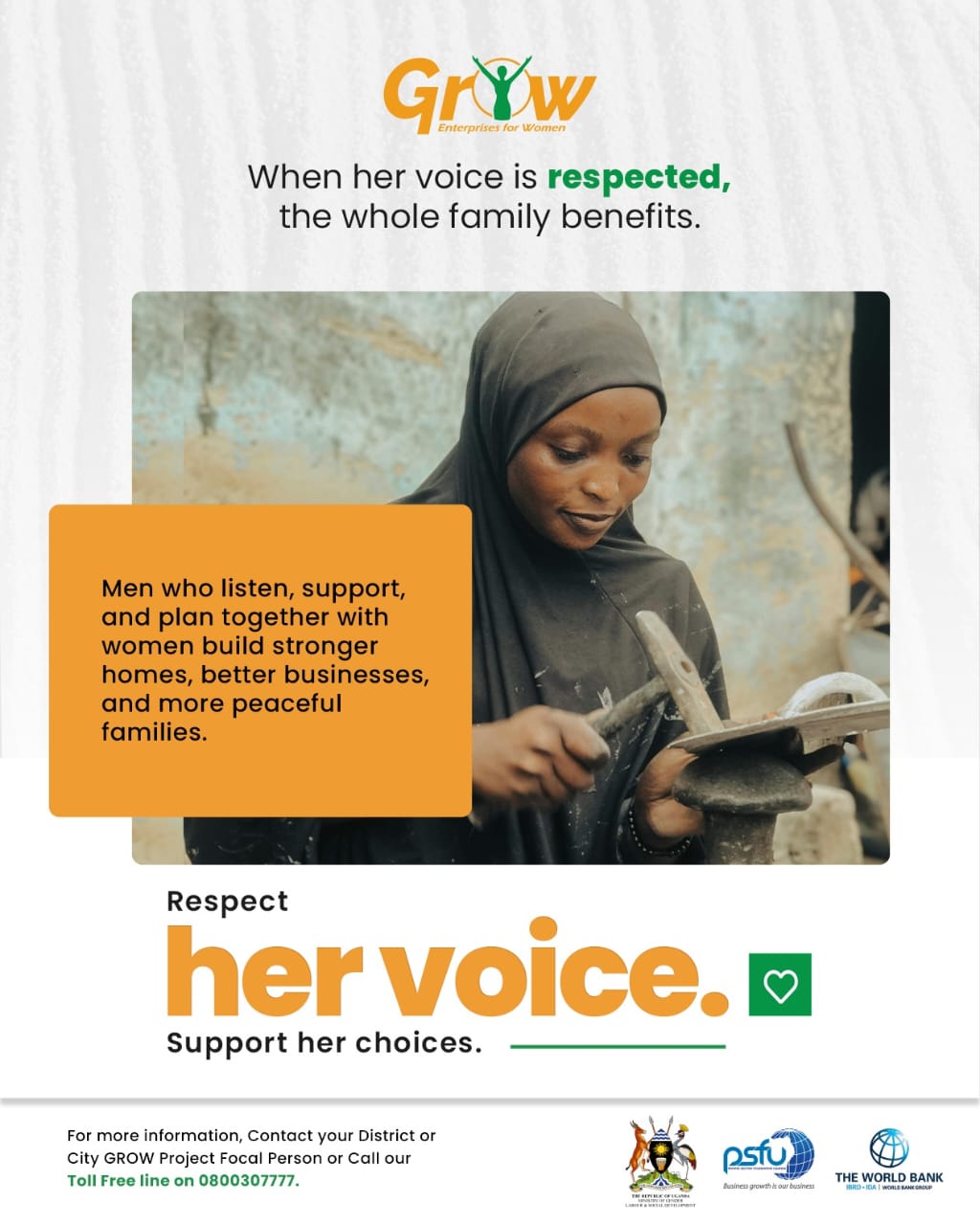
KAMPALA, Uganda — As Uganda intensifies efforts to empower women economically, a government-backed initiative is emerging as a game-changer for female entrepreneurs: the GROW Project (Generating Growth Opportunities and Productivity for Women Enterprises). Experts and policymakers increasingly argue that joining the program is no longer optional for ambitious businesswomen—it is essential.
A national response to persistent barriers
Women in Uganda continue to face structural challenges in business, including limited access to finance, markets, and entrepreneurial training. Despite owning about 39% of businesses, women receive only a small fraction of commercial loans and are significantly less likely to access formal financial services.
The GROW Project was designed specifically to tackle these gaps. Initiated by the Government of Uganda with support from the World Bank, the program aims to expand access to entrepreneurial services and help women-led businesses grow from micro to small and from small to medium enterprises.
Why joining GROW matters:
Access to funding and financial support
One of the biggest obstacles for women entrepreneurs is capital. Through GROW, participants can access loans, grants, and financial linkages tailored to their business stage. The project has already introduced targeted financing initiatives, including specialized loan schemes for women entrepreneurs.
Business training and skills development
Beyond funding, GROW offers structured training programs covering entrepreneurship, management, and sector-specific skills. These programs are designed to equip women with practical knowledge needed to survive and thrive in competitive industries.
Importantly, the project supports both registered and unregistered businesses, making it accessible even to informal entrepreneurs who often lack formal documentation.
Mentorship, networking, and market access
GROW uses a “wrap-around” approach—combining training, mentorship, and networking opportunities. Women are connected to peers, industry experts, and markets, helping them move beyond survival-level enterprises into scalable ventures.
Such networks are critical in a business environment where information gaps and limited exposure often hinder growth.
Inclusive opportunities for vulnerable groups
The project stands out for its inclusivity. It targets women across Uganda, including those in refugee-hosting districts and marginalized communities. Thousands of refugee women entrepreneurs are already part of the initiative, reflecting a broader goal of inclusive economic development.
Job creation and economic transformation
GROW is not just about individual success—it has national implications. By supporting over 60,000 women-owned enterprises and hundreds of thousands of workers, the project is expected to create jobs and stimulate local economies.
Officials say empowering women-led businesses has a multiplier effect, benefiting families, supply chains, and entire communities.
A strategic advantage in a changing economy
With Uganda pushing for industrialization and private sector growth, women entrepreneurs who fail to tap into structured support risk being left behind. Programs like GROW provide a competitive edge—offering tools that many businesses would otherwise struggle to access independently.
Moreover, the initiative aligns with broader national goals of financial inclusion and gender equality, making participants better positioned to benefit from future policies and investment opportunities.
For details, visit your nearest GROW Focal person at the district or division or call 0800307777.