


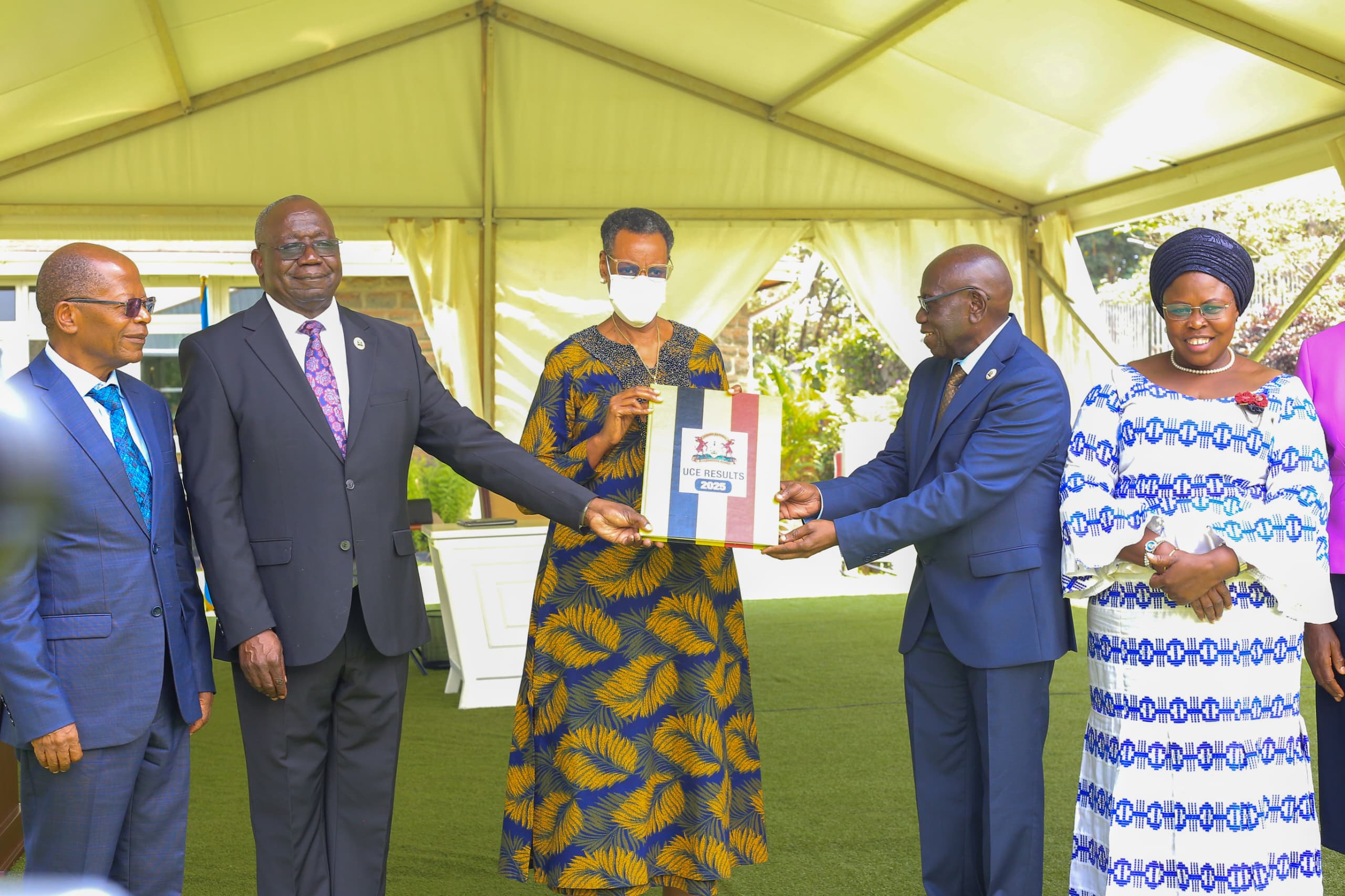
Uganda National Examinations Board has released the 2025 Uganda Certificate of Education (UCE) examination results, marking a significant milestone for the second cohort of learners under the Competency-Based Curriculum (CBC).
The examinations were conducted under the theme: “Embracing security and holistic assessment of learners in a dynamic environment.”
Presenting the results to the Minister of Education and Sports, Janet Kataaha Museveni, the UNEB Executive Director Dan N. Odongo highlighted improved performance trends and increased candidature compared to 2024.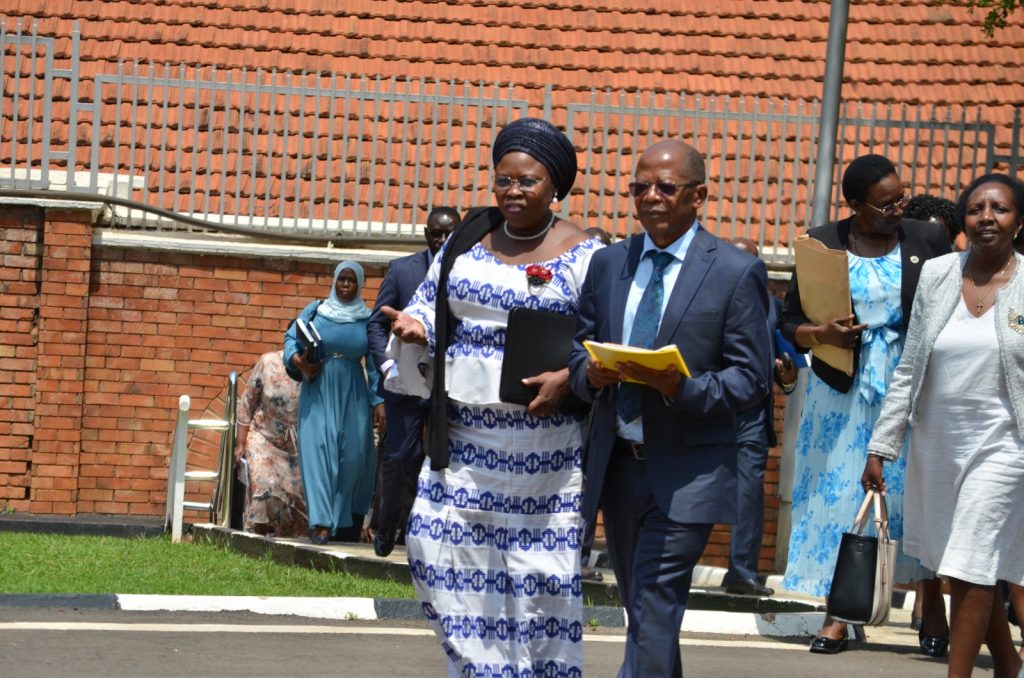 Increased Candidature and Improved Attendance
A total of 432,163 candidates from 3,975 examination centres registered for the 2025 UCE examinations — an increase of 72,746 candidates (20.2%) compared to 2024.
Of the total candidature, 227,871 (52.7%) were females while 204,292 (47.3%) were males. Beneficiaries of the USE programme accounted for 154,642 candidates (35.8%), while 277,521 (64.2%) were non-USE candidates.
Out of the total registered candidates, 429,949 (99.5%) sat for the examinations, while absenteeism dropped further to just 0.5%, continuing the downward trend observed in 2024.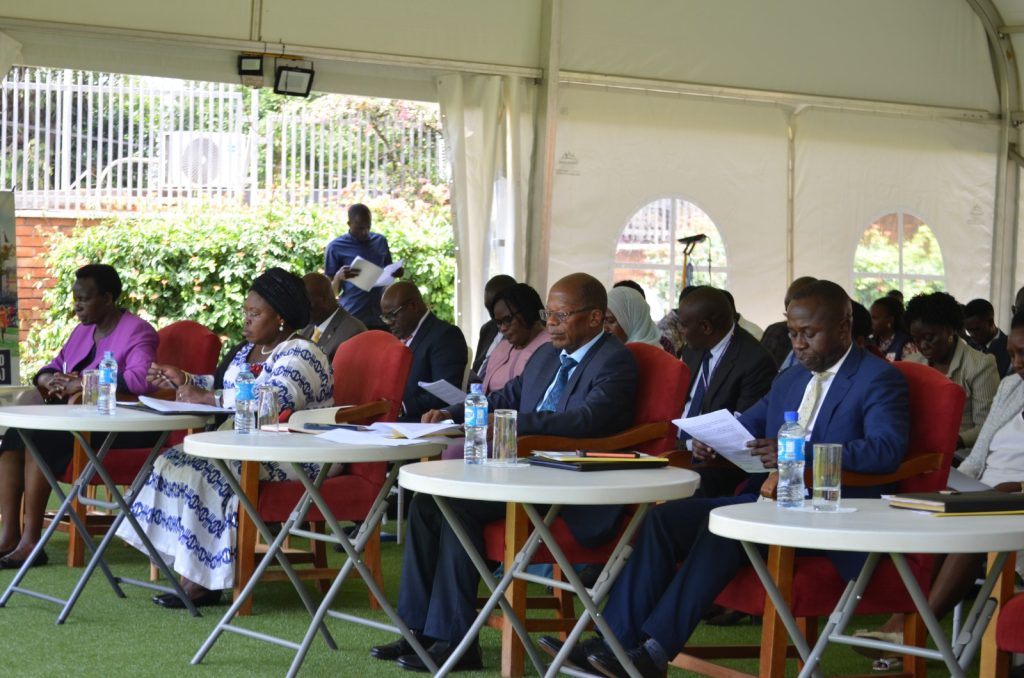 99.69% Qualify for UCE Certificate
The overall performance shows marked improvement. A total of 428,628 candidates (99.69%) qualified for the UCE certificate, Only 0.31% did not qualify, a sharp drop from 1.9% in 2024.
Under the CBC grading system, performance is reported using achievement levels A (Exceptional), B (Outstanding), C (Satisfactory), D (Basic) and E (Elementary). The majority of candidates attained Grade C (Satisfactory), reflecting adequate competency in applying knowledge and skills in real-life situations.
Female Candidates Excel in English and CRE
One of the standout highlights of the 2025 results is the strong performance by female candidates in specific subjects.
In English Language, female candidates outperformed their male counterparts across higher achievement levels. At Grade A, females scored 3.6% compared to 2.5% for males, while at Grade B, females scored 20.1% compared to 14.8% for males.
In Christian Religious Education (CRE), females also demonstrated stronger achievement. At Grade A, females scored 3.9% compared to 3.2% for males, while at Grade B, females scored 19.6% compared to 16.2% for males.
UNEB noted that apart from English Language and Christian Religious Education, achievement levels between male and female candidates were largely comparable across other compulsory and large-entry subjects.
Encouraging Gains in Sciences
Performance in Science subjects showed notable improvement compared to 2024, with significant reductions in candidates scoring below the basic competency level.
Subjects such as Mathematics, Physics, Chemistry and Biology recorded stronger percentages at Grade C and above. However, examiners observed that some candidates still struggle with interpreting practical scenarios, linking experiments to real-life situations, and applying creative and problem-solving skills.
UNEB emphasized that the CBC is designed not merely for factual recall, but to train learners to think critically and apply knowledge meaningfully.
Special Groups Register Strong Performance
A total of 708 Special Needs Education (SNE) candidates registered for the exams. UNEB provided Braille papers for the blind, enlarged print papers for learners with low vision, sign language interpreters for the deaf, and an extra 45 minutes per paper. Of these, 695 candidates (98.2%) qualified for the UCE certificate.
Candidates from Luzira Upper Prison and Mbarara Main Prison also registered impressive results. At Luzira, 39 of the 40 registered candidates sat the exam and all qualified. At Mbarara, all 12 registered candidates sat and qualified.
Minimal Examination Malpractice
UNEB reported only 63 cases of malpractice, mainly in Mathematics and science practical papers. The Board noted that the CBC assessment structure makes malpractice more difficult due to its emphasis on scenario-based and practical application tasks.
Positive Candidate Feedback
From a sample of 36,546 candidates surveyed, 96.3% said exam questions were within the syllabus, 74.7% found the time allocated adequate, 88.2% said the questions were clearly presented, and 66.4% described the examinations as fair.
These responses align with the overall performance trend, where most candidates attained Grade C.
Accessing Results
Schools can download results from their examination centre portals. Candidates and parents can also access results via SMS by going to the Messages menu on their phones, typing UCE, leaving a space, entering the full index number, and sending the message to 6600 on MTN or Airtel.
A Milestone for Competency-Based Curriculum
The 2025 UCE results signal steady progress in Uganda’s transition to the Competency-Based Curriculum. With improved overall performance, reduced absenteeism, strong achievement among special groups, and standout performance by female candidates in English and Christian Religious Education, UNEB has described the exercise as successful and encouraging.
The Board congratulated all successful candidates, teachers and parents, and reaffirmed its commitment to maintaining examination integrity and supporting continuous improvement in learner assessment across the country.