


Kampala — The World Wide Fund for Nature (WWF), in collaboration with governments and development partners, has officially launched the One Health Preparedness, Prevention, and Response Project, a $25 million regional initiative aimed at addressing the rising threat of zoonotic diseases in the Greater Virunga Landscape.
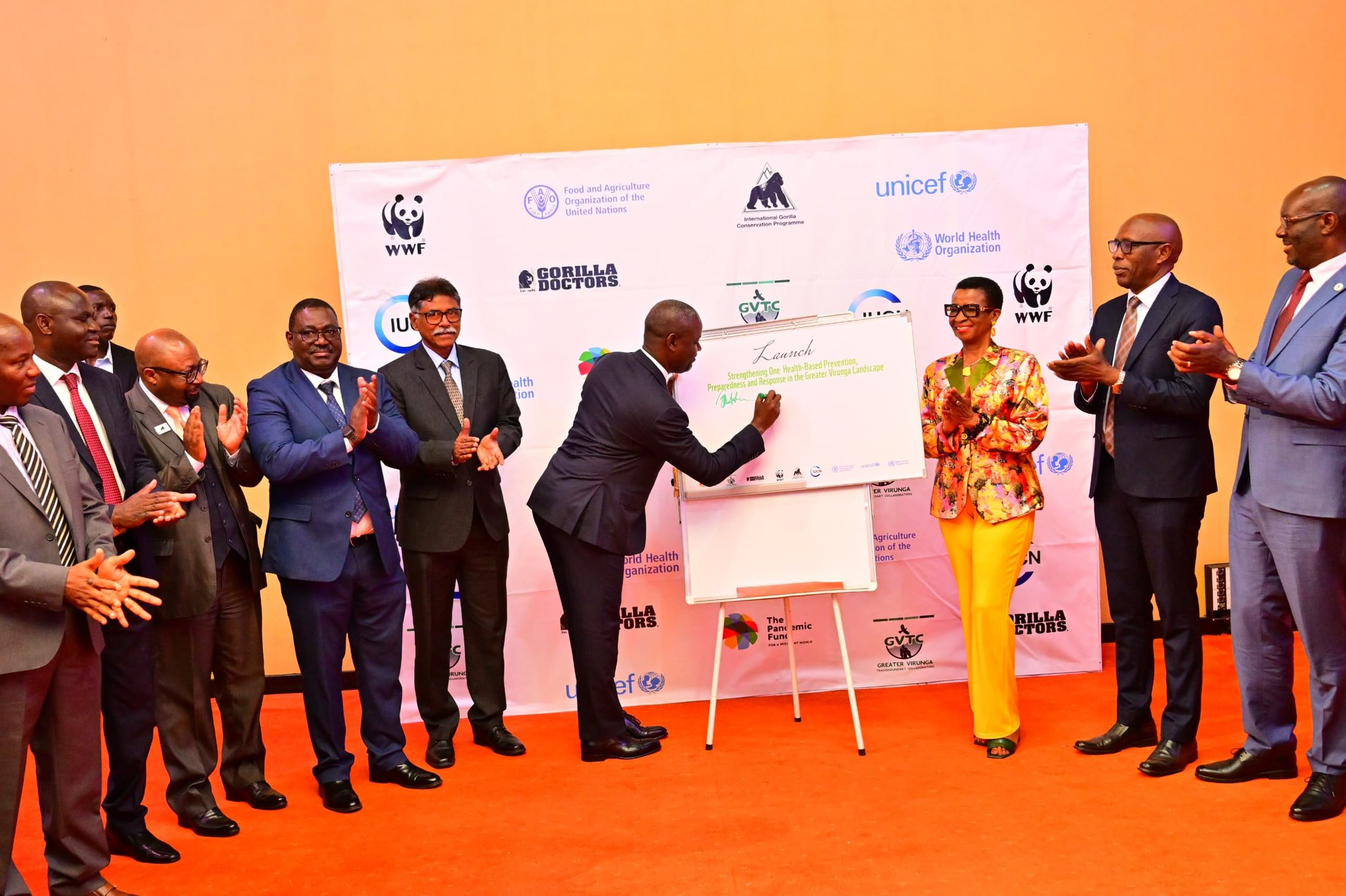
The initiative was officially launched at an event held at Speke Resort Munyonyo in Kampala, Uganda. This event was the first of three planned launches happening this year in Uganda, Rwanda, and the Democratic Republic of Congo (DRC).
The One Health initiative takes a holistic approach to public health, recognizing the interconnectedness of human, animal, and environmental health. The Greater Virunga Landscape which spans parts of Uganda, Rwanda, and DRC is one of the most biodiverse regions in the world, home to endangered species such as mountain gorillas, chimpanzees, elephants, lions, and golden monkeys. However, increasing human-wildlife interaction and environmental degradation have made the region a hotspot for the emergence and spread of infectious diseases.
“The connections between people, animals, and the environment in relation to health have been recognized for decades, and the One Health approach has existed since 2003. Yet it took a global pandemic for the world to finally prioritize it,” said Ivan Tumuhimbise, Country Director of WWF Uganda. “We are confident this partnership will become a model of multidisciplinary disease prevention, uniting health workers, veterinarians, communities, scientists, researchers, policymakers, and NGOs to help prevent future pandemics.”
Strengthening Regional Health Defenses
Funded by the World Bank’s Pandemic Fund, in close collaboration with the World Health Organization (WHO) and other global health agencies, the project aims to strengthen regional defenses against zoonotic diseases such as Ebola, Marburg, Anthrax, and Mpox.
Key activities include;
- Enhancing disease surveillance systems
- Expanding laboratory capacity across Uganda, Rwanda, and DRC
- Training local communities on disease risk and prevention
- Building infrastructure to support rapid detection and response
- Promoting cross-border collaboration and data sharing
Uganda is set to receive approximately 40% of the total project budget, with priority areas including Bwindi Impenetrable and Mgahinga Gorilla National Parks—renowned ecotourism destinations that attract thousands of visitors annually and contribute significantly to Uganda’s economy.
“Tourism has been identified as a key driver of Uganda’s economic growth, and by safeguarding health security, we also safeguard the future of this vital sector,” noted Hon. Thomas Tayebwa, Deputy Speaker of Parliament, who officiated the launch.
Collaboration Across Borders
The project is implemented by a broad coalition of partners, including; Greater Virunga Transboundary Collaboration (GVTC), World Wide Fund for Nature (WWF), Gorilla Doctors (GD), International Union for Conservation of Nature (IUCN), International Gorilla Conservation Programme (IGCP), National ministries of health and environment, Universities and community-based organizations
“This project recognizes that placing people at the center is key to its success,” Tumuhimbise emphasized. “We are working closely with local communities, ensuring they are integral to decision-making and supporting them in protecting their biodiversity, while keeping communities healthy and resilient in the long term.”
Wellard Makambo, Director of IGCP, added: “The project will capitalize on existing data and ensure better coordination of ongoing cross-sectoral initiatives. For example, data from the ongoing mountain gorilla census in the Bwindi–Sarambwe area will provide vital insights — not just on gorilla demographics, but also on health patterns across species and ecosystems.”