


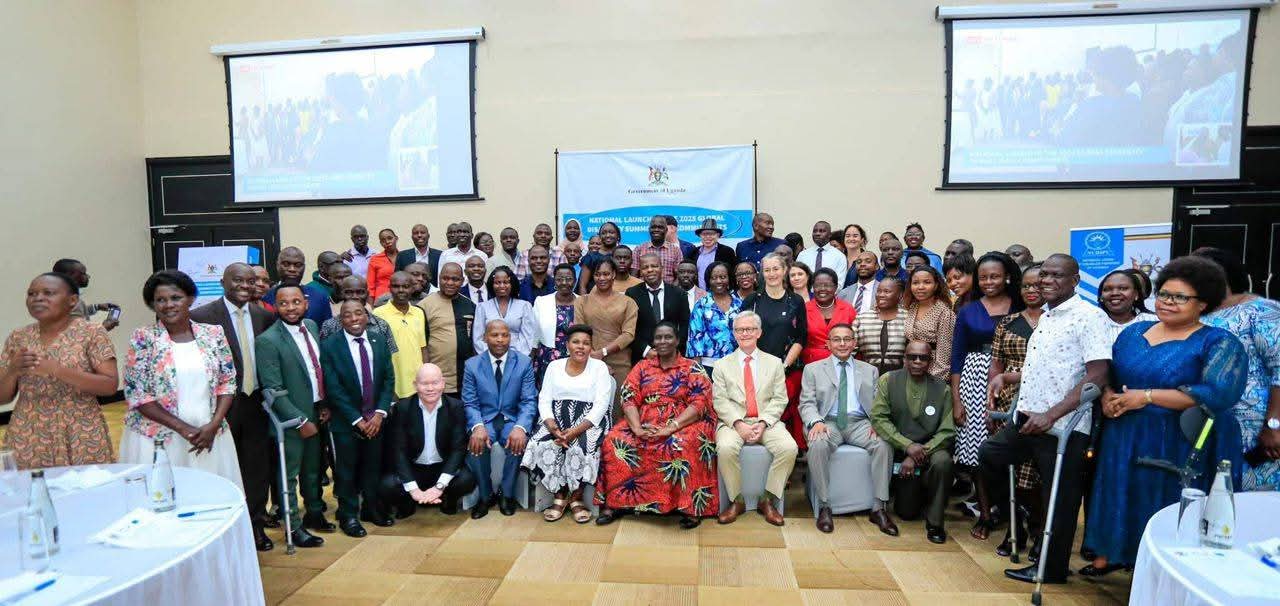
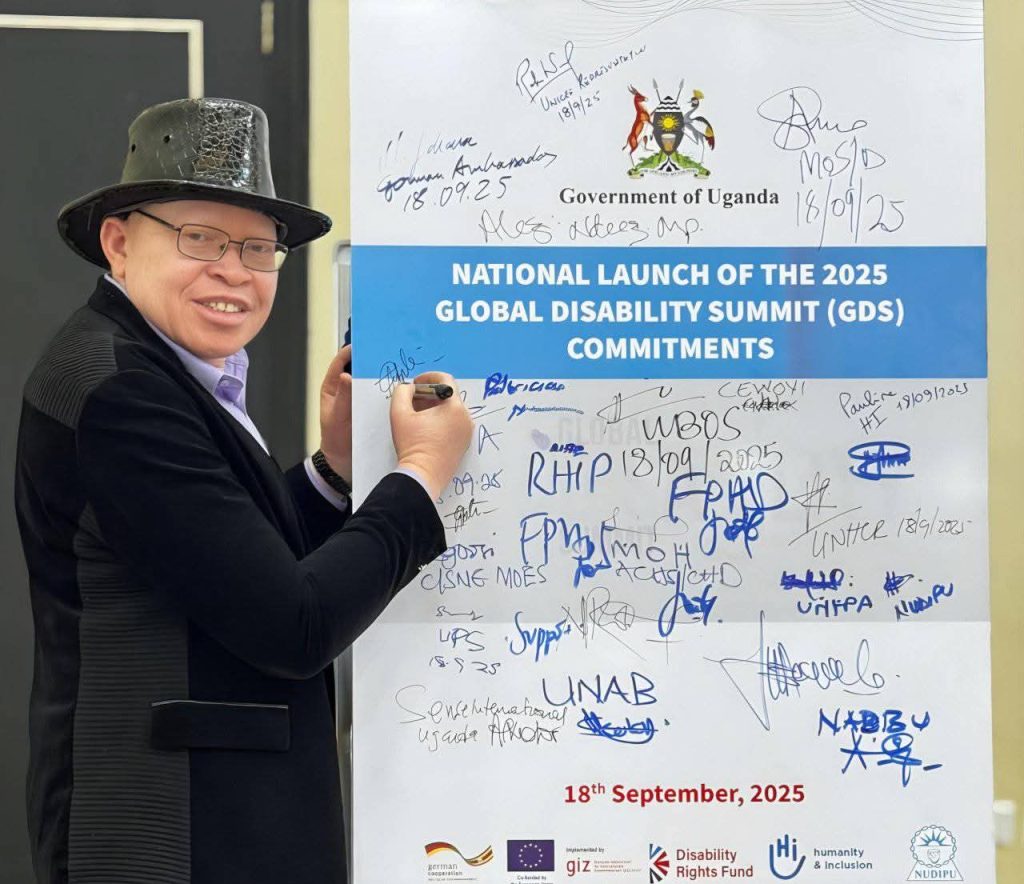
Kampala, Uganda — The Government of Uganda has pledged to fully implement the resolutions made at the Global Disability Summit held in Berlin, Germany, from April 2–3, 2025. The summit brought together governments, civil society organizations, and disability rights advocates from around the world to address long-standing challenges facing persons with disabilities.
The key focus areas at this year’s summit included the rights of persons with disabilities, inclusive development, implementation of legal frameworks, national ownership, and data and evidence-based policymaking.
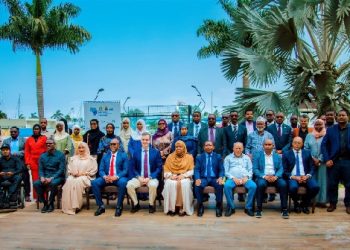
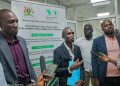
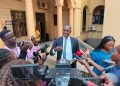
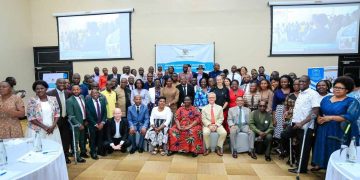
Speaking at the official launch of Uganda’s commitments from the global summit at Mestil Hotel, the Minister of State for Disability Affairs, Hon. Hellen Asamo, reaffirmed government’s determination to move disability from the margins to the center of national development planning.
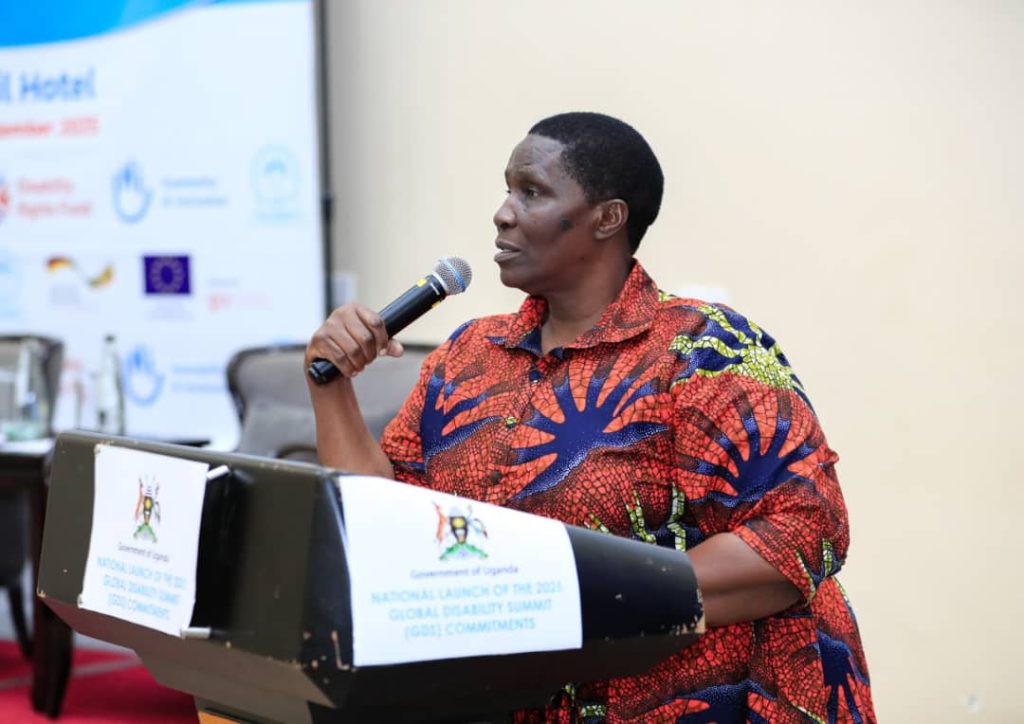
“We have come up with practical strategies to ensure that people with disabilities are fully integrated into the country’s development agenda. Disability is not just a social issue; it is a development agenda,” she emphasized.
Concrete Measures and Legal Frameworks
Hon. Asamo highlighted that Uganda has domesticated the 2020 Persons with Disabilities Act, aligning it with national policies across sectors such as education, health, trade, and infrastructure. She noted that the National Development Plan IV (NDP IV) includes an entire chapter on disability, with specific focus on socio-economic empowerment and social protection.
In a major policy shift, the government is requiring all new multi-storey buildings to include elevators beyond the first floor to enhance physical accessibility. In education, affirmative action continues to be implemented across all levels; Free primary education for children with disabilities, Access to secondary and university education, with government sponsorship for qualifying students, and Special accommodations in public service, including sign language interpreters and extended time for candidates with visual impairments
“We know we can’t build Rome in a day. Many old buildings are inaccessible, but going forward, every new building must meet accessibility standards,” she said.
Financial Boost for Disability Inclusion in PDM
Hon. Asamo also announced an additional UGX 500,000 has been earmarked under the Parish Development Model (PDM) to help disabled persons overcome barriers to participation—such as paying for sign language interpreters, wheelchair pushers, or transport to markets.
The government has already allocated 10% of PDM funds specifically for persons with disabilities. However, the Minister acknowledged a gap in implementation, with only 2.5% of that allocation reaching beneficiaries so far.
“We have raised this concern in Cabinet. We want clear mechanisms that allow people with disabilities to receive their fair share—10% of every 100 million shillings should go directly to them,” she added.
 Inclusive Employment and Education
The Minister made a passionate call for the end of discrimination in education and employment. She criticized the outdated model of “special schools” that isolate children with disabilities, leading to stigma and exclusion in adulthood.
“When a person with a disability appears before an interview panel, they’re often judged by appearance, not ability. This has to stop,” she said. “If someone qualifies for the job, then give them the chance. Don’t deny them because of a wheelchair or a cane.”
She noted progress in public service recruitment, where accommodations are now being made, such as interpreters for deaf applicants and special aptitude tests for the blind. However, she admitted that changing public attitudes remains a long journey.
Call to Action from NUDIPU
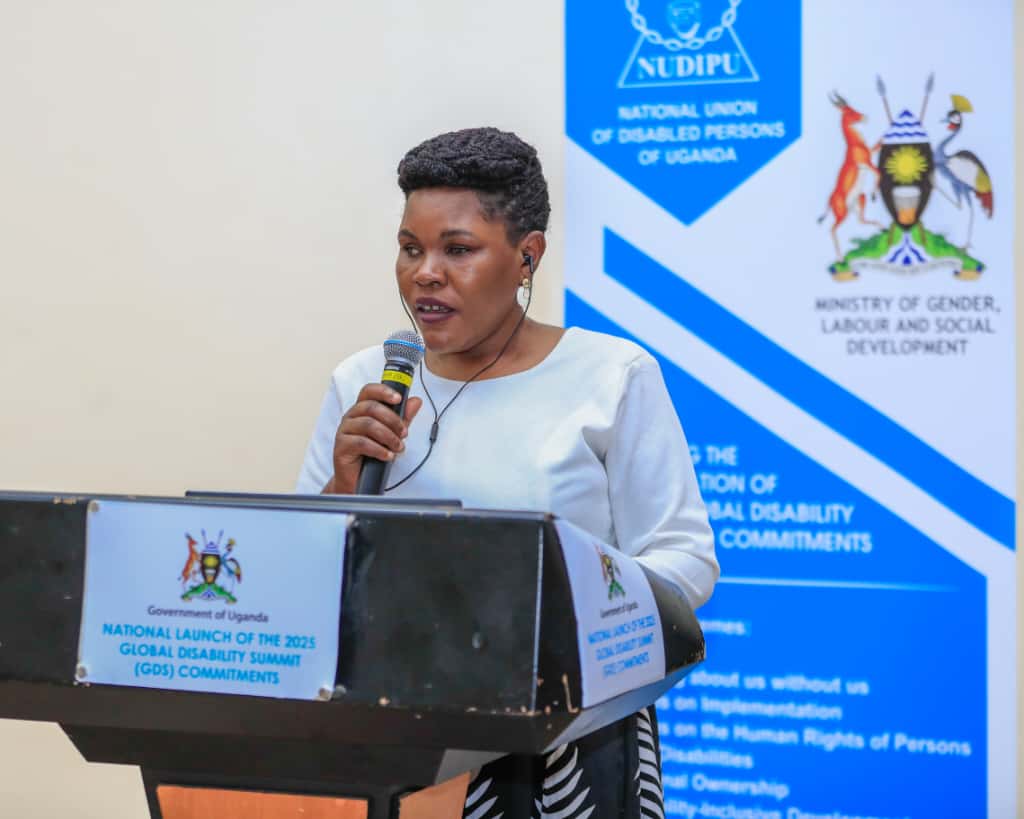
Esther Kyozira, CEO of the National Union of Disabled Persons of Uganda (NUDIPU), urged all government ministries, departments, and agencies to implement the commitments made at the summit.
“These global commitments were not just made for show. They are meant to bring real change. We want to see the promises fulfilled at every level, especially in parishes where people often say, ‘we have never seen this,’” she said.
Kyozira stressed the importance of reasonable accommodation in livelihood programs.
“If a person in a wheelchair wants to grow beans, they need a helper and that helper needs to be supported too. An additional UGX 500,000 for disability support is welcome and shows that government is starting to understand our needs,” she added.
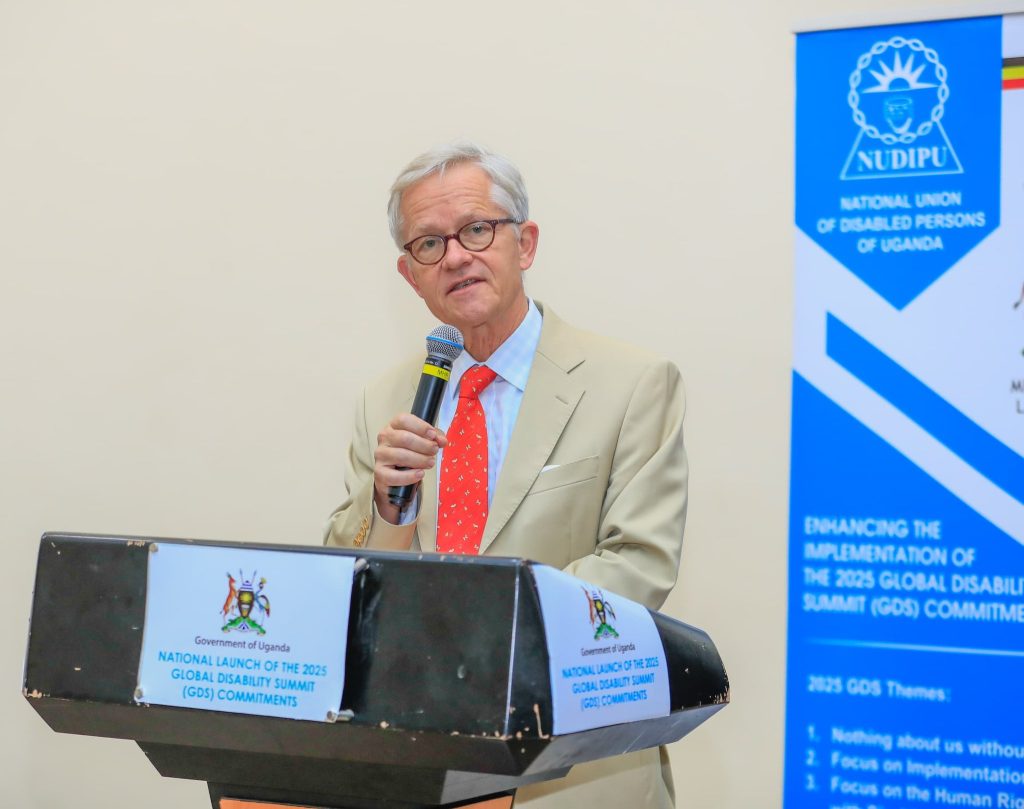
Matthias Schauer, the German Ambassador to Uganda, expressed a keen interest in supporting disability affairs. During the event, he emphasized the importance of strengthening partnerships to address challenges affecting persons with disabilities.