


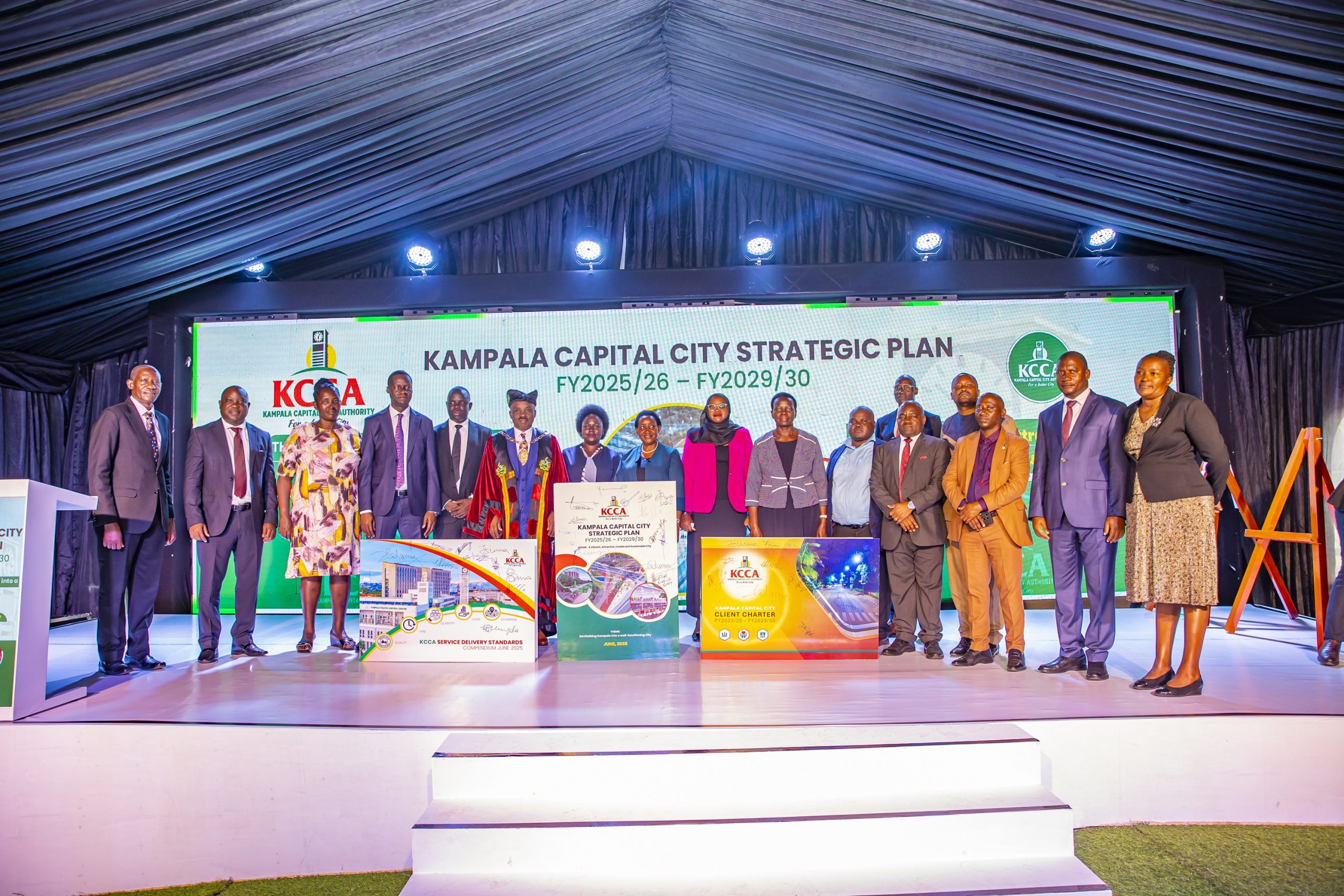
In a bold move to reshape Kampala’s urban landscape, the Kampala Capital City Authority (KCCA) has launched a shs11.9 trillion Strategic Plan aimed at driving infrastructure development and improving the city’s liveability, resilience, and economic vibrancy over the next five years.
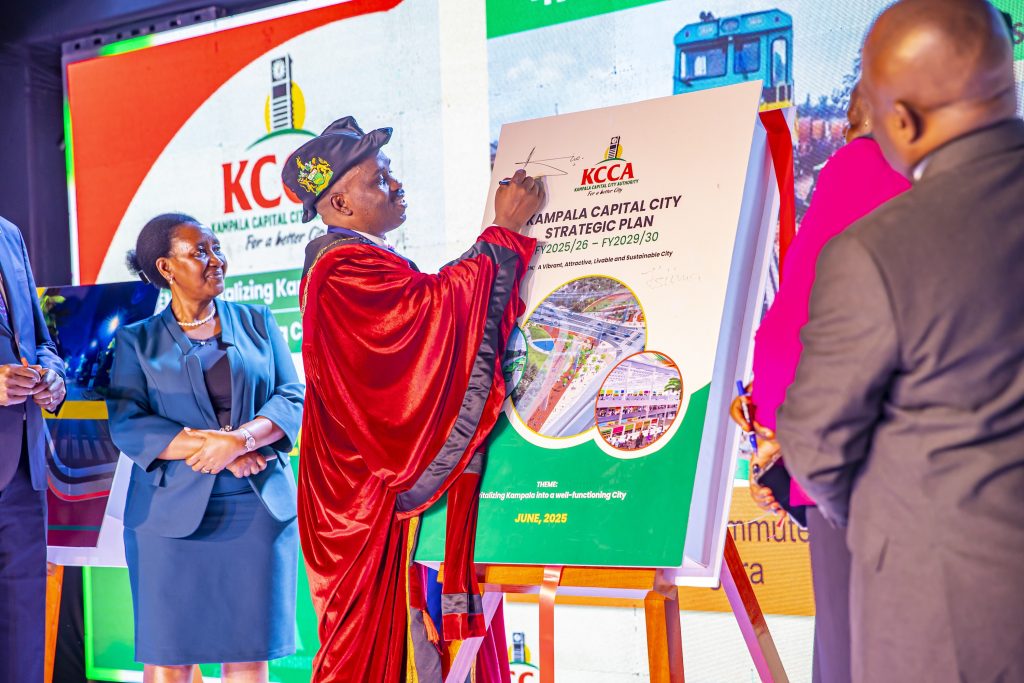
The 2025–2030 Strategic Plan was officially unveiled on Tuesday by City Lord Mayor Erias Lukwago and KCCA Executive Director Sharifah Buzeki.
The initiative marks a major step toward transforming Uganda’s capital into a modern, sustainable, and inclusive city equipped to tackle the pressing challenges of climate change, urban congestion, and public service delivery.
At the heart of the plan is an integrated vision to create a greener, smarter, and more efficient Kampala. The roadmap prioritizes significant upgrades to the city’s roads, drainage systems, waste management, transport networks, and social services, including health and education facilities.
Lukwago emphasized that the plan’s cornerstone is tackling the city’s crippling traffic congestion. As part of this, KCCA will roll out a Bus Rapid Transit (BRT) system, beginning with a 14.4-kilometre corridor under the Kampala City Roads Rehabilitation Project (KCRRP), supported by the African Development Bank.
This project, he said, is expected to drastically cut down the hours lost in traffic each day and lay the groundwork for a more efficient public transport system.
“Reducing time wasted in traffic is not just about mobility, it’s about productivity, well-being, and unlocking the city’s economic potential,” Lukwago said.
The plan also targets the rehabilitation and construction of 325 kilometres of city roads, installation of 25,000 streetlights, and development of over 80 kilometres of drainage channels to address perennial flooding and infrastructure bottlenecks.
Waste management is another critical focus. With over 100 parishes to cover, KCCA is seeking to procure 100 new garbage trucks to replace its aging and inadequate fleet.
Lukwago acknowledged that while some new trucks have been added, the current number remains far below what is needed to maintain consistent waste collection across the city.
The healthcare and education sectors are also poised for a major overhaul. The strategy includes upgrading several KCCA-managed health centres to Health Centre IV and eventually to city hospital status, easing the burden on national referral facilities and improving access to quality care for Kampala residents.
Currently, KCCA runs two Health Centre IVs, four Health Centre IIIs, and two Health Centre IIs, many of which are operating beyond their intended capacity.
Buzeki highlighted the inclusive process that shaped the strategic plan, noting that all councillors from Kampala’s five divisions were consulted.
The result, she said, is a cohesive political and administrative commitment to transforming Kampala into a smart and competitive city.
“The goal is to build a modern capital that is economically productive, socially inclusive, and environmentally sustainable,” Buzeki said. “This plan is about creating a smart city that leverages technology and innovation to deliver better services and a higher quality of life for all.”
KCCA will rely on a mix of local revenue generation and government support to finance the plan.
Though the city collected Sh127.6 billion in the 2024/25 financial year, exceeding its target, Lukwago acknowledged that much more is needed. Revenue streams such as property rates, business licences, ground rent, and user fees will be critical, along with improved tax base management.
The government has already allocated Sh800 billion to KCCA for the current fiscal year, and officials are optimistic that improved oversight and financial accountability will enable the city to meet its ambitious goals.
Deputy Head of Public Service Jane Kyarisiima Mwesiga, who officiated at the launch, urged KCCA leaders to maintain rigorous oversight and ensure full implementation of the strategy’s objectives.
“This is not just a blueprint, it’s a commitment to Kampala’s future,” she said.
If successfully executed, the Strategic Plan could mark a historic leap in Kampala’s development, setting the capital on a path toward becoming one of Africa’s most liveable and economically dynamic cities.