


KAMPALA, Uganda : The Citizens’ Coalition Against the Protection of Sovereignty Bill 2026 has renewed its call for Parliament to halt consideration of the proposed law and institute an inquiry into concerns raised by Yoweri Museveni over its authenticity.
In a message shared on his X platform, the President indicated that the bill currently before Parliament may differ from the version he originally approved in Cabinet, raising serious questions about legislative integrity. The coalition comprising of religious leaders, civil society organisations, the Uganda Law Society, and traders now says this discrepancy casts doubt on the legitimacy of the entire process and is demanding the bill’s immediate withdrawal.
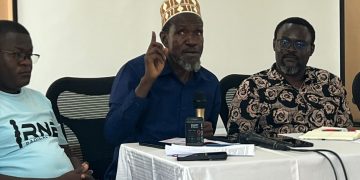
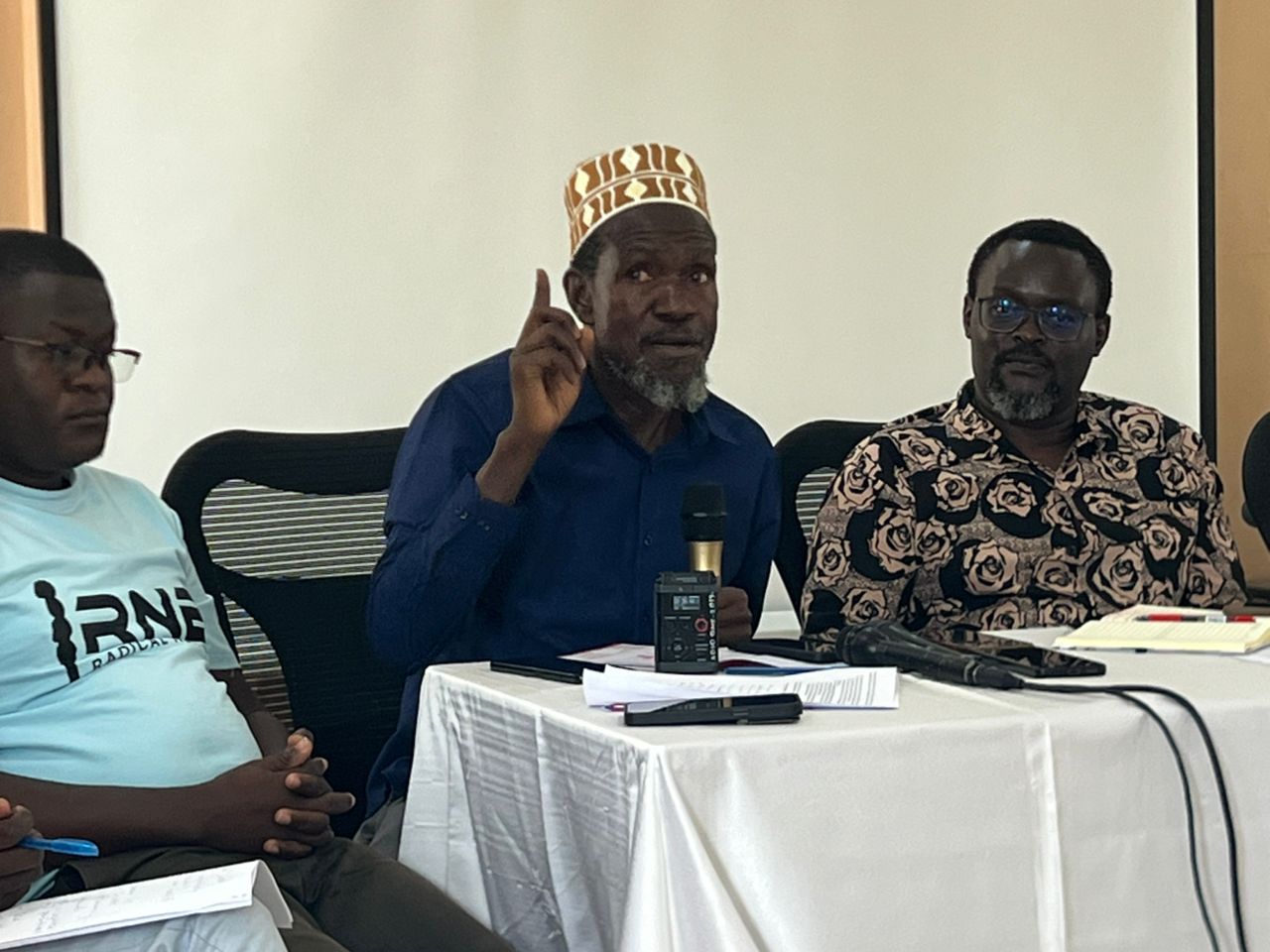
Parliament is expected to proceed with the second and third readings of the bill, with debate and a possible vote anticipated. However, speaking to journalists at Eureka Hotel in Ntinda, coalition members warned that the proposed law lacks broad public support and could have far-reaching constitutional, economic, and governance implications.
Arthur Larok: “This Is a Law Against the Sovereign People”
Coalition member Arthur Larok strongly criticized the bill, arguing that it fundamentally undermines the very sovereignty it claims to protect.
“The National Sovereignty Bill 2026 is a bill against the sovereignty of the people of Uganda and must be withdrawn and rejected. We speak as Ugandans who believe in the sovereignty, independence, dignity and security of our country. We support legitimate measures to protect Uganda from money laundering, terrorism financing, illicit foreign influence and threats to national security.”
Larok emphasized that while protecting national sovereignty is essential, the current bill fails to achieve that goal and instead threatens constitutional principles.
“No serious Ugandan can be against the protection of the sovereignty of their country. But we are equally clear that the bill in its current form and spirit does not protect Uganda’s sovereignty. It threatens the very source of sovereignty under our constitution.”
Citing Article 1 of the Constitution, he stressed that all power belongs to the people and cannot be appropriated by the executive or any institution.
“A law that weakens citizens, silences civic participation and makes it dangerous for people to organize, speak, associate, question public policy or participate in public life is not a sovereignty law. It is a law against the sovereign people.”
Larok further pointed to overwhelming public opposition, claiming that up to 96 percent of submissions to the parliamentary committee rejected the bill. He also referenced the President’s concerns, noting that even the originator of the bill now appears to distance himself from it.
“He says it is not the bill that he originated. So the President is against the bill too. The proposed amendments cannot cure a bill whose foundation remains flawed.”
While acknowledging that some controversial provisions had been softened due to public pressure, Larok insisted that the core problem lies in the bill’s structure and intent.
“The problem is not only the wording of a few clauses. The real problem is the architecture, the spirit, and the subtext of the bill. These have not changed.”
He warned that the bill wrongly treats legitimate civic activity—including research, advocacy, church partnerships, and development cooperation—as potential threats to the state.
“Where the bill has been substantially altered, the public must be given an opportunity to study and respond to the new text. Anything less would be an abuse of process.”
Larok also argued that Uganda already has sufficient legal frameworks to address concerns such as money laundering, terrorism financing, and foreign interference, making the proposed law unnecessary and duplicative.
“The simple question is, what gap is this bill really fixing? In our view, nothing. Parliament should not create a vague, overbroad, and punitive regime that duplicates existing laws while giving excessive discretionary powers to the executive.”
He further warned that the bill could harm the economy by undermining investor confidence, disrupting financial flows, and weakening the shilling.
“How can a bill that risks weakening the currency, discouraging remittances, threatening investment, and disrupting lawful financial flows be called a sovereignty bill?”
Imam Idi Kasozi: “The Process and the Substance Are Both Flawed”
Coalition member Imam Idi Kasozi echoed these concerns, focusing on both the legal process and the broader implications of the bill.
“Having listened to my colleague Arthur and engaged with the public and the Parliamentary Committee, I am compelled to conclude that the bill violates binding constitutional doctrine.”
Using a programming analogy, Kasozi described the bill as fundamentally defective.
“There was a syntax error in this bill. Instead of restarting the process, changes were manoeuvred without being made public, and now there is an attempt to conclude it. When the premise is false, the conclusion cannot be true.”
He also raised concerns about procedural irregularities, including alleged interference during committee proceedings.
“The process has been compromised. It contradicts established jurisprudence and fails procedural legality. What is being done is not right legally.”
Kasozi warned that the bill introduces significant economic risks, citing early signs of impact such as the withdrawal of international partners from local economic activities.
“You may not have been part of those consuming the benefits, but someone would have bought your cow at a better price. Economically, we are all affected.”
He highlighted the importance of international partnerships in supporting development, sharing examples of water projects and community initiatives funded by foreign partners.
“If institutions like civil society and churches are interfered with in their relationships with international partners, it becomes a disaster.”
Kasozi argued that the bill shifts Uganda from an open economic system to a restrictive, permission-based framework.
“This law moves the country from an open flow system to a permission-based system, where participation may require approval. That raises serious questions about fairness and transparency.”
He outlined the likely economic consequences, including reduced investment, pressure on foreign exchange, rising inflation, declining business confidence, and the resurgence of informal markets.
“When formal systems are restricted, people will find informal ways. That reduces tax revenue and affects service delivery.”
On governance, he warned of increased centralization of power and risks of selective enforcement.
“We risk creating a system where approvals and control dominate, and where enforcement may not be consistent.”
Kasozi concluded by calling for immediate withdrawal and a constitutionally compliant redrafting process.
“The remedy is clear: withdraw the bill, reconsider it fully, and ensure any new version complies with the Constitution and involves the public.”
Miria Matembe: “Dropping the Bill Would Be a Gift to Ugandans”
Former minister and coalition member Miria Matembe framed the issue as a test of Parliament’s responsiveness to public concerns.
“As the President prepares to swear in, dropping this bill would be the best gift for Ugandans.”
She noted that opposition to the bill cuts across multiple sectors, including civic leaders, legal experts, religious institutions, and the diaspora, with little visible grassroots support beyond its sponsors.
The coalition collectively urged Members of Parliament to listen to citizens, institutions such as the Bank of Uganda, and the Constitution itself before making a final decision. They insisted that sovereignty ultimately resides with the people and warned against passing legislation that could restrict civic participation or create fear among citizens engaging in public life.