


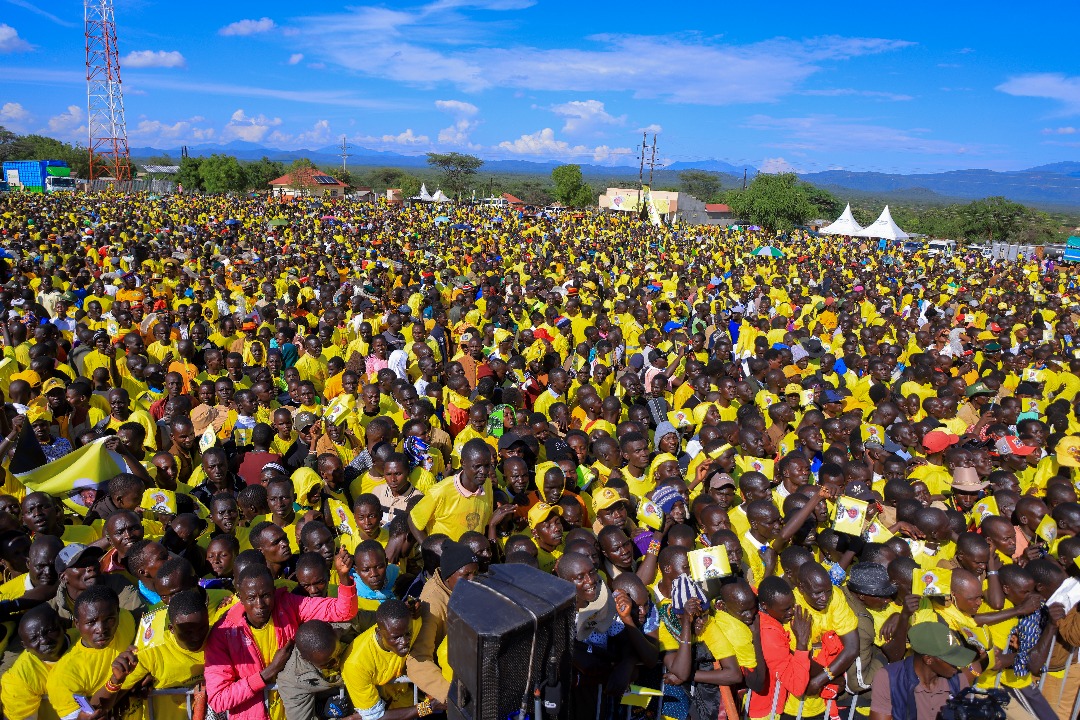
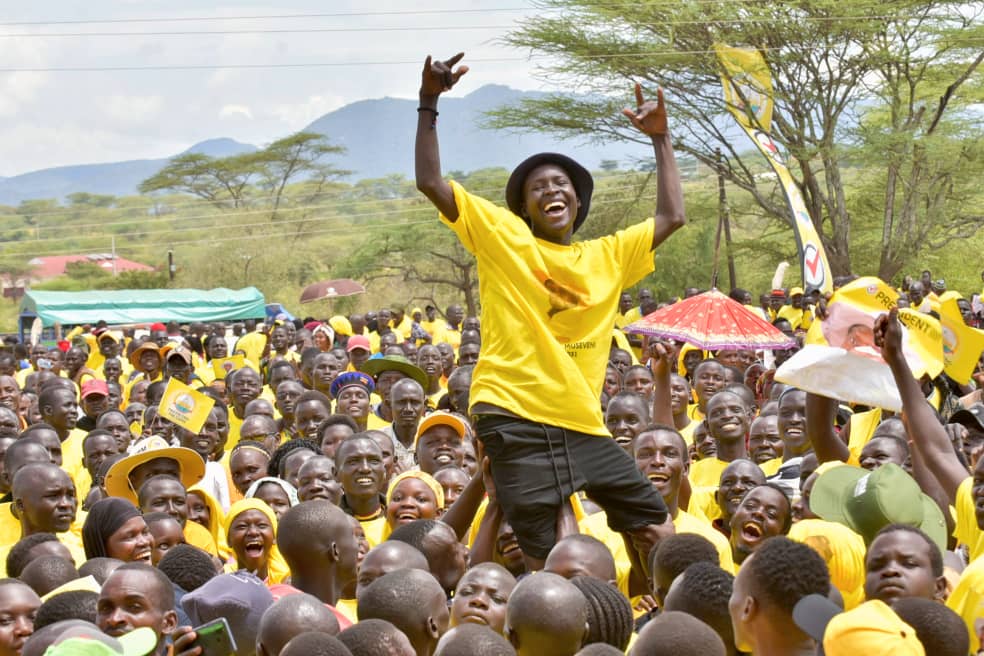
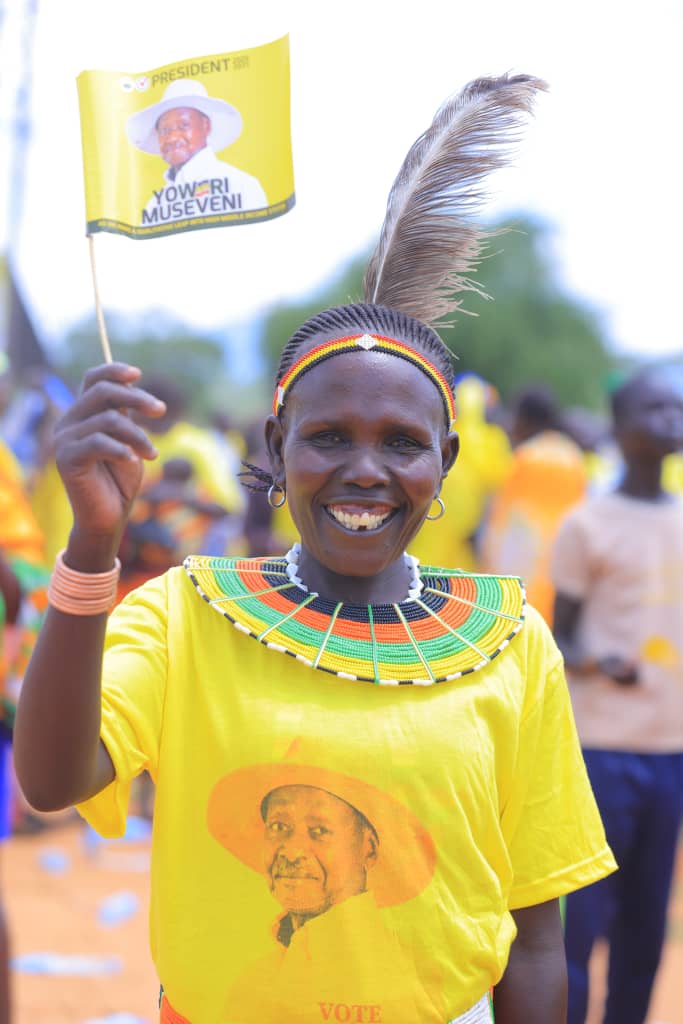
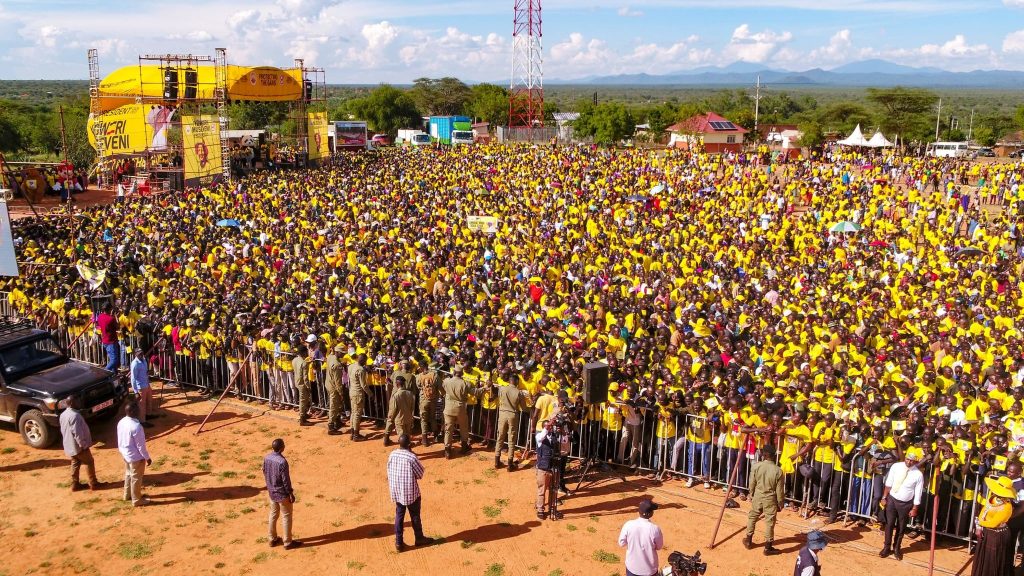
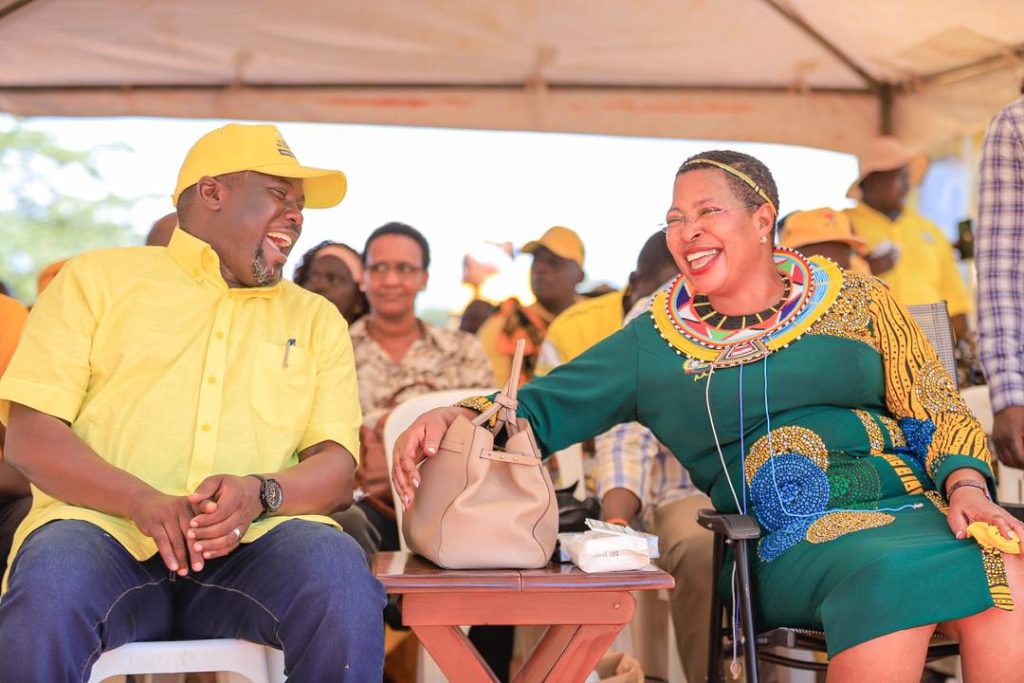
Under the blazing sun that scorched the rolling plains of Karamoja, the usually quiet and dusty town of Amudat came alive with song, dance, and a sea of yellow, a signature of the National Resistance Movement (NRM) party.
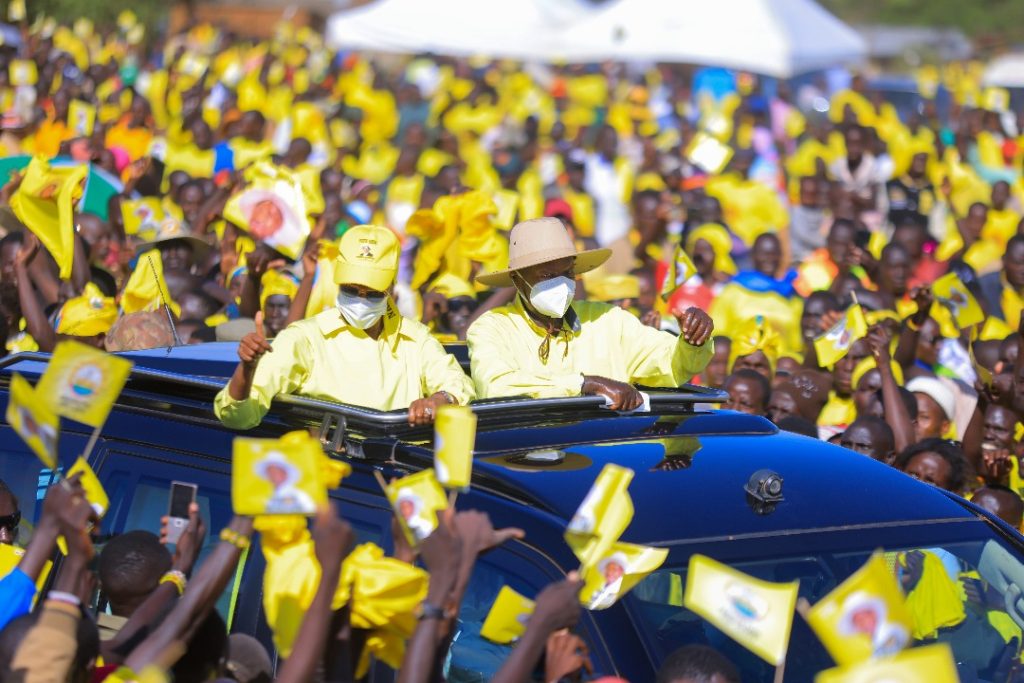
From the early hours of the morning, hundreds of National Resistance Movement (NRM) supporters clad in yellow streamed into Kalas Girls Primary School grounds, their spirits undimmed by the heat.
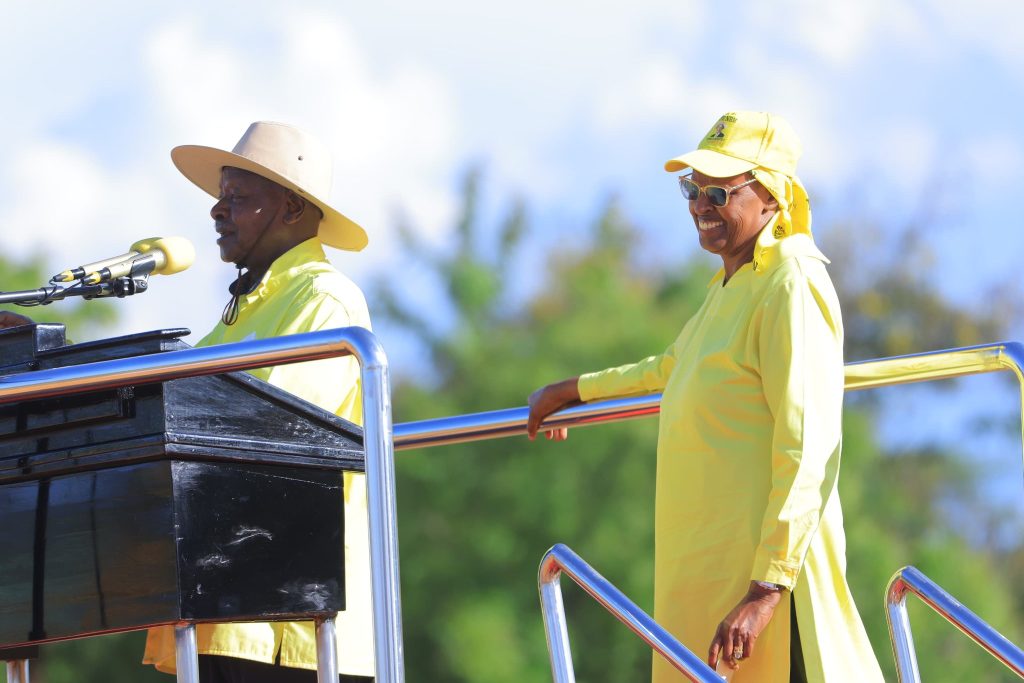
The air buzzed with anticipation for the arrival of President Yoweri Kaguta Museveni, the party’s flag bearer and Uganda’s long-serving leader, affectionately known among many as the old man his with the hat. Many here also call him Mzee.
Nestled on Uganda’s border with Kenya, Amudat is a district defined by resilience and deep cultural roots. Its people, predominantly the Pokot, are cattle keepers and farmers whose lives are woven into the rhythms of the land.
Like their Karamoja neighbors, they have endured the hardships of cattle rustling and insecurity, but through coordinated efforts by security agencies, peace has gradually returned, save for a few isolated incidents, thanks to the NRM government which is now focusing on protecting the gains achieved in the past 40 years.
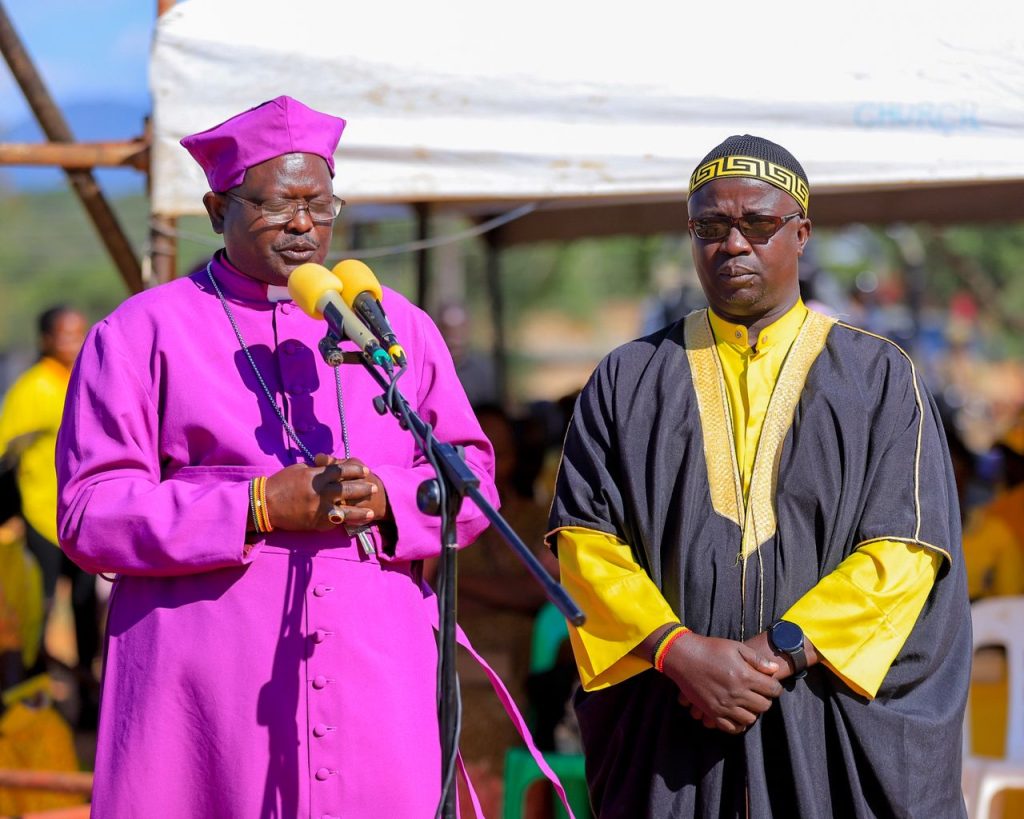
Before his journey to Amudat, President Museveni began his day on a spiritual note at Our Lady and St. Jude Parish in Naggulu, Kampala, where he joined Christian faithful to celebrate the Feast of St. Jude Thaddeus.
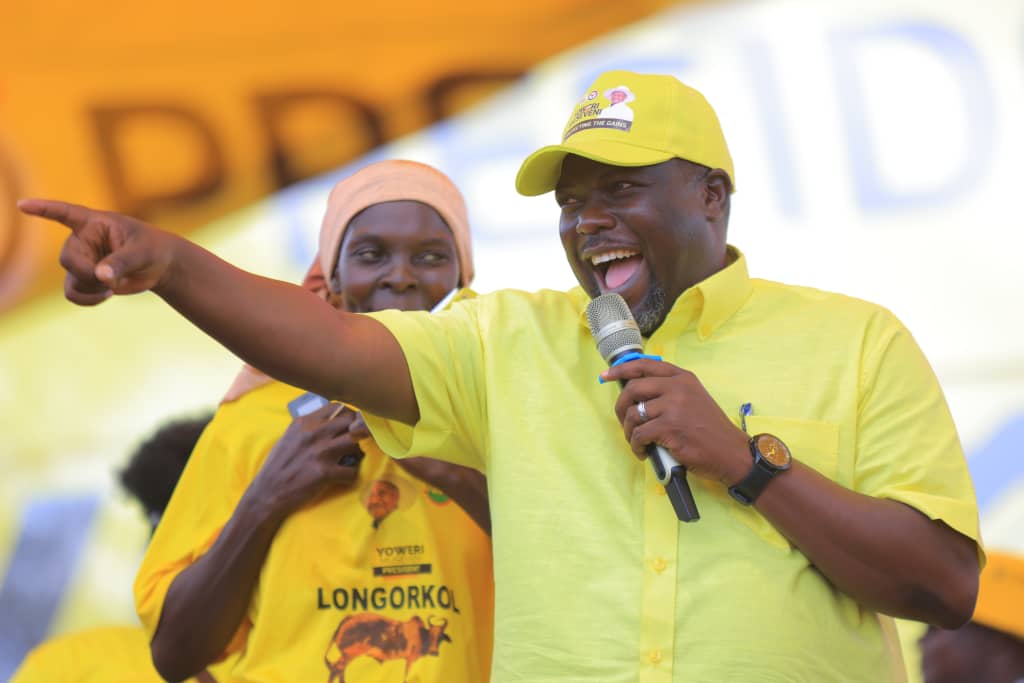
In his address, he commended the Church for harmonizing traditional faith with modern values, reminding the congregation that the essence of all commandments is love.
He spoke candidly about his faith, saying that rejecting him is akin to rejecting God’s creation, for man is made in God’s image , yet he emphasized that his mission, above all, is guided by love for all Ugandans.
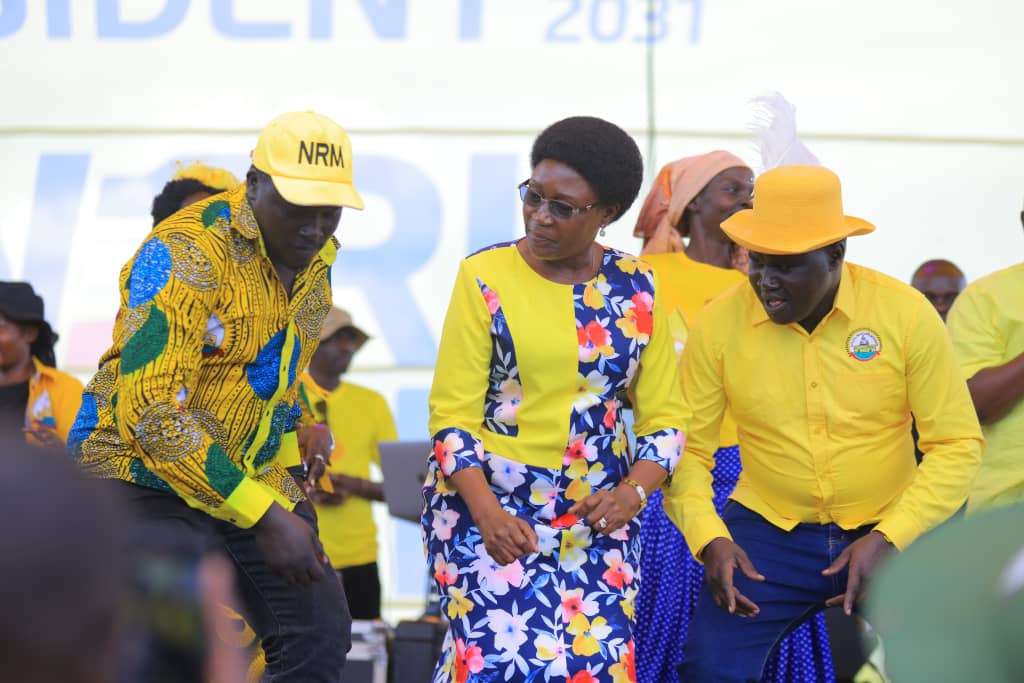
As his convoy wound its way into Amudat Town Council later in the day, cheers erupted from the crowds that had waited for hours under the open sky.
Among those ready to receive him was NRM Secretary General Rt. Hon. Richard Todwong, who, along with other senior party officials, had been on the ground preparing for the historic visit.
For Amudat, this was not merely a political rally, it was a reaffirmation of loyalty. The district has long stood as an NRM stronghold, often delivering overwhelming support, with past election tallies reaching up to 90 percent in the ruling party’s favor.
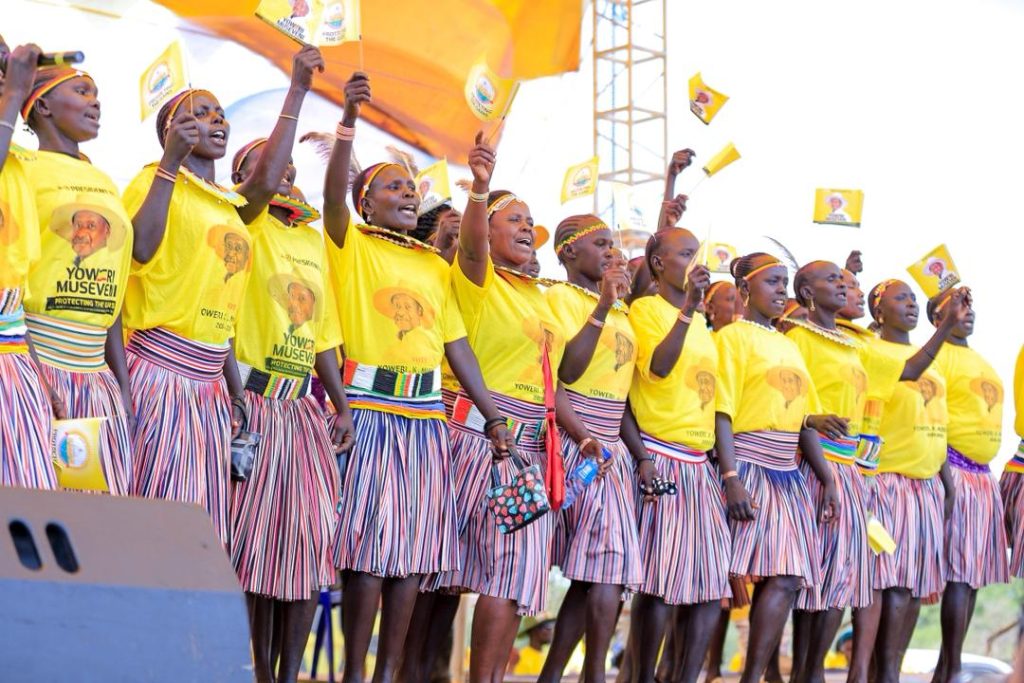
Amudat’s story is as much about tradition as it is about transformation. Established as a district in 2010. Its administrative heartbeat is centered in a town surrounded by stunning, untamed landscapes.
The Pokot people, whose heritage stretches across the Kenya-Uganda border, maintain a proud identity steeped in music, dance, and pastoral life.
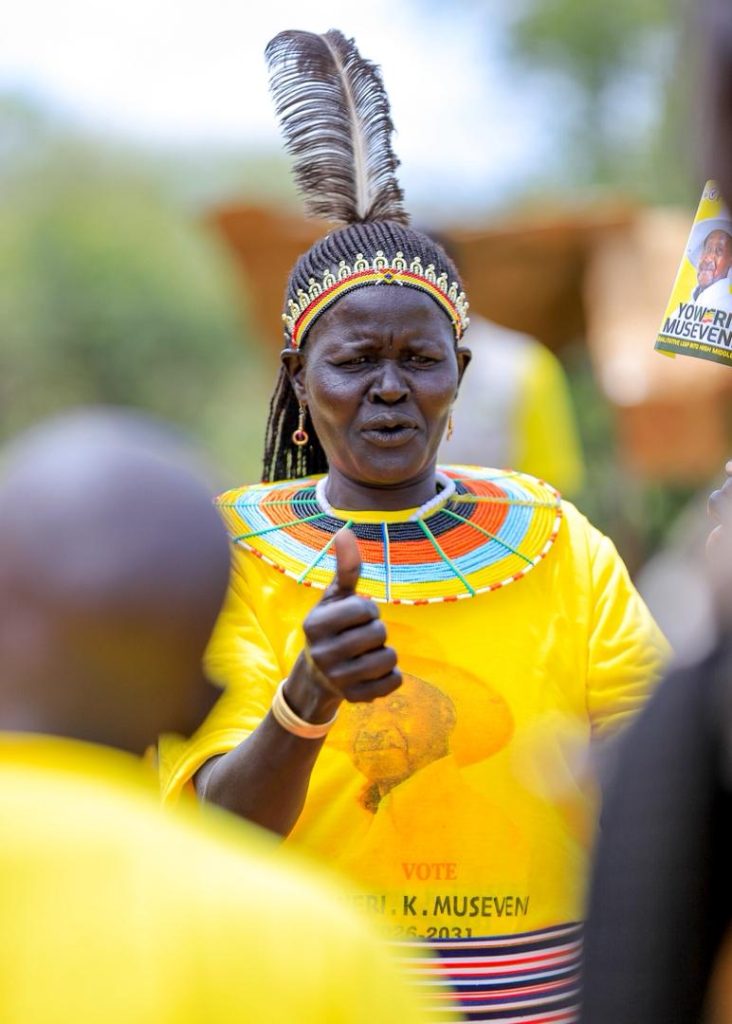
Their governance blends age-old clan leadership structures with modern political systems, creating a unique social fabric where tradition and statehood coexist.
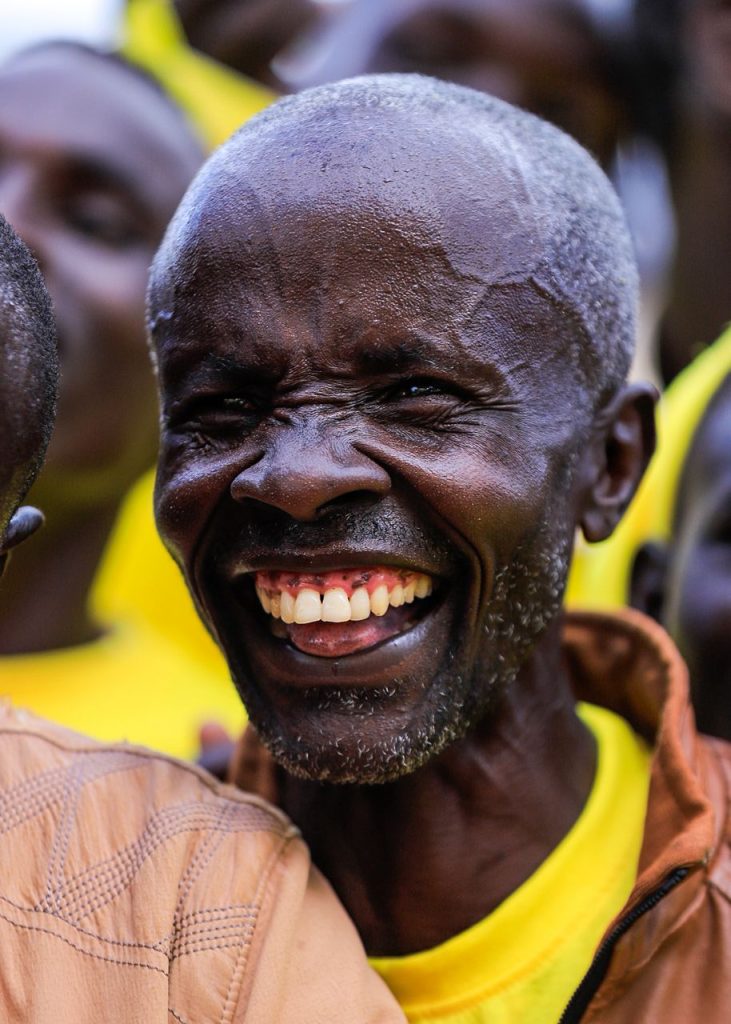
Economically, Amudat thrives on agriculture and livestock farming, though most households still depend on subsistence production.
Efforts to spur development have been buoyed by partnerships with organizations like UNICEF, ActionAid, and UNFPA, which have supported education, healthcare, and infrastructure among others supplementing government efforts.

The newly established Amudat Border Post has also begun to open the district to greater trade opportunities, hinting at a more connected future for this once-isolated region.
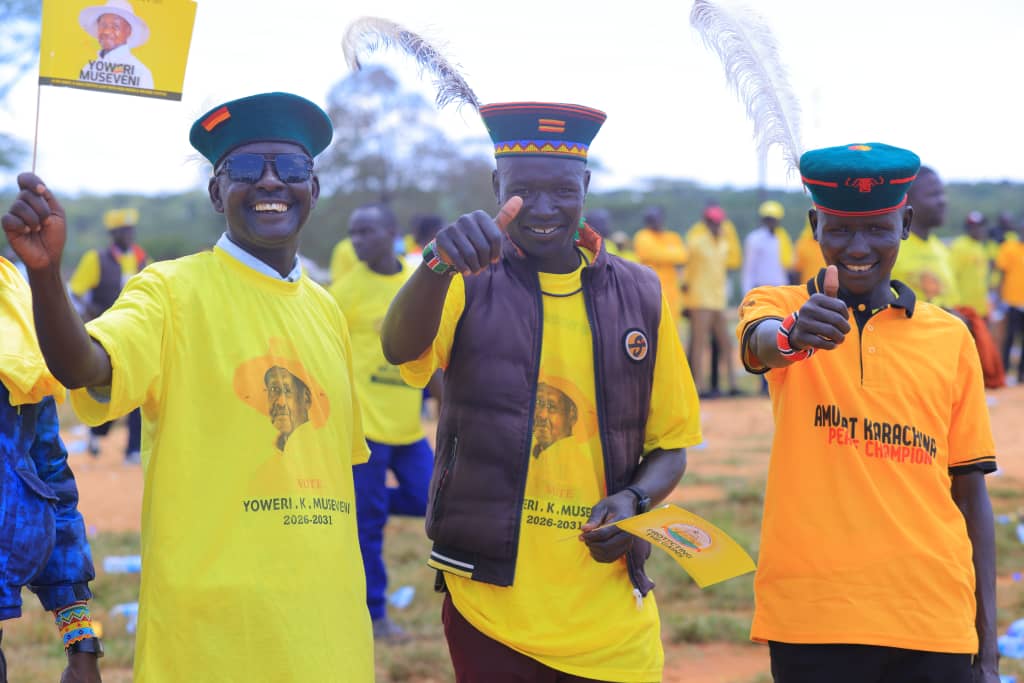
Despite being part of Uganda’s poorest sub-region, Amudat’s people exude warmth, pride, and faith in progress. Their festivals, including the colorful Karamoja Festival, and bustling markets in Karita and Loroo celebrate the endurance of Pokot culture and community spirit.
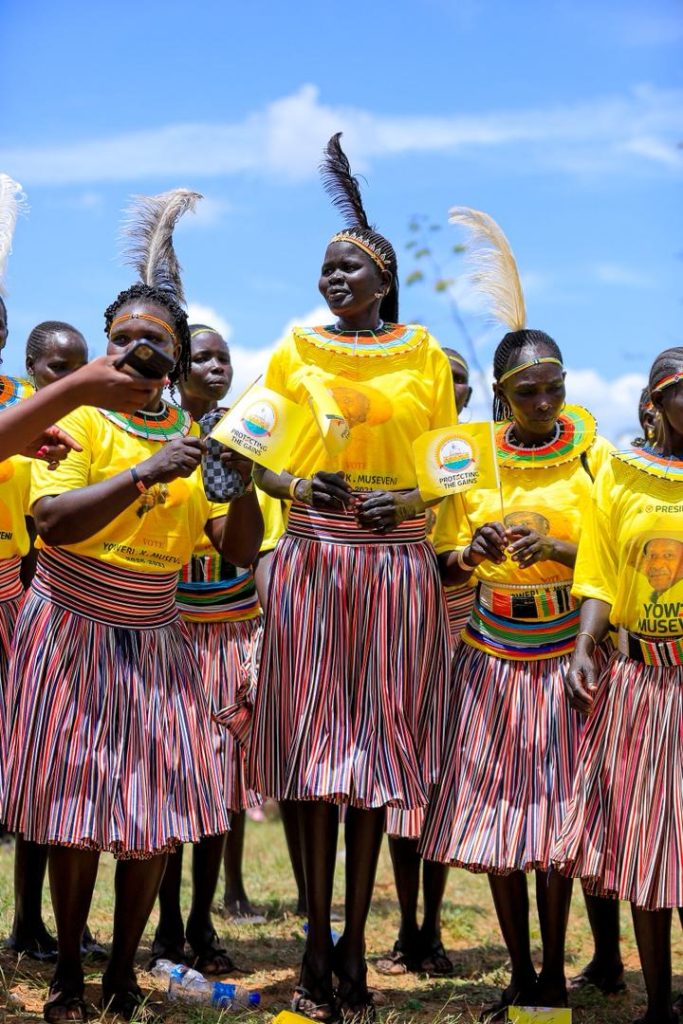
As the sun dipped low over the horizon, painting the Karamoja sky in shades of gold and crimson, Amudat’s celebration became more than a campaign stop. It was a testament to the district’s unwavering faith, in God, in its traditions, and in a political movement that continues to shape its destiny.
Facts
In the last Presidential elections, Amudat had 43,647 registered voters, of whom 31,453—or 72.1%—cast their votes. President Museveni, the NRM flagbearer, received 97.6% of the votes.
Today, the number of registered voters in Amudat has risen to 58,203, an increase of 14,556.

NRM Manifesto 2026–2031 Theme: “Protecting the Gains: Advancing Towards High Middle-Income Status”