


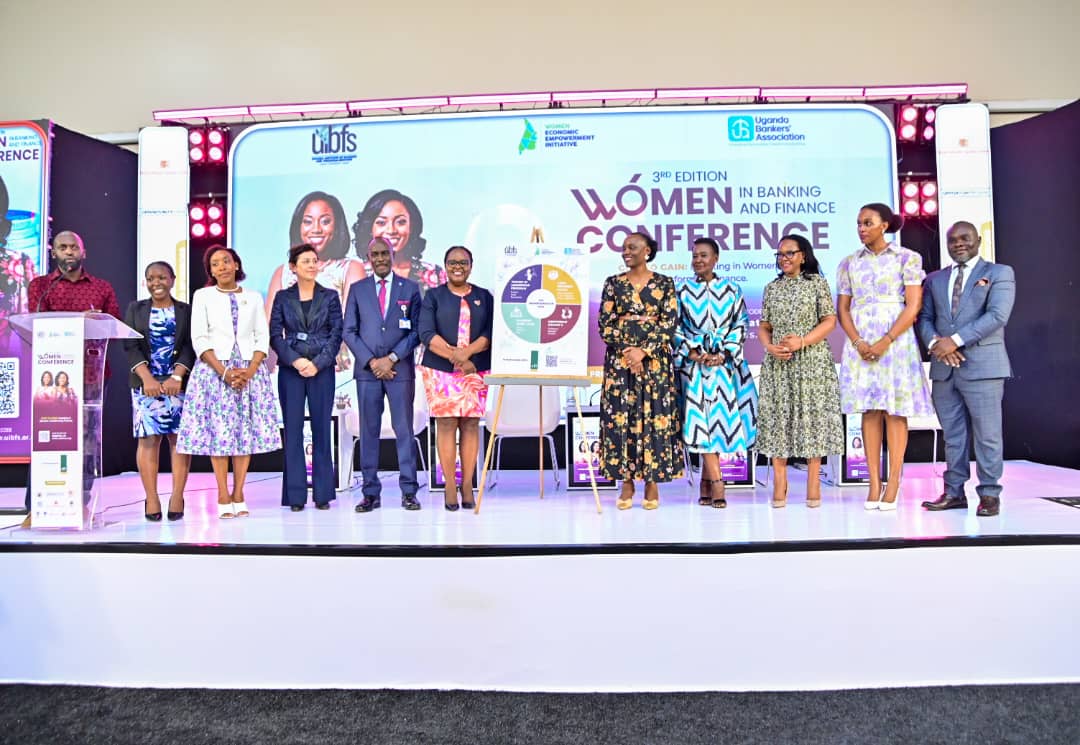
KAMPALA, Uganda — The Uganda Institute of Banking and Financial Services, in partnership with the Uganda Bankers’ Association and aBi Finance, successfully hosted the 3rd Women in Banking and Finance Conference 2026 at Mestil Hotel under the theme, “Give to Gain: Investing in Women, Transforming Finance.”
The conference brought together leaders from the financial sector, policymakers, development partners, and industry professionals to discuss how intentional investment in women can accelerate inclusive economic growth, strengthen leadership pipelines, and transform financial systems.
Delivering the opening remarks as Guest of Honour, Serena Cavicchi, Senior Social Development Specialist at the World Bank and Task Team Lead for the GROW Project in Uganda, emphasized the economic value of investing in women.
“Women-led businesses are good business and not a risk. Women are good borrowers and good leaders,” she said, stressing the importance of recognizing women as key drivers of economic transformation rather than merely beneficiaries.
In her welcome address, Goretti Masadde, Chief Executive Officer of UIBFS, highlighted the importance of partnerships in advancing gender inclusion within Uganda’s financial sector.
“When we intentionally invest in women, we strengthen institutions, deepen leadership pipelines, and build a more resilient financial sector. At UIBFS, we believe that progress is achieved through partnerships,” she noted.
A major highlight of the conference was the launch of the Transformational Hub, an initiative designed to support mentorship, leadership development, and career progression for women in banking and finance.
The conference featured keynote presentations and engaging panel discussions centered on women’s participation in leadership, governance, financial inclusion, and career advancement. Discussions focused on increasing women’s representation on boards, strengthening gender-responsive governance, and expanding opportunities for women in the financial sector.
Delivering a keynote presentation, Christine Kyeyune Kawooya called for intentional inclusion of women in leadership and decision-making spaces.
“We are not asking for charity or special favours. We are asking for intentionality. Success is not about titles — it is about the influence and impact you create,” she said.
Similarly, Grace Muliisa, Vice Chairperson of the Uganda Bankers’ Association and Managing Director of Ecobank Uganda, underscored the wider social impact of empowering women leaders.
“When women rise, communities rise with them. True leadership is about creating space for others to thrive,” she said.
Throughout the conference, speakers and participants emphasized that gender equity is not only a social responsibility but also a sound business strategy, with diverse leadership linked to stronger institutional performance, innovation, and sustainability.
The first panel discussion, moderated by Saul Sseremba, examined women’s influence on boards and institutional transformation. Panelists included Annette Mbabazi Rumanyika Mulira from MTN Mobile Money Uganda, Monica Sanyu of UGAFODE, Catherine Poran from Stanbic Business Incubator, and Janet Navvuga Bugembe, who shared insights on governance, mentorship, sponsorship, and breaking boardroom barriers.
The second panel, moderated by Florence Qitui, focused on women in banking and finance. Contributors included Martha Bisamaza of MTN MoMo Uganda, Ann Marie Mwaka Sabano, Patricia Amito Lutwama, and Joseph Kiwanuka from Centenary Bank. Discussions centered on mentorship, women-led sustainable finance initiatives, empowerment, and the business case for gender equity.
The final panel, moderated by Ibrahim Gava Kalule, explored women’s leadership within communities and financial inclusion efforts. Speakers included Goretti Masadde, Mercy Sande Ainomugisha of VisionFund Uganda, Amelia Kyambadde, and Claire Tumwesigye from Equity Bank Uganda. The discussion highlighted advocacy, career navigation, leadership influence, and financial inclusion as tools for community transformation.
The event attracted support from several key players in Uganda’s financial industry, including the Bank of Uganda, Stanbic Bank Uganda, Bank of Baroda Uganda, Cairo Bank Uganda, Opportunity Bank Uganda, Pearl Bank, United Bank for Africa Uganda and I&M Bank Uganda, among others, reflecting a shared commitment to advancing gender inclusion across the country’s financial ecosystem.
As the conference concluded, participants reaffirmed their commitment to promoting mentorship, sponsorship, inclusive leadership, and increased investment in women as a pathway to transforming Uganda’s financial sector.
The Uganda Institute of Banking and Financial Services remains one of Uganda’s leading providers of training and professional development for the financial sector, promoting professionalism and inclusion through market-led training, research, and consultancy services.