


For years, the murder of a boda-boda rider in one of Kampala’s busiest neighbourhoods remained frozen in the public memory as a few terrifying images: a motorcycle, a roadside attack and the sudden disappearance of a man whose livelihood depended on carrying strangers through the city.
On Monday, the case reached another defining moment.
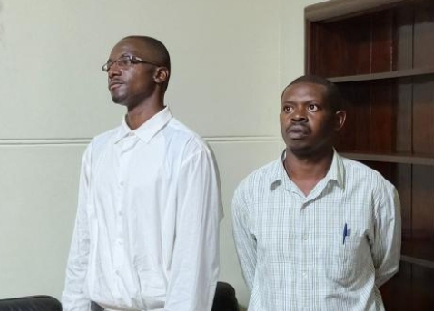
The High Court sentenced Aloysius Tamale, also known as Young Mulo, and John Bosco Mugisha, alias Mukiga, to lengthy prison terms for robbery and murder, bringing a measure of finality to a case that had once become emblematic of a darker danger facing Kampala’s motorcycle taxi industry.
Justice Alex Ajiji imposed 80 years’ imprisonment on each convict, according to the sentencing details supplied for this report. The judge declined to impose the death penalty, despite the gravity of the offences and the prosecution’s case history, but made clear that the punishment had to reflect both the seriousness of the crime and the danger posed by repeat offenders.
The decision leaves the two men facing decades behind bars.
It also reopens an older question in Uganda’s criminal justice system: what should punishment achieve when a court is confronted with a particularly brutal crime, retribution, deterrence, rehabilitation, or simply keeping a dangerous offender away from the public?
Justice Ajiji’s answer was emphatic. Society, he said, had to be protected from offenders who had demonstrated a capacity to return to crime.
A case that shocked Kampala
The case first entered the national consciousness not through a courtroom but through a piece of CCTV footage.
In 2019, footage showing the killing of boda-boda rider Derrick Muwonge at Kakeeka in Mengo circulated widely, provoking anger and fear among riders and residents. The footage showed the attackers killing the rider in cold blood before leaving with his motorcycle.
Police subsequently arrested Tamale and Mugisha.
The investigation quickly became larger than one killing.
Uganda Radio Network a renowned news agency, reported at the time that police linked the two suspects and members of an alleged criminal gang to a number of other murders involving boda-boda riders in Kampala.
Police said the gang targeted motorcycles because they could be stolen and resold, with investigators tracing suspected activity to several parts of the city.
The police account painted a particularly chilling picture of the alleged operation: riders could be selected because their motorcycles were valuable, while victims could be attacked after being hired or taken to isolated locations.
By late July 2019, police said they had assembled what they described as prima facie evidence in eight murder cases involving Tamale and his associates and had forwarded files to the Director of Public Prosecutions.
That broader investigation is important to understanding why the Mengo case attracted such attention. For boda-boda riders, the motorcycle is not merely transport. It is often the workplace, the income source and, in many cases, the family’s economic lifeline.
A rider who disappears does not leave behind only an empty seat.
He leaves a household without income.
The death penalty question
At sentencing, the defence urged the court not to impose the maximum punishment.
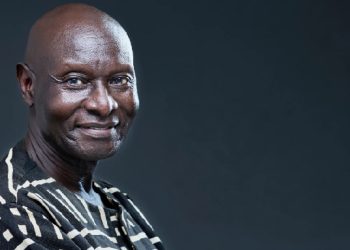
The lawyers pointed to the possibility that even people convicted of grave offences may still have a contribution to make to society. They cited the extraordinary history of Chris Rwakasisi, a former government minister who spent more than two decades on death row before President Yoweri Museveni pardoned him in 2009.
Rwakasisi’s case is an unusual but powerful example of why the consequences of irreversible punishment continue to attract debate in Uganda.
He was sentenced to death in 1988 and remained on death row for years before his pardon.
He had spent more than two decades in prison before walking out of Luzira as a free man.
Years later, Rwakasisi would publicly speak about his experience of death row and argue against capital punishment. He has described the possibility of innocent people being condemned to death as one of the reasons he opposes the penalty.
For Tamale and Mugisha, however, the argument for mercy met the reality of the offences before the court.
Justice Ajiji stopped short of the death sentence but imposed a punishment designed to keep the two men away from society for a very long time.
Why 80 years matters
An 80-year sentence can sound almost abstract.
For a prisoner, it is anything but.
The court was not simply calculating a number. It was balancing the competing principles that sit at the heart of sentencing: punishment for the harm caused, protection of the public, deterrence of others and the possibility, however limited, of rehabilitation.
The judge also took into account the men’s previous criminal record, according to the sentencing account.
That was central to the court’s reasoning.
A severe sentence, in this context, was not presented simply as retaliation for a single death. It was also intended as a barrier between the convicted men and a public that the court considered entitled to protection from repeat offending.
It is a logic familiar to courts around the world: when rehabilitation appears uncertain and the perceived risk of reoffending is high, incapacitation becomes one of the strongest arguments for a long custodial sentence.
The wider cost of boda-boda crime
The Mengo killing also belongs to a much larger Kampala story.
Boda-bodas have become indispensable to the city’s movement and economy. They can cut through traffic where cars cannot, connect neighbourhoods poorly served by formal public transport and provide one of the few accessible sources of employment for thousands of young people.
But their very structure creates vulnerabilities.
Riders routinely carry strangers. They work long hours. Many operate alone. And their motorcycles can be converted relatively quickly into cash or parts.
That combination has repeatedly made riders targets for violent robbery.
The 2019 investigation demonstrated how quickly a single murder could expose the possibility of a much wider network.
Police said at the time that several other riders had been killed in circumstances connected to motorcycle theft, while investigators pursued suspected links across Kampala.
For the families of victims, however, statistics are never the whole story.
Each motorcycle taken represents a lost livelihood.
Each rider killed represents a father, son, husband, brother or friend who does not return home.
Justice after the headlines fade
The CCTV footage that helped propel the Mengo killing into the national spotlight was eventually replaced by something less dramatic but more consequential: years of investigation, hearings, adjournments and evidence tested in court.
By 2023, the case was still moving through the High Court. A hearing was postponed after Justice Ajiji and other judges were away attending the funeral-related proceedings of a colleague’s wife. The media noted at the time that the case had continued to attract attention because of its connection to the 2019 killings that had unsettled Kampala’s boda-boda community.
That long passage from crime scene to sentencing is easy to overlook.
But it is one of the most important parts of any criminal case.
For victims’ families, justice is not only about the final number of years announced in a courtroom. It is also about whether the state can identify a suspect, gather admissible evidence, prosecute the case and eventually obtain a verdict.
The sentence handed to Tamale and Mugisha therefore closes one chapter, but it does not erase the questions raised by the case.
How many riders remain vulnerable?
How many motorcycle thefts begin with an apparently ordinary passenger?
And how much can policing, forensic investigation, CCTV coverage and cooperation between riders do to prevent another Mengo?
The High Court has now drawn a clear line.
The men will spend many years in prison. They were spared the death penalty, but not a punishment severe enough to effectively remove them from ordinary society for a substantial part of their lives.
The court also informed them of their right to appeal.
That final detail matters.
A conviction is not necessarily the end of a criminal case. The appellate process remains part of the architecture of justice, allowing a higher court to examine whether the trial and sentence complied with the law.
For the family of the murdered rider, meanwhile, the courtroom’s decision cannot restore the life that was taken.
For Kampala’s boda-boda riders, the deeper significance may lie elsewhere.
The case began with a motorcycle rider who did not make it home.
It ends, for now, with two men facing decades in prison, and with the city left to confront the harder question that follows every high-profile conviction:
How does a society make sure the next rider gets home safely?