





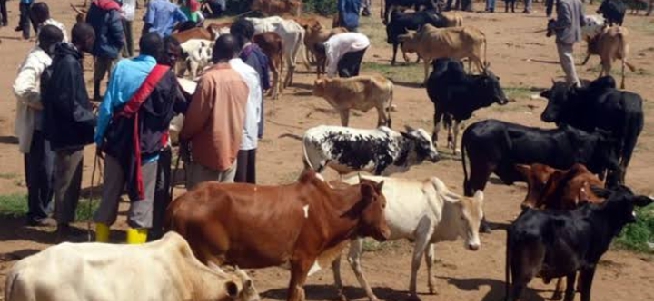
Livestock farmers in Kamwenge District are facing fresh uncertainty after district authorities ordered the immediate temporary closure of all livestock markets to prevent the spread of Foot and Mouth Disease (FMD), a highly contagious viral disease that threatens cattle, goats, sheep and pigs.
The precautionary measure follows reports of increasing FMD cases in neighbouring districts within Uganda’s cattle corridor, raising concerns about the movement of infected animals across district boundaries.
Kamwenge Resident District Commissioner (RDC) Afrikano Aharikundira announced the suspension after consultations with veterinary experts and district leaders, who warned that unrestricted animal movement could accelerate the spread of the disease and expose thousands of livestock farmers to significant losses.
“The closure is a preventive measure intended to protect livestock and safeguard the livelihoods of farmers,” Aharikundira said. “We are acting on technical guidance from veterinary officers and will continue enforcing control measures until the threat is contained.”
Kamwenge is one of the leading livestock-producing districts in western Uganda, with cattle farming serving as a major source of income for households. The district shares close livestock trade links with neighbouring districts including Kitagwenda, Kazo, Kiruhura, Kyenjojo and Ibanda, making disease surveillance critical whenever outbreaks are reported within the region.
Veterinary officials have intensified surveillance activities across the district, with farmers being urged to report any animals showing signs of excessive salivation, mouth sores, lameness or reduced milk production, the common symptoms associated with FMD.
The latest restrictions come amid heightened concern across the Ankole sub-region and surrounding cattle-keeping areas.
In Kiruhura District, one of Uganda’s largest cattle-producing areas, authorities have previously implemented movement controls during FMD outbreaks to protect the district’s extensive dairy and beef industry. Similarly, Kazo District, which relies heavily on livestock production and milk sales, remains vulnerable due to frequent livestock movement between farms and trading centres.
In neighbouring Kitagwenda District, where mixed farming and livestock keeping are important economic activities, veterinary teams have been urged to remain vigilant as farmers continue to trade animals with markets across Kamwenge and other western Uganda districts.
Agricultural experts warn that FMD outbreaks can have severe economic consequences despite rarely causing death in adult animals.
The disease reduces milk yields, lowers market value, disrupts livestock trade and can lead to prolonged market closures, affecting household incomes and local economies.
District authorities have advised farmers to suspend the movement of animals, avoid buying livestock from unknown sources and observe strict biosecurity measures on farms.
Enforcement teams have also been deployed to monitor compliance and prevent illegal animal transportation.
As veterinary surveillance continues, farmers across Kamwenge and neighbouring districts are hoping the restrictions will help contain the threat before it develops into a wider regional outbreak.