


Finance Ministry Permanent Secretary and Secretary to the Treasury, Ramathan Ggoobi, has strongly pushed back against sceptics of Uganda’s economic progress, declaring it “foolhardy” for anyone to dismiss the country’s growth trajectory.
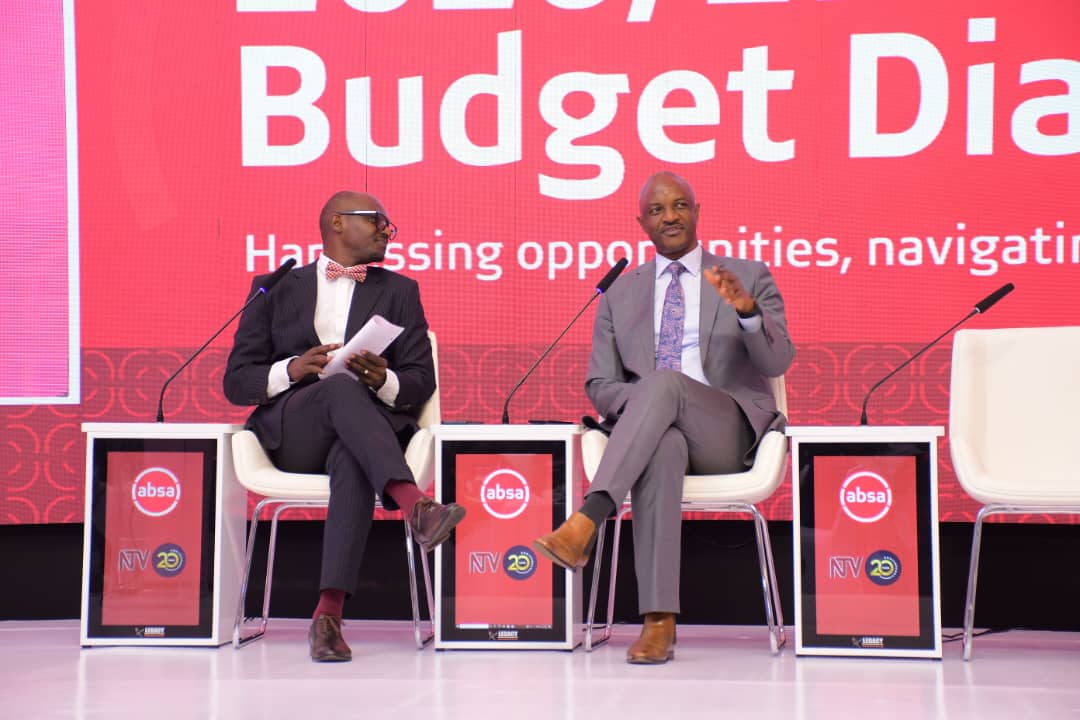
His remarks were made on Friday at the fifth edition of the Absa Post-Budget Forum, a high-level annual engagement that brings together key stakeholders from government, the private sector, development partners, academia, and the media to unpack the implications of the national budget following its presentation on Thursday.
“What do you see about inflation, the exchange rate, the availability of foreign exchange in the country, and the growth of economic activity itself? The economy is doing well at a macro level, and it is only someone who is not actually very honest or acting in good faith who can say otherwise,” Ggoobi said.
His comments came as the government highlighted a series of macroeconomic milestones and fiscal measures expected to benefit the private sector. Uganda’s GDP currently stands at USD 69.3 billion, with the economy projected to grow by 10% in FY2026/27, translating into an expansion to approximately USD 80 billion.
Notably, the projected 10% growth is expected before the commencement of commercial oil production, positioning oil as an additional catalyst for economic expansion.
On the trade front, Uganda’s exports reached USD 18 billion in the 12 months ending March 2026. Over the past 15 years, the country has added 31 new products to its export basket, including pharmaceuticals, refined gold, steel products, ICT products, ceramics, plastics, and dairy products.
Absa Uganda Chief Finance Officer Michael Segwaya also acknowledged the encouraging macroeconomic environment while urging all stakeholders to focus on converting the momentum into tangible outcomes for the economy.
During a panel discussion at the forum, Segwaya said: “Every national budget tells a story. Beyond the numbers, it reflects the choices a country is making about its future, the opportunities it seeks to unlock, and the challenges it is prepared to confront.”
He added: “Optimism alone is not enough. The real question is how we convert this moment into lasting impact for businesses, households, and communities across the country.”
Ggoobi also reminded the audience that the largest share of government revenue is generated through taxation, making economic growth and compliance critical to funding national priorities.
He explained that approximately 95% of the budget has been allocated to what he termed the “ATMs of the economy” — Agriculture, Technology (ICT), and Manufacturing — as the most productive sectors, along with their enablers. He said there would be a renewed emphasis on implementation discipline to ensure that planned outcomes are delivered on the ground.
He also highlighted key measures introduced to strengthen budget discipline and accountability, including a requirement for Accounting Officers to sign a Budget Discipline and Accountability Charter, a move designed to reinforce personal responsibility for the management of public resources.
The planned reduction in domestic borrowing from UGX 11.4 trillion to UGX 9.0 trillion is a welcome step toward fiscal consolidation, as it should ease pressure on local credit markets and support more affordable capital for businesses.
Equally significant is the substantial increase in allocations for clearing domestic arrears, from UGX 200 billion to UGX 1.4 trillion. The move is aimed at providing much-needed liquidity to SMEs, contractors, and suppliers, thereby strengthening business confidence and continuity.
On energy, Uganda’s electricity generation capacity has grown from 60MW in 1986 to 2,098MW today, with a long-term ambition of reaching 50,000MW through a diversified mix of hydro, solar, gas, wind, nuclear, and geothermal sources.
To support affordable financing, the government has capitalised the Uganda Development Bank with approximately UGX 1.6 trillion, enabling it to offer lending rates of 12% per annum. Meanwhile, the Parish Development Model is providing loans at 6% interest to approximately 3.7 million households.