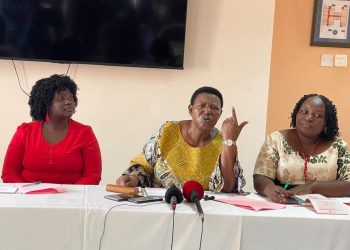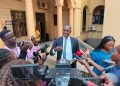



The Electoral Commission boss, Justice Simon Byabakama, has denied allegations that the recently approved UGX 56 billion budget for conducting the proposed Local Council elections was unnecessarily inflated, saying that this was not the true position.
He made the remarks on 22 June 2026 at the Electoral Commission headquarters in Industrial Area while unveiling the roadmap for the LC1 and LCII elections.
Byabakama clarified that more than 70 percent of the funds will largely cover allowances for polling officials who are yet to be recruited.
A polling officer will earn UGX 20,000 per day, while polling assistants will receive UGX 10,000 per day for eight consecutive days. The payments will cover activities at 71,214 polling centres throughout the electoral process.
He noted that the Commission will concurrently conduct two sets of elections: the LC1 and LCII elections, which will culminate at the district level, and the Women’s Local Council elections, which will climax with the National Women’s Council Electoral Conference.
He challenged village council electorates, which constitute the electoral constituency, to elect people of integrity and good character to contest for these offices, noting that they play a crucial role in the grassroots administration of government services and programmes.
Responding to questions about individuals seeking to hold two elective offices concurrently, Byabakama clarified that this is illegal. He explained that once a person is elected to one office and subsequently wins another position at a higher level, he or she must resign from one of the two offices as required by law.
The LC1 elections will be conducted on 28 July 2026 across all 71,214 villages and wards nationwide.
The LCII elections will be held on 10 August 2026.
The National Women’s Council Conference and elections will take place on 3 and 4 September 2026.