


Ugandan lawmakers have urged the government to accelerate the relocation of thousands of people living on the unstable slopes of Mount Elgon, warning that further delays could cost lives as another rainy season approaches.
Members of Parliament from the eastern Mount Elgon region said widening geological cracks and forecasts of above-normal rainfall have heightened the risk of fresh landslides in an area that has experienced repeated disasters over the past two decades.
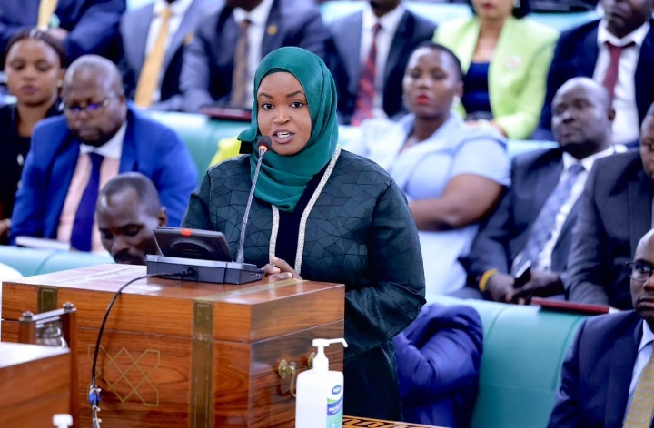
Speaking in Parliament, Sironko District Woman MP Aisha Mafabi said at least 1,645 people in her district remain in high-risk areas despite previous government resettlement efforts.
“Sironko has lost people, livestock and fertile agricultural land every year because of landslides,” she said, urging authorities to relocate vulnerable families before heavy rains further weaken the mountain slopes.
Prime Minister Robinah Nabbanja said the government remained committed to permanently resettling communities living in the most dangerous areas, describing relocation as the only sustainable long-term solution.
She said about 1,200 people had already been relocated after land was acquired in neighbouring Kween District but acknowledged that finding suitable land within the Mount Elgon region had become increasingly difficult because of land shortages and ownership disputes.
Nabbanja said the government had allocated 56 billion Ugandan shillings for the relocation programme and was considering a policy change that would provide affected families with funds to purchase their own land instead of relying on government land acquisitions, a move intended to speed up the resettlement process.
Despite those assurances, lawmakers questioned the pace of implementation, saying many displaced families continue to live in harsh conditions years after being forced from their homes.
Bulambuli County MP John Musila described conditions facing displaced residents as unacceptable, saying many households survive on a single meal a day while some families have remained separated for extended periods because of inadequate accommodation.
Nabbanja defended the government’s decision to close temporary camps established after the 2024 Bulambuli landslides, saying they had become difficult to manage after relief supplies attracted people from surrounding communities who were not registered victims.
She said the government’s priority had shifted from maintaining emergency camps to achieving permanent resettlement.
Deputy Speaker Thomas Tayebwa directed the Prime Minister to convene a meeting with lawmakers from the Mount Elgon region to produce a comprehensive roadmap for the relocation programme, including clear timelines, identified beneficiaries and an implementation plan.
The Mount Elgon region, which spans several districts in eastern Uganda, has suffered repeated landslides triggered by prolonged heavy rainfall, steep terrain and environmental degradation. One of the country’s deadliest disasters struck Bududa District in 2010, killing more than 300 people, while subsequent landslides have claimed additional lives and displaced thousands more.
The renewed calls for faster action come as experts warn that increasingly intense rainfall linked to climate variability is raising the risk of slope failures across parts of East Africa, leaving vulnerable mountain communities exposed to recurring humanitarian emergencies.