


Uganda’s government has warned newly elected Members of Parliament against establishing official parliamentary relationships with Taiwan, Kosovo or Somaliland, saying such engagements would conflict with the country’s foreign policy and could damage key diplomatic partnerships.
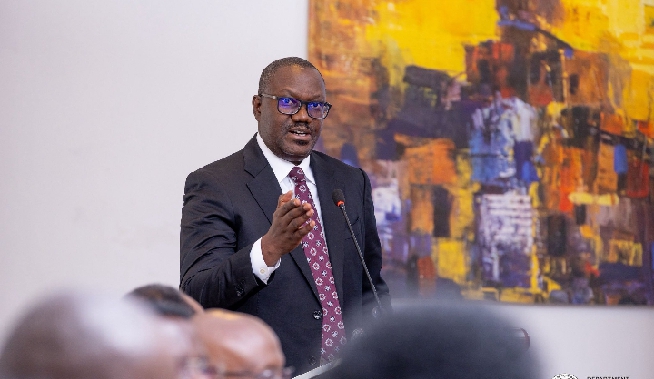
Speaking during the induction of legislators for the 12th Parliament at Commonwealth Speke Resort Munyonyo, Permanent Secretary at the Ministry of Foreign Affairs Vincent Bagiire said lawmakers must ensure their international engagements reinforce, rather than contradict, Uganda’s official diplomatic positions.
“Parliamentary diplomacy must complement, not contradict, the foreign policy of the Republic of Uganda,” Bagiire told MPs, noting that legislators increasingly play an influential role in international relations.
His strongest warning concerned Taiwan, revealing that previous parliaments had been approached to establish a “Friends of Taiwan” parliamentary caucus.
Bagiire urged lawmakers to reject any similar proposals, saying Uganda remains firmly committed to the One-China policy and recognises the People’s Republic of China as the sole legitimate government representing China.
He cautioned that any parliamentary initiative suggesting official ties with Taiwan could undermine Uganda’s longstanding relationship with Beijing, one of the country’s largest development partners and a major financier of infrastructure projects, trade and investment.
Bagiire also advised MPs against pursuing official engagement with Kosovo and Somaliland, reiterating that Uganda does not recognise Kosovo’s declaration of independence from Serbia and regards Somaliland as part of the Federal Republic of Somalia.
“We believe in the Federal Republic of Somalia and not the breakaway Somaliland,” he said.
He clarified, however, that Uganda recognises the Sahrawi Arab Democratic Republic, commonly known as Western Sahara, which is recognised by the African Union and maintains diplomatic representation in Kampala.
The Permanent Secretary stressed that while parliamentary diplomacy has become an important aspect of international engagement, Uganda’s Constitution assigns responsibility for foreign affairs to the Executive, with Parliament expected to operate within the framework of established national policy rather than independently shaping it.
Bagiire also urged lawmakers to exercise caution when commenting on international conflicts, saying Uganda’s longstanding membership in the Non-Aligned Movement requires the country to avoid taking sides in global geopolitical disputes.
“Whether it is Gaza, Palestine, Iran, Israel, Russia or Ukraine, Uganda has consistently supported peaceful resolution of conflicts. We remain non-aligned without appearing to support one side against another,” he said.
He further reminded legislators that Uganda is legally bound to implement sanctions imposed by the United Nations Security Council but is not obligated to enforce unilateral sanctions imposed by individual countries.
His remarks came as the discussion shifted to the growing challenge of human trafficking involving Ugandan migrant workers.
National Female Youth MP Mercy Kanyesigye questioned the government on efforts to protect Ugandans recruited through fraudulent labour agencies before being trafficked into forced labour, online scam operations and sexual exploitation, particularly in Southeast Asia.
Bagiire acknowledged that trafficking has become one of the ministry’s most pressing consular challenges, citing limited resources for rescue and repatriation efforts.
He said the government, working with the International Organization for Migration, had recently brought home more than 100 Ugandans rescued from criminal networks operating in Myanmar.
He said traffickers continue to exploit vulnerable job seekers by promising employment in countries such as Thailand before transporting them across the border into Myanmar, where many are forced into cybercrime operations or other forms of exploitation.
“The unfortunate reality is that even as some Ugandans were returning from Myanmar, others were boarding flights after being promised jobs in Thailand. Once they arrive, they are trafficked across the border back into Myanmar,” Bagiire said.
He added that some victims are reluctant to return home because they fear the economic hardships awaiting them in Uganda, highlighting what he described as the growing link between unemployment, irregular labour migration and transnational organised crime.