


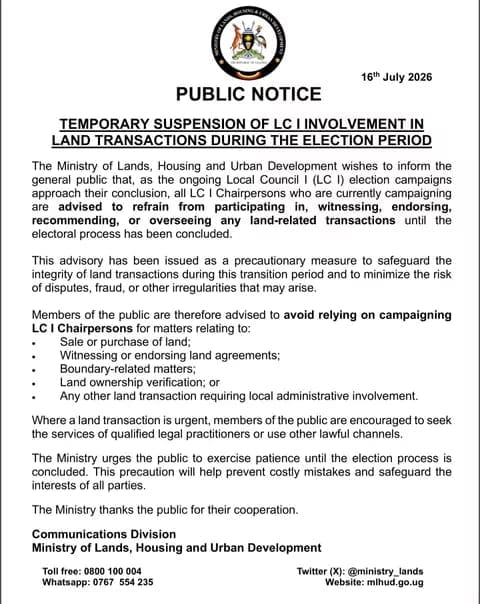
The government has temporarily suspended all LC1 chairpersons who are contesting in the ongoing Local Council elections from participating in land-related transactions, in a move aimed at protecting the public from fraud, land disputes and administrative irregularities during the election period.
In a statement issued on July 16, 2026, the Ministry of Lands, Housing and Urban Development directed that LC1 chairpersons who are actively campaigning should immediately refrain from witnessing, endorsing, recommending or overseeing any land transactions until the electoral process is concluded.
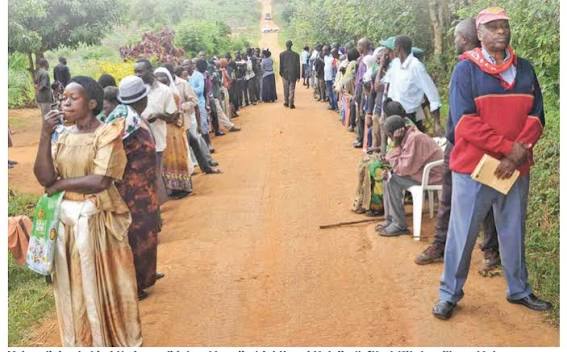
The LC1 elections are scheduled to take place on July 28, 2026.
“As LC1 chairpersons who are currently campaigning are advised to refrain from participating in, witnessing, endorsing, recommending or overseeing any land-related transactions until the electoral process has been concluded,” the ministry said.
The ministry further cautioned members of the public against relying on campaigning LC1 chairpersons for land sale agreements, ownership verification, boundary-related matters or any other land transactions requiring local administrative involvement.
Instead, those with urgent land matters have been advised to seek the services of qualified legal practitioners or use other lawful administrative channels until the elections are completed. The ministry urged the public to exercise patience, saying the precaution is intended to prevent costly mistakes and safeguard the interests of all parties.
The directive places the spotlight on the pivotal role LC1 chairpersons play in land administration at the village level. Although they do not have the legal authority to determine land ownership or transfer titles, they are routinely called upon to witness land sale agreements, confirm the identity of parties to transactions, help verify local occupancy, mediate boundary disputes and provide recommendations that are often relied upon by government agencies, financial institutions and courts when disputes arise.
Their proximity to communities has also made some LC1 chairpersons central figures in Uganda’s persistent land conflicts.
Over the years, complaints lodged with government agencies and courts have implicated some village leaders in endorsing fraudulent land sales, witnessing transactions involving contested property, issuing conflicting recommendations and siding with influential parties in land disputes.
In several cases, victims of land fraud have accused LC1 officials of failing to carry out proper verification before appending their signatures to agreements, while others have alleged collusion with land grabbers and speculators.
Although many LC1 chairpersons execute their responsibilities with integrity, such incidents have prompted repeated government warnings about the need for greater accountability in local land governance.
By temporarily removing campaigning LC1 chairpersons from land-related processes, the Ministry of Lands hopes to eliminate potential conflicts of interest during the election season and shield communities from disputes that could arise from decisions made by leaders seeking another term in office.
The ministry maintains that the suspension is a precautionary measure designed to safeguard the integrity of land transactions until the electoral process is completed.