


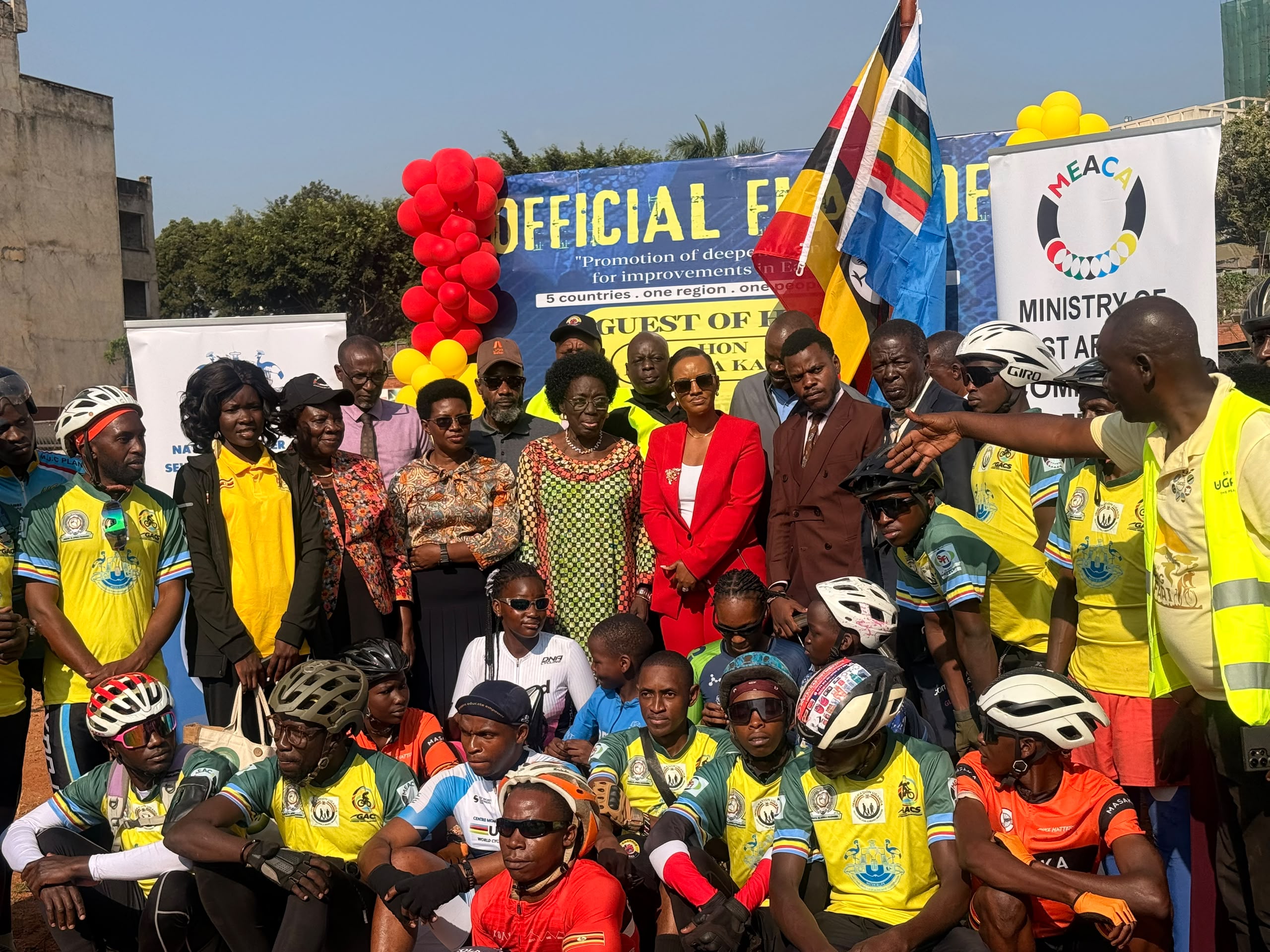
First Deputy Prime Minister and Minister for East African Community Affairs Rebecca Alitwala Kadaga has flagged off 41 cyclists who will traverse East African Community (EAC) member states as part of the ninth edition of the Great Africa Cycling Safari (GACS).
The cyclists, comprising young women and men as well as senior participants, will cover approximately 6,000 kilometres over 55 days, visiting five capital cities while promoting regional integration, freedom of movement and closer cooperation among East African countries.
Speaking at the flag-off ceremony in Kampala, Kadaga urged the cyclists to use their journey to mobilize communities across the region and promote the vision of a united East Africa.
Kadaga particularly asked the team, upon reaching Tanzania, to encourage citizens to support their government in completing consultations on the proposed East African Political Confederation.
“Uganda, Kenya, Rwanda and Burundi have completed their consultations on the Political Confederation. Tanzania is the next, so I want them to speed up. If they finish their consultations, we can organize the Confederation,” Kadaga said.
She said the EAC integration process is anchored on key pillars, including the Customs Union, Common Market, Monetary Union and Political Confederation.
Kadaga explained that the ultimate goal is to establish a stronger regional bloc in which member states can work together in areas such as foreign affairs, the economy, defence and infrastructure.
“Our dream is about integration and forming a big bloc. Already, we are a big market, but we each do things differently—different budgets, different education systems and others. We think that if we are together, we are stronger,” she said.
The minister said the cycling expedition would also raise awareness about critical regional priorities, including food security, water safety and climate action.
She emphasized the importance of involving ordinary citizens, particularly young people, in the integration process to ensure that the EAC agenda is understood, supported and owned at the grassroots.
Kadaga pointed to previous engagements with young people, including a recent gathering of about 1,000 university student leaders from across East Africa, as part of efforts to deepen public awareness of regional integration.
She said increased public participation would help accelerate integration by enabling citizens to understand the benefits of closer cooperation among EAC member states.
Taking Integration to the Grassroots
Abdul Wahab Nyanzi, one of the directors of the Great Africa Cycling Safari, said the initiative was designed to take the integration conversation beyond government offices and political leaders to ordinary East Africans.
“Our message is to all East Africans, ordinary East Africans, leaders, governments and local governments to embrace the integration of the region,” Nyanzi said.
He said the organisers believe cycling can be used as a powerful tool to inspire citizens to take an active role in advancing regional integration.
“We believe that using the power of the bicycle, we can cause the change that is required and move the integration talk from political offices to the grassroots,” he said.
Nyanzi said while East African leaders have played an important role in advancing regional integration, ordinary citizens also have a responsibility to contribute to the realization of the regional integration agenda.
He particularly emphasized the importance of freedom of movement across the region, saying it would create opportunities for increased trade, tourism and other economic and social benefits.
“We are critically emphasizing the freedom of movement across the region. Once we achieve freedom of movement, we are sure that we will have trade, tourism and all the other benefits that come with freedom of movement in the region,” he said.
The 41-member team includes cyclists of different ages and nationalities, including six women. The youngest cyclist undertaking the full tour is about 16 years old, while the team also includes senior cyclists, including a 59-year-old participant from Burundi and a 61-year-old Ugandan.
Nyanzi said some additional cyclists joined the team during the flag-off to boost morale but would not undertake the entire 55-day journey.
He said logistics, particularly access to food and water, have remained among the major challenges faced during previous editions of the cycling safari.
“Cyclists need water, cyclists need food,” Nyanzi said, noting that the organisers had secured more partners this year to support the expedition.
He appealed to East Africans to support and encourage the cyclists throughout their journey and called for prayers for the team as it undertakes the 6,000-kilometre expedition.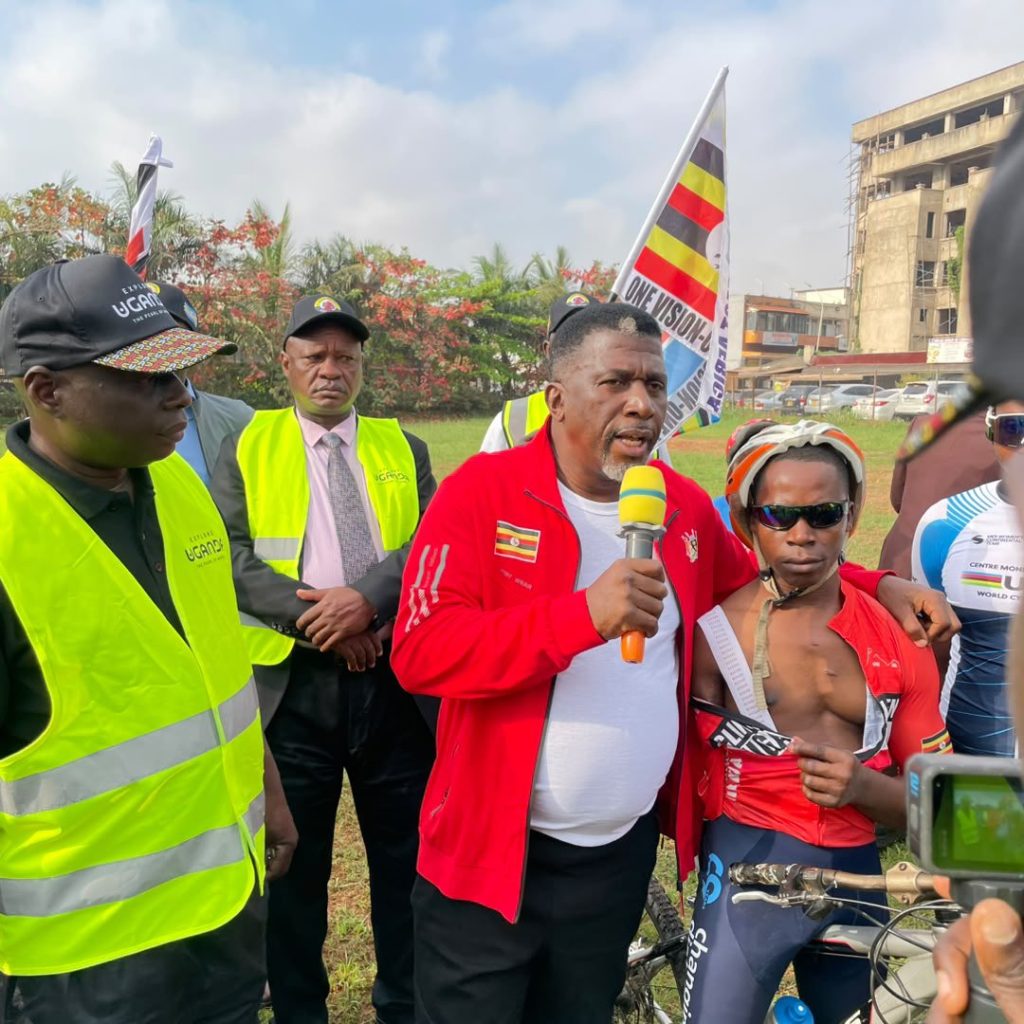 Balimwezo Urges Road Safety
Kampala Lord Mayor Ronald Balimwezo said cycling should not be viewed merely as a sport, but also as an activity that promotes endurance, good health and unity.
He urged the cyclists to respect fellow road users and road furniture throughout the journey.
Balimwezo also appealed to motorists and other road users to give cyclists adequate space whenever they encounter them on the road to prevent accidents and ensure their safety.
He commended the Ministry of East African Community Affairs for supporting initiatives that bring East African citizens together and promote regional unity.
The Uganda Police Force and Uganda Prisons and Fire Rescue Service (UPFRS) have provided a security vehicle and an ambulance to escort and support the cyclists during the expedition.
The Great Africa Cycling Safari is intended to demonstrate that regional integration is not solely the responsibility of governments and political leaders, but also a cause that can be championed by ordinary citizens through people-to-people interaction, shared experiences and cross-border engagement.