


KAMPALA — Police in central Uganda have arrested 22 people after intercepting a taxi allegedly carrying hunting equipment and suspected wildlife products in Nakaseke District.
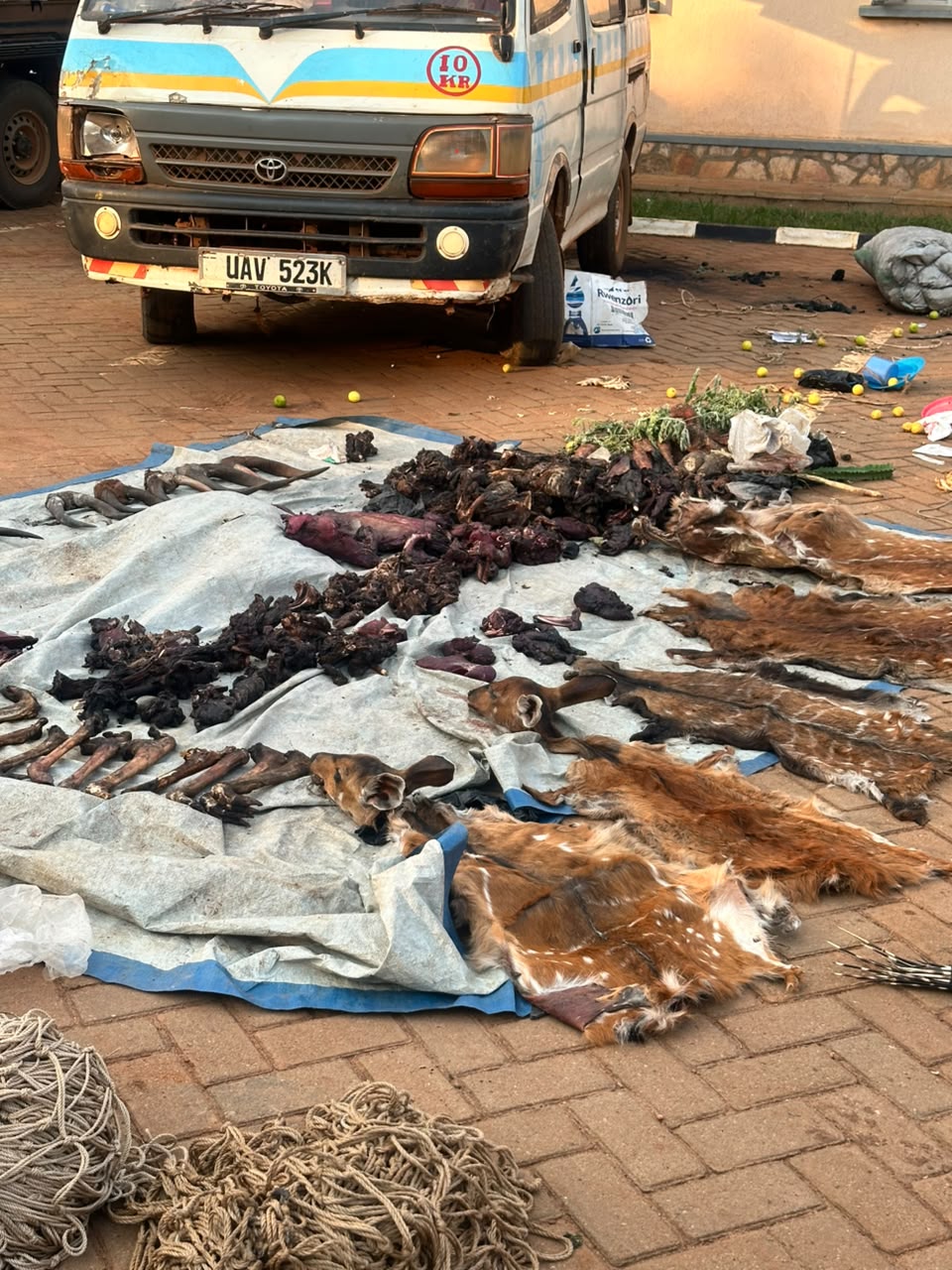
The suspects were detained late on Monday, 17 August, after officers operating a snap checkpoint stopped a white Toyota Hiace taxi, registration number UAV 523K, at about 23:00 local time.
According to police, officers found hunting nets, spears, pangas and knives inside the vehicle, alongside suspected wildlife products.
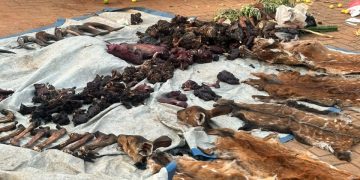
The recovered items included smoked and fresh suspected wild meat, three pairs of oribi horns, five bushbuck horns and porcupine quills.
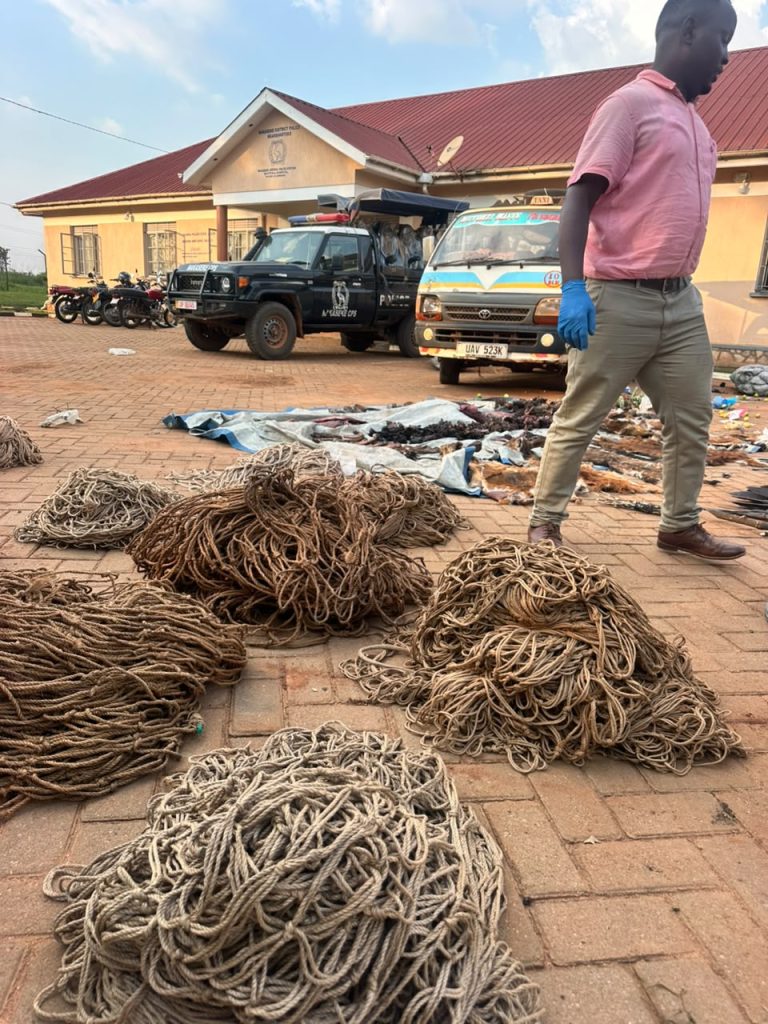
Police also recovered roots and leaves of unidentified plant species, which have been secured as exhibits as investigations continue.
Sam Twineamaziima, the Savannah Region police spokesperson, confirmed the arrests and said the suspects would be handed over to the Uganda Wildlife Authority for further management.
“The 22 occupants were arrested and detained,” Twineamaziima said in a statement. He added that the suspects would be transferred to the relevant wildlife authorities.
The arrests highlight continuing concerns over illegal hunting and the movement of wildlife products through Uganda.
Uganda is home to several important wildlife habitats, including Murchison Falls, Queen Elizabeth and Kidepo Valley national parks, and serves as a wildlife corridor linking parts of East and Central Africa. Authorities have increasingly focused on disrupting networks involved in the illegal trade in animal parts, particularly where Uganda is used as a transit point for wildlife products destined for international markets.
The illegal wildlife trade extends beyond high-profile products such as elephant ivory. Pangolin scales, big-cat skins, bushmeat and the body parts of other protected species are also traded through criminal networks.
In January 2026, Uganda’s Wildlife Crime Unit seized two leopard skins, a lion skin and 26kg of pangolin scales during an intelligence-led operation in western Uganda. The case illustrated the continued demand for wildlife products in illegal domestic and international markets.
Ugandan authorities have sought to strengthen cooperation between police, the Uganda Wildlife Authority and specialised wildlife crime investigators as traffickers increasingly rely on transport routes connecting wildlife-rich areas to urban centres and regional borders.
The latest suspects in Nakaseke remain in custody pending further inquiries. Police have not yet established whether the group was part of a wider organised trafficking network, and the species represented by some of the recovered materials are still being identified.
The case will be handled by the relevant wildlife authorities in accordance with Uganda’s wildlife protection laws.