


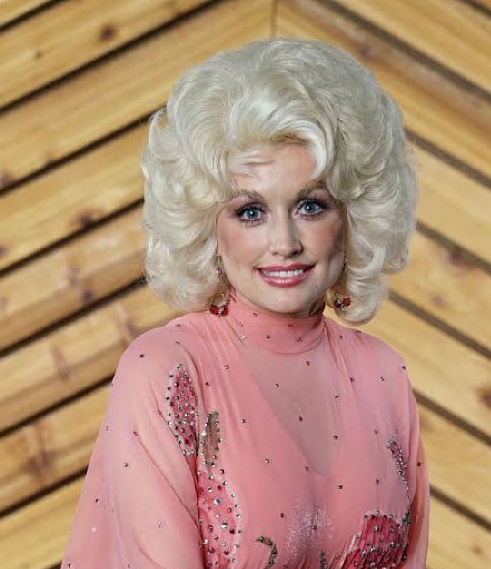
NASHVILLE, Tennessee — Long before the rhinestones, the towering blonde wigs and the sold-out concert halls, Dolly Parton was a child growing up among the mountains of eastern Tennessee, surrounded by poverty, siblings and music.
She was born Dolly Rebecca Parton on January 19, 1946, in Pittman Center, Tennessee, and grew up in nearby Locust Ridge. She was the fourth of 12 children born to Robert Lee Parton, a tobacco farmer, and Avie Lee Parton.
The Parton household had little money. The family lived in a small one-room cabin, but music was plentiful.
Her mother sang traditional songs and ballads, while other members of the family played instruments. For Dolly, music became both entertainment and an escape, and eventually a way out.
Her extraordinary journey ended on August 25, 2026, when Parton died peacefully in Nashville at the age of 80, her family said. No cause of death was disclosed.
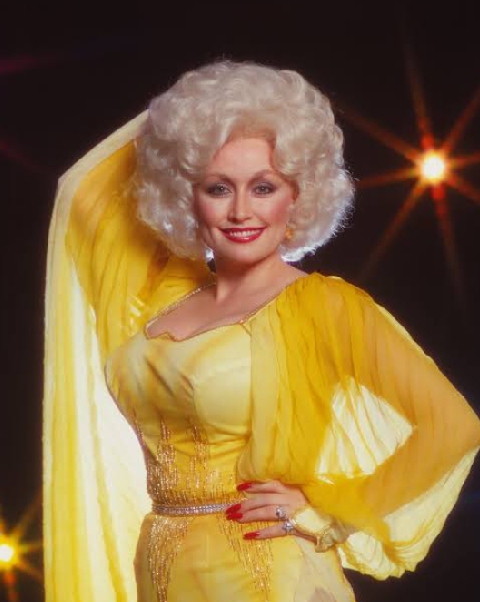
By then, the little girl from the Smoky Mountains had become one of the most recognisable entertainers in the world.
A songwriter before she was a superstar
Parton’s gift appeared early. She began writing songs as a child, including one she later recalled writing when she was about six years old for a corncob doll named Little Tiny Tasseltop. By her early teens, she was already performing on radio and television.
At 13, she appeared at Nashville’s Grand Ole Opry, one of country music’s most important stages.
After finishing high school, she moved to Nashville to pursue music professionally. Her breakthrough came when she joined country singer Porter Wagoner’s television programme.
The partnership gave Parton national exposure, but it was her songwriting that ultimately established her as a force in her own right. When she decided to leave Wagoner’s show and pursue a solo career, she wrote “I Will Always Love You” as a farewell to him.
The song would eventually travel far beyond country music. Decades later, Whitney Houston’s recording for The Bodyguard turned it into a worldwide phenomenon. That was one of the defining characteristics of Parton’s career: she could write a deeply personal country song and somehow make it belong to millions of other people.
The stories inside the songs
Parton wrote about poverty, heartbreak, family, ambition, loneliness and resilience.
Songs such as “Jolene,” “Coat of Many Colors” and “9 to 5” became part of the cultural vocabulary of several generations.
Reuters reported that she wrote roughly 3,000 songs during her lifetime and sold more than 100 million records.
She received 11 Grammy Awards, including a Lifetime Achievement Award.
But statistics only tell part of the story.
Parton’s greatest strength was her ability to make ordinary experiences feel important.
A coat made from scraps of cloth could become a story about a mother’s love. A troubled relationship could become a song recognised around the world. The frustrations of working women could become a hit record and a Hollywood film.
She was, above all, a storyteller.
From country star to Hollywood
Parton did not remain confined to the recording studio.
In 1980, she made her film debut in “9 to 5,” alongside Jane Fonda and Lily Tomlin. The film became a major success, while Parton’s title song earned her an Academy Award nomination.
She went on to appear in films including “The Best Little Whorehouse in Texas,” “Steel Magnolias,” “Rhinestone” and “Straight Talk.”
Her career demonstrated something that had not always been obvious in Nashville: country music could be a launching pad rather than a boundary.
Parton moved comfortably between music, cinema, television and business without abandoning the identity that had made her famous.
Building an empire in her own backyard
Parton’s ambitions eventually extended beyond entertainment.
In Tennessee, she became closely associated with Dollywood, the theme park that grew into one of the region’s major attractions.
The enterprise was more than a business project. It helped connect Parton’s international fame with the landscape and communities that shaped her childhood.
Even as her wealth and influence grew, Parton repeatedly returned to the same source material: the people, places and struggles she knew before fame arrived.
The other legacy: books
Perhaps her most lasting contribution may have nothing to do with music.
In 1995, Parton established Dolly Parton’s Imagination Library, inspired in part by her father’s inability to read and write.
The programme began in her home county, providing young children with free books. It eventually expanded across the United States and into Canada, Britain, Australia and Ireland.
The programme says it has now distributed more than 270 million books.
For many children, Parton became known not primarily as a country singer but as the woman who sent them a book every month.
That nickname; “The Book Lady”, pleased her because it connected her success to something her father valued deeply: education.
Fame without abandoning her roots
Parton’s appearance was deliberately larger than life.
Her elaborate hair, colourful clothes, high heels and rhinestones became instantly recognisable.
She understood the power of the image and turned it into part of her brand.
But the public persona never completely replaced the woman behind it.
She continued to speak about her Appalachian upbringing and the poverty that shaped her early years.
Her philanthropy included support for education, literacy, disaster relief and medical research. During the COVID-19 pandemic, she donated $1 million to Vanderbilt University for vaccine research, helping support work connected to the development of Moderna’s vaccine.
A career measured in more than awards
Parton’s honours eventually became almost as extensive as her songbook.
She received the Kennedy Center Honors, a Grammy Lifetime Achievement Award and recognition from the US Library of Congress. She was inducted into the Songwriters Hall of Fame and later the Rock & Roll Hall of Fame.
Yet her career was never simply a collection of trophies.
Parton’s unusual achievement was her ability to remain commercially successful while also becoming a symbol of generosity, humour and perseverance.
She could appeal to country traditionalists and pop audiences, older listeners and children, Hollywood audiences and people who had never considered themselves country music fans.
The girl from Locust Ridge
There is a temptation to describe Dolly Parton’s life simply as a story of rags to riches.
It was that, but it was also something more complicated.
She did not erase the poverty of her childhood. She turned it into material.
She did not hide the world she came from. She carried it with her.
And she did not treat success as the final destination. She used it to build businesses, create opportunities and put books into the hands of children.
That may explain why Parton’s appeal survived so many changes in popular culture.
The world around her changed dramatically during her nearly six decades in the spotlight. Music formats changed. Television changed. Hollywood changed. Country music changed.
Dolly Parton remained unmistakably Dolly.
On August 25, 2026, the voice that had travelled from a Tennessee mountain cabin to stages around the world fell silent.
But the songs remain. So do the books.
And somewhere in the mountains of Tennessee, the story of a little girl who dreamed beyond her circumstances has become part of the history of American music and culture.
Dolly Parton was born poor. She became famous. But her most remarkable achievement may have been turning the things she once lacked: money, opportunity and education, into things she spent decades helping others find.