


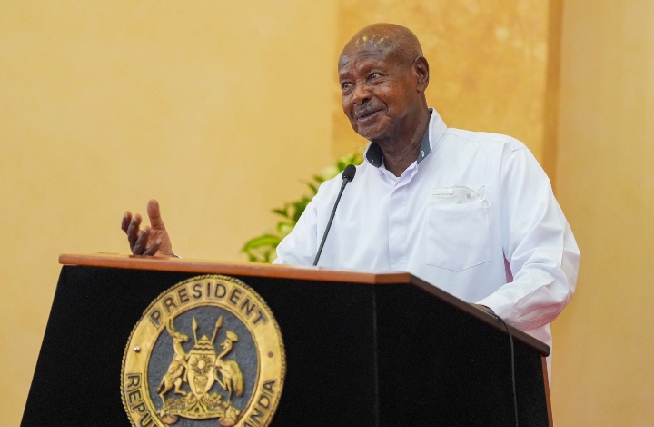
President Yoweri Museveni has defended field inspection tours led by Balaam Barugahare (Minister of Local Government) and his junior Minister in the same docket Justine Nameere, saying direct engagement with communities is helping expose corruption that has gone unreported or been covered up by officials.
In a message to Ugandans through his X page, Museveni rejected concerns that the inspections could amount to “Kutomera” acting blindly or stumbling upon problems without sufficient evidence. He said the frequency of corruption allegations, including claims involving the Parish Development Model (PDM), government jobs, schools and health centres, justified the investigations.
The President noted that he had personally been confronted with complaints about corruption during his recent 2026 election campaign, forcing him to interrupt campaign activities to address concerns raised by citizens.
He also recalled meeting elders from Bunyoro who alleged that government jobs were being sold, as well as reports of “ghost” learners and teachers in government schools and health facilities.
“The challenge now is for the DPP to have a dedicated officer that can quickly assess the abundant evidence against these criminals so that they are prosecuted,” Museveni said, referring to the Office of the Director of Public Prosecutions ODPP).
The president identified what he described as two major obstacles to fighting corruption: the alleged cover-up by officials responsible for protecting public interests, and the failure of influential citizens with access to government decision-makers to report wrongdoing. He praised Barugahare and Nameere for taking their investigations directly to communities through public gatherings, known as barazas.
According to Museveni, the approach has allowed investigators to bypass what he described as a “blockade” created by officials and other powerful individuals seeking to shield corrupt actors.
He said the response from communities showed that Ugandans were willing to speak out when given a direct channel to report abuses.
Museveni also cited Hon. Byamukama as an example of what he described as patriotic conduct by members of the political elite. He said Byamukama had alerted him to an alleged extortion racket operating within State House, after which an operation was mounted that resulted in arrests.
“This corruption in Uganda is stoppable,” Museveni said, urging government officials not to conceal wrongdoing and citizens to report suspected corruption. The president said he had previously assigned former Minister of Local Government Raphael Magyezi to follow up on corruption complaints raised by members of the public.
Although Magyezi visited some of the affected areas, Museveni said decisive action appeared not to have followed.
He contrasted that experience with the public response to the recent inspection tours, saying the crowds attending Barugahare and Nameere’s meetings reminded him of the early years of the National Resistance Movement (NRM), when large numbers of people attended public meetings voluntarily.
Museveni’s comments amount to an endorsement of a more direct, community-based approach to uncovering corruption, while placing responsibility on law-enforcement and prosecutorial authorities to assess evidence and pursue cases where wrongdoing is established.
The president urged both officials and citizens to play their part, warning against protecting suspected offenders and encouraging the public to report corruption rather than remain silent.
“Do not cover-up if you are a Government officer and report if you are a citizen,” he said.