

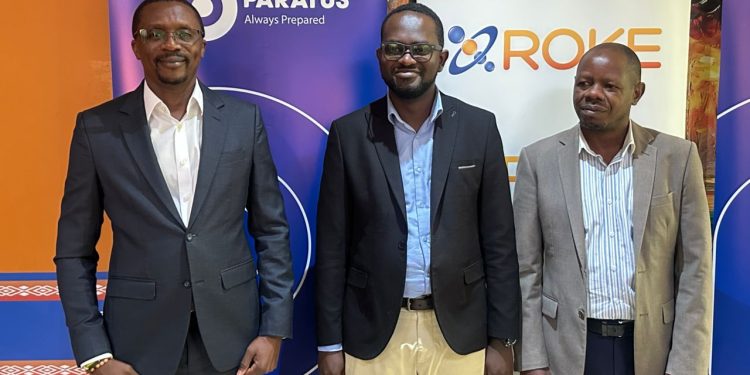
Businesses operating in parts of Uganda long bypassed by fibre and reliable mobile networks now have a satellite alternative, after Roke Telkom and Paratus Uganda launched Starlink connectivity for the enterprise market.
The partners are pitching the low Earth orbit (LEO) service at organisations whose operations sit beyond the reach of conventional networks — among them mines, tourist lodges, health facilities, farms, construction sites, NGOs and government offices in remote and underserved areas. For sectors that have had to work around patchy or absent connectivity, the launch offers a route to high-speed, low-latency access in locations where laying fibre has been uneconomical.
Roke Telkom, a Kampala-based internet service provider that says it is marking 20 years in the market this year, delivers the service through Paratus Uganda — the authorised Starlink reseller in the country and a joint venture between Roke and the pan-African operator Paratus Group. The company says it is the first provider to formally launch Starlink services in Uganda, making it the ninth African country in which Paratus Group offers the service.
The launch comes just over three months after the Uganda Communications Commission (UCC) signed an operational licence with Starlink, in an agreement witnessed by President Yoweri Museveni on 15 May 2026. That deal ended a standoff that had seen the network ordered offline from 1 January 2026 — weeks before the general election — after the regulator complained that Starlink was operating without a licence, and after the Uganda Revenue Authority restricted hardware imports the previous December.
Peter Muhumuza, chief executive of Roke Telkom, said connectivity alone was no longer enough for businesses. “What businesses need is connectivity that works within their wider operations, whether that means integrating their networks, strengthening cybersecurity or connecting them to cloud services,” he said.
Edwin Kyambadde, country manager at Paratus Uganda, said the service was meant to close gaps businesses had faced while giving them an additional connectivity option. “Our focus is not simply on selling connectivity. We want to understand what the customer is trying to achieve, where they operate and what their network requires, and then design a solution that works for them,” he said.
The companies say they will pair Starlink with services including network integration, cybersecurity and cloud, and will offer local billing and technical support. Roke points to two decades of local infrastructure and support, while Paratus says it operates across 16 African countries.
Cost, however, is likely to keep the service a premium option for the hubs it targets. The monthly plan in Uganda is currently around UGX 220,000 (about US$60), with the dish adding roughly $420 before shipping, taxes and electricity — pushing a realistic first-year total to around $1,500. Paratus says its initial focus is the enterprise segment rather than residential customers, though Starlink residential service is also available in the country.