


ADDIS ABABA, ETHIOPIA — Uganda has formally endorsed two major regional frameworks aimed at strengthening food security, agricultural investment and seed systems across the Intergovernmental Authority on Development (IGAD) region.
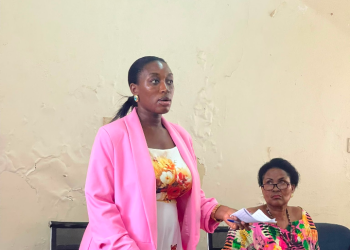
Minister of State for Agriculture, Desire Muhooza, representing the Government of Uganda, endorsed the IGAD Regional Agrifood Systems Investment Plan (RASIP) 2026–2035 and the IGAD Regional Seed Policy and Regulatory Framework during a Ministerial Session held in Addis Ababa, Ethiopia.
Speaking at the session, Muhooza welcomed the two instruments, stressing that they come at a critical time for a region where more than 60 million people remain acutely food insecure as a result of conflict, recurrent droughts and floods, displacement, pests and diseases, market disruptions and economic pressures.
“These challenges do not respect national borders, and neither should our response,” Muhooza said.
She called for the RASIP’s projected USD 150 million investment envelope to be converted into practical, bankable and measurable regional interventions that complement national agricultural investment plans.
According to the Minister, regional cooperation is particularly important in areas such as cross-border trade, sanitary and phytosanitary standards, transboundary pests and diseases, pastoral mobility, climate information and regional value chains.
Muhooza also underscored the importance of the IGAD Regional Seed Policy and Regulatory Framework, describing access to quality seed as fundamental to improving agricultural productivity, food security and climate resilience.
She said the framework offers an opportunity to address fragmented national seed laws, certification standards, variety release procedures and quality assurance systems that have hindered the efficient movement of improved seed varieties across borders.
“Agriculture remains the backbone of Uganda’s economy, contributing 26.2 percent of GDP, employing close to 70 percent of our labour force and accounting for about 38.5 percent of export earnings,” Muhooza said.
She added that Uganda, through the National Agricultural Research Organisation (NARO), continues to strengthen agricultural research and breeding, seed multiplication, inspection, certification, traceability and distribution.
Under the new regional frameworks, Uganda committed to aligning its national priorities with the RASIP, strengthening links between national and regional planning and reporting, investing in agreed regional priorities and participating actively in mutual accountability mechanisms under the CAADP Biennial Review and Joint Sector Review processes.
On the seed agenda, Uganda pledged to work towards greater alignment with regional standards, mutual recognition and certification mechanisms, while strengthening collaboration among research institutions, private seed companies, farmer organisations and local seed enterprises.
Muhooza urged IGAD to move swiftly to establish clear implementation arrangements, identify high-impact regional investments and mobilise predictable resources to turn the commitments into tangible results.
She also called on development partners to align their support with the region’s agreed agricultural priorities.
“Uganda stands ready to work with IGAD, fellow Member States and our partners to move decisively from endorsement to implementation,” Muhooza said.
The endorsement marks Uganda’s renewed commitment to regional cooperation in tackling food insecurity, strengthening agricultural resilience and improving the movement and availability of quality seed across the IGAD region.

Africa’s food must be grown by African farmers’
By Million Belay (PhD) For too long, Africa’s agricultural future has been narrated as a story of rescue: outside finance,...